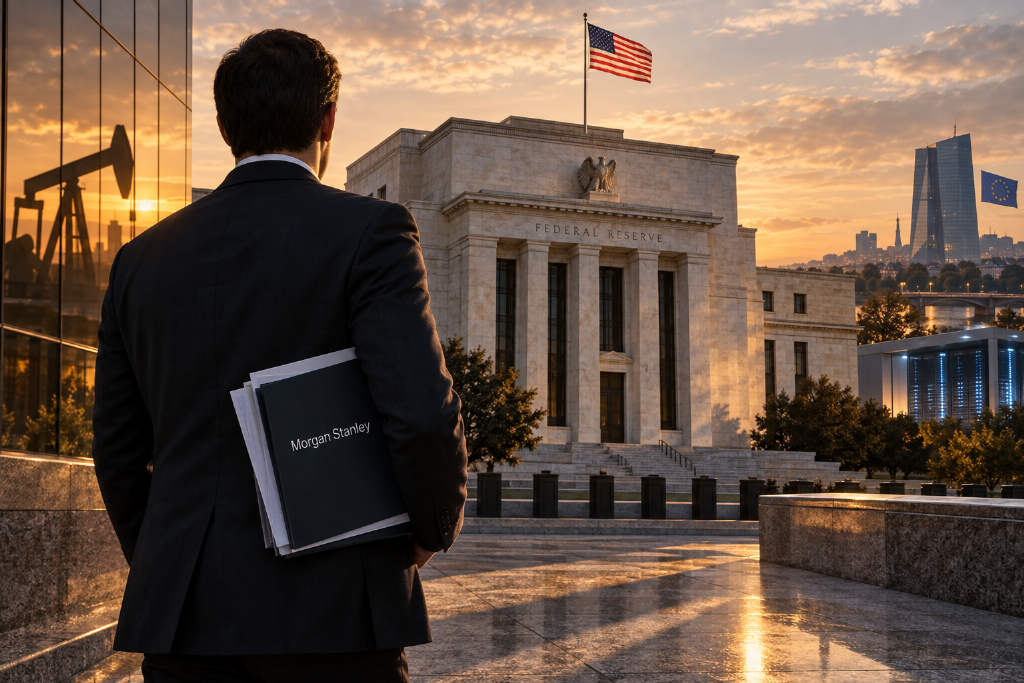
Morgan Stanley said in a new report that it now expects the U.S. Federal Reserve to raise rates twice more this year, with a 25-basis-point move anticipated this week and another 25-basis-point increase in December. The bank said the U.S. disinflation process has been slower than expected, which has led it to adopt a more hawkish view.
According to the report, stronger-than-expected inflation data, international oil prices moving above $100 a barrel, demand resilience tied to AI investment, and the Fed’s need to preserve its anti-inflation credibility could all push policymakers toward tighter settings. Morgan Stanley also said market expectations for a rate increase this week have climbed to 93%.
The bank also changed its view on the European Central Bank. It withdrew its previous call that ECB rate hikes had already peaked and now expects another 25-basis-point increase in December, which would take the deposit rate to 2.75%. It also pushed back the timing of the first rate cut to the end of 2027. Still, some economists remain cautious, warning that keeping rates elevated or raising them further may increase the risk of a policy mistake.
BlockBeats reported on Sept. 15 that Morgan Stanley has turned more hawkish and now expects the U.S. Federal Reserve to deliver two more rate hikes this year.
In its latest report, the bank said the U.S. disinflation process has been slower than expected. It now sees the Fed raising rates by 25 basis points this week and by another 25 basis points in December. Morgan Stanley said stronger-than-expected inflation data, international oil prices rising above $100 per barrel, demand resilience linked to AI investment, and the Fed’s effort to preserve its anti-inflation credibility could all support further policy tightening. Market expectations for a rate hike this week have meanwhile risen to 93%.
ECB outlook revised
At the same time, Morgan Stanley withdrew its previous view that European Central Bank rate hikes had already peaked. The bank now expects the ECB to raise rates by another 25 basis points in December, lifting the deposit rate to 2.75%, and delaying the first rate cut until the end of 2027.
Some economists remain cautious
Not all economists agree with the latest tightening call. Mark Zandi, chief economist at Moody’s Analytics, warned that the risk of a major Federal Reserve policy mistake is rising. Economists at Standard Chartered and Oxford Economics also said the Fed should keep rates unchanged for now and wait for more economic data.
This article was originally published by Bit.Fan. For more cryptocurrency news and market insights, visit www.bit.fan. Disclaimer:
The market information, project data, and third-party content displayed on this platform are for industry information sharing only and do not constitute any form of investment advice or return commitment.
Cryptocurrency trading carries high risks. Users should fully assess their risk tolerance and make independent decisions. All profits, losses, and legal responsibilities are borne by the users themselves.