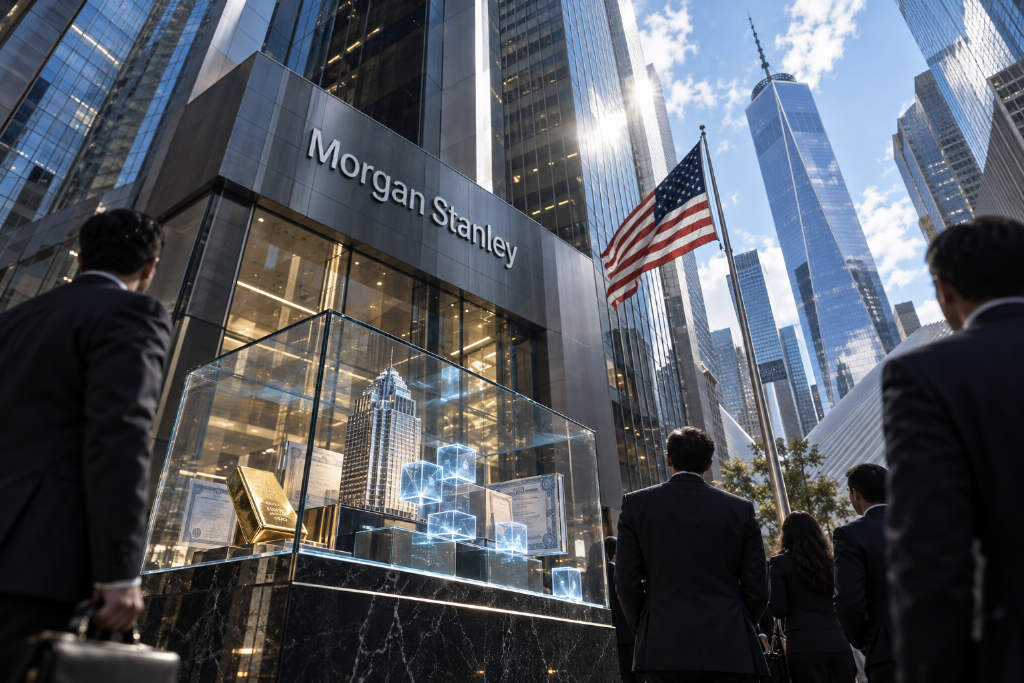
Morgan Stanley digital asset strategy head Amy Oldenburg said the market for tokenized real-world assets could grow to between $3 trillion and $10 trillion by 2030, calling that outlook beyond doubt. She said growth drivers across the sector are reinforcing one another, while institutional investors are showing rising interest and stronger participation in the space. Oldenburg also said institutional markets are already showing clear signs of FOMO, or fear of missing out. Separately, Morgan Stanley had previously said it expects to begin supporting trading in tokenized stocks on its alternative trading system, or ATS, in the first quarter of 2027. That timeline is later than an earlier plan that targeted the second half of 2026.
On Oct. 12, Morgan Stanley Head of Digital Asset Strategy Amy Oldenburg said the market for tokenized real-world assets, or RWA, will reach $3 trillion to $10 trillion by 2030, adding that the forecast is 「without a doubt」.
Institutional interest is rising
Oldenburg said growth momentum across the industry is feeding on itself. She said institutional investors are paying closer attention to the sector and are participating with greater enthusiasm, with clear FOMO already visible in institutional markets.
Tokenized stock trading timeline moved back
Morgan Stanley had previously said it expects to start supporting tokenized stock trading on its alternative trading system, or ATS, in the first quarter of 2027. That is later than its earlier plan for the second half of 2026.
This article was originally published by Bit.Fan. For more cryptocurrency news and market insights, visit www.bit.fan. Disclaimer:
The market information, project data, and third-party content displayed on this platform are for industry information sharing only and do not constitute any form of investment advice or return commitment.
Cryptocurrency trading carries high risks. Users should fully assess their risk tolerance and make independent decisions. All profits, losses, and legal responsibilities are borne by the users themselves.