
The Federal Reserve raised its policy rate by 25 basis points last week, the first increase in three years. Markets had already priced in the move and, in some cases, expected more. Morgan Stanley said the main issue is not the hike itself, but the logic behind it and what it implies for the inflation path ahead.
In a new research note, Morgan Stanley chief global economist Seth Carpenter wrote that the significance of the decision lies less in "what happened" than in "why it happened" and "where things go next." He said the Fed acted because inflation has not cooled quickly enough and energy prices have moved higher, but he framed the step as a policy adjustment designed to keep disinflation on track, not the opening of a new tightening cycle.
Slower-than-expected disinflation and higher energy prices changed the setup
Before the meeting, Morgan Stanley had expected the Fed to stay on hold. The bank’s view was based on inflation moving in the right direction and on the assumption that Chair Warsh would prefer to avoid rate hikes if possible.
That assumption did not hold. The note said the key gauge Warsh referenced at Jackson Hole and again at his September press conference — the six-month inflation trend — was still declining, but not fast enough for the Federal Open Market Committee, or FOMC.
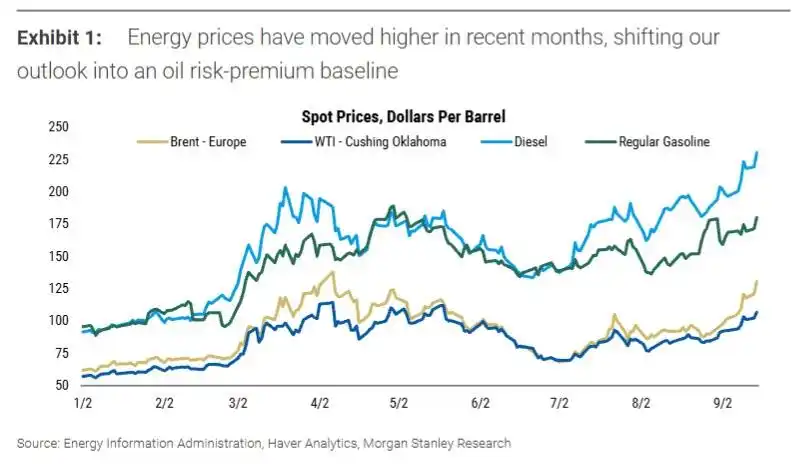
Energy prices added another layer of pressure. Morgan Stanley said oil did not remain as contained as expected because supply disruptions and risk premia returned. With disinflation progressing too slowly and upside risks in energy becoming clearer, the FOMC chose to move.
Committee dynamics still dominate the rate path
Morgan Stanley said Warsh had made clear in public comments before his appointment that he sees the Fed’s balance sheet, rather than interest rates, as the reason inflation has remained above target. Even so, the FOMC’s traditional rate tool still appears to be in control of the process.
The note stressed that policy is set by committee vote. A new chair has substantial influence, but cannot immediately remake the decision-making structure. As early as the June dot plot, a meaningful number of officials were already leaning toward more tightening. In July, three officials even cast dissenting votes in favor of a rate increase.
On that reading, the September hike was not simply Warsh’s decision. It also reflected the position of a majority inside the committee, with many officials unwilling to declare victory over inflation too early.
The dot plot is a directional signal, not a precise forecast
Morgan Stanley warned against reading too much into the dot plot. The current median projection points to one more hike, while keeping open the option of a second.
The bank said the chart is better understood as a directional signal than as a firm forecast. Its message is that the Fed is willing to tighten further if inflation does not improve enough.
The note also said the distinction between voting and non-voting members next year matters a great deal. According to Morgan Stanley, many of next year’s voting members may want to push rates to a higher level.
The central question is the balance sheet
Morgan Stanley argued that the September move looks like a correction within the current framework, not the start of a new tightening cycle. The Fed’s statement said the goal was to bring inflation back to target in a more "timelier" way. In the bank’s view, that means the direction of inflation has not changed; policymakers simply want the process to move faster.
That leads to what Morgan Stanley called the key question: how does Warsh plan to achieve price stability?
The bank noted that Warsh has consistently argued that the balance sheet is the core driver of inflation, yet he did not mention the balance sheet at all in his September press conference. Morgan Stanley said that inconsistency strengthens the case that markets may be pricing in more rate hikes than this Fed will actually deliver.
If Warsh’s working group completes its work and balance-sheet reform is put in place, the note said, the need for aggressive rate increases could drop sharply.
Morgan Stanley sees the end point near the low end of market expectations
Overall, Morgan Stanley said the Fed has become more concerned about inflation and is willing to act, but the latest move looks more like a recalibration to preserve the disinflation process. The market often describes that as unwinding last year’s "insurance cuts."
The bank added that the U.S. economy can absorb these rate increases. If disinflation continues as expected, the degree of tightening the Fed ultimately seeks should become clearer and is likely to land near the low end of market expectations.