
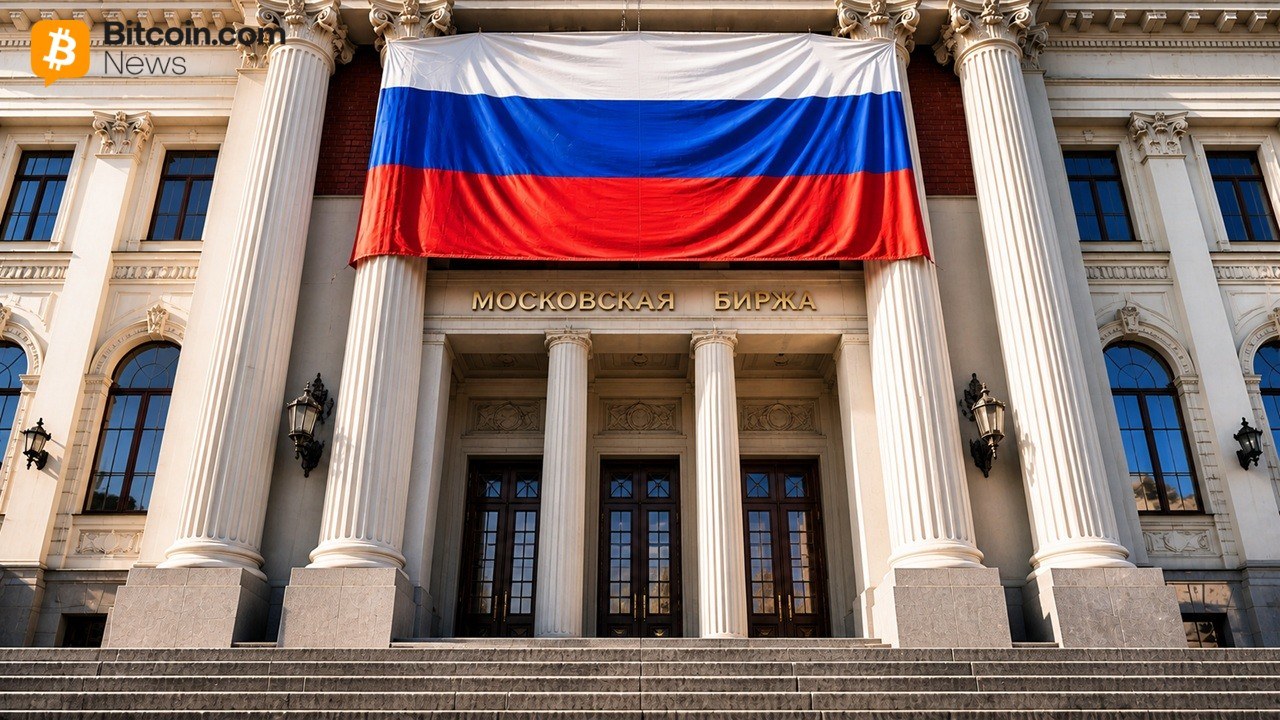
Russia's Moscow Exchange (Moex) announced that it will begin publishing four new cryptocurrency indexes tracking Solana (SOL), XRP, Tron (TRX) and BNB starting May 13, 2026. This marks the first time the exchange has expanded its regulated crypto benchmark suite beyond bitcoin and ether, following the launch of its bitcoin index (MOEXBTC) in June 2025 and ether index (MOEXETH) in October 2025.
Index Pricing Methodology: Multi-Exchange Weighted Basket
Moex will not rely on a single price source. Each index will be calculated using a weighted basket drawn from four global venues: Binance at 50%, Bybit at 20%, OKX at 15% and Bitget at 15%. The multi-exchange approach is designed to mitigate the risk of price manipulation on any single platform and to produce a benchmark reflecting broad market consensus. This structure mirrors the methodology already applied to Moex's bitcoin and ether indexes, both of which have served as the basis for related derivative products.
The new indexes will be listed as MOEXSOL, MOEXXRP, MOEXTRX and MOEXBNB. Once sufficient price history is established, the exchange expects to build futures contracts on each index.
Russia's Regulated Crypto Infrastructure Expands Amid Sanctions
The announcement carries weight beyond the four assets involved. Throughout 2025 and into 2026, Russia has steadily expanded its regulated crypto infrastructure despite Western sanctions limiting access to dollar-denominated financial systems. Exchange-listed crypto indexes give Russian institutional investors a regulated exposure pathway that is significantly more accessible under Russian financial law compared to other avenues.
The selection of assets is notable: XRP is closely tied to U.S.-based fintech Ripple, and BNB is the native token of Binance, the world's largest exchange by volume. The Moex team has stated its intention to grow the crypto index count to at least 10 assets over time, meaning the May 13 launch represents the second phase of a longer buildout, not its conclusion.
For institutional participants, the long-term significance of new indexes lies in the derivatives they enable. Once a benchmark has a track record, exchange-listed futures contracts can be structured around it, giving traders regulated access to leveraged price exposure without direct crypto custody.