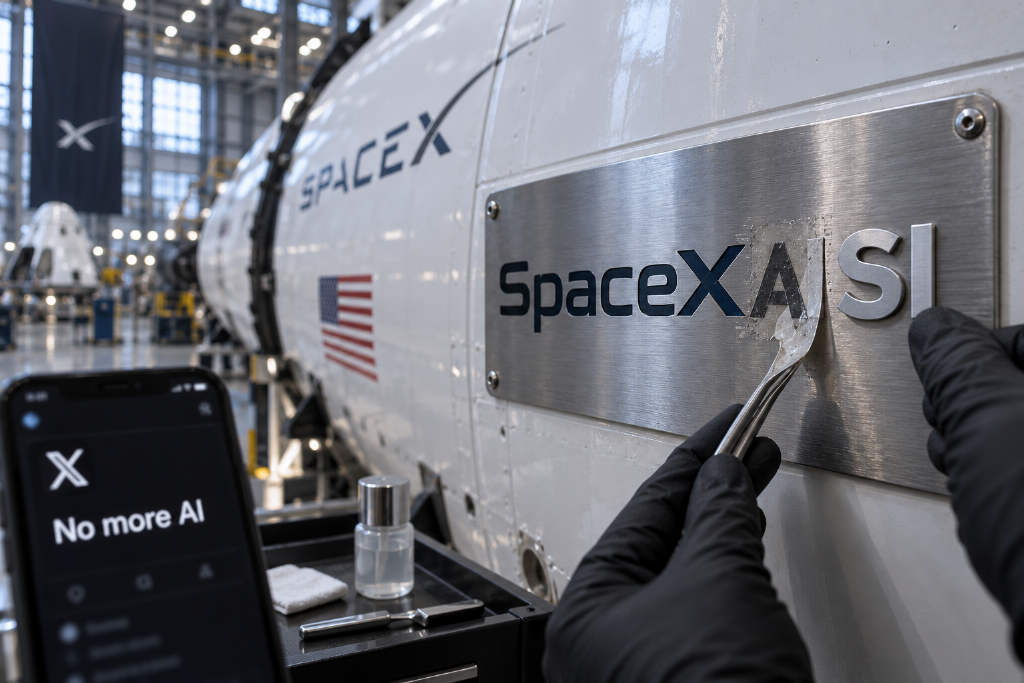
Elon Musk said SpaceXAI is set for another name change, this time to SpaceXSI.

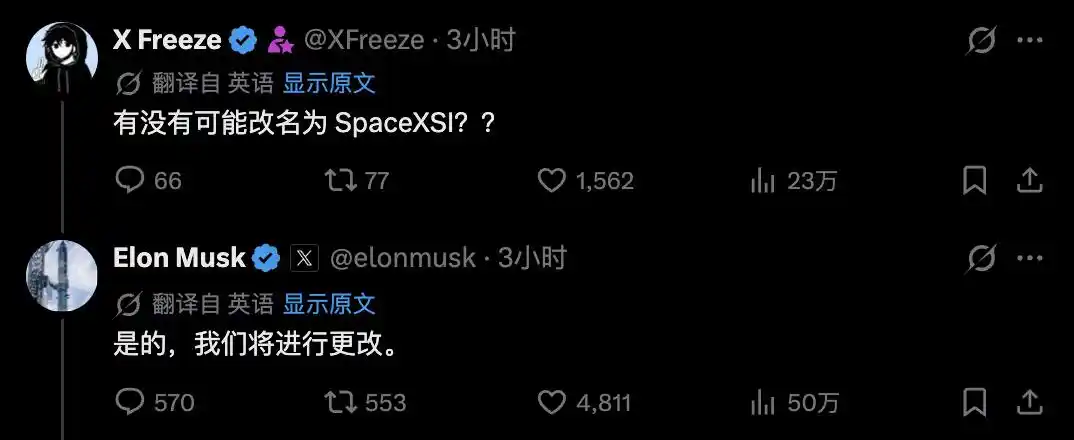
On Oct. 4, Musk wrote on X: "No more AI," adding that SI, or "superintelligence," is a better term. When a user asked whether the company could be renamed SpaceXSI, Musk replied: "Yes, will do."
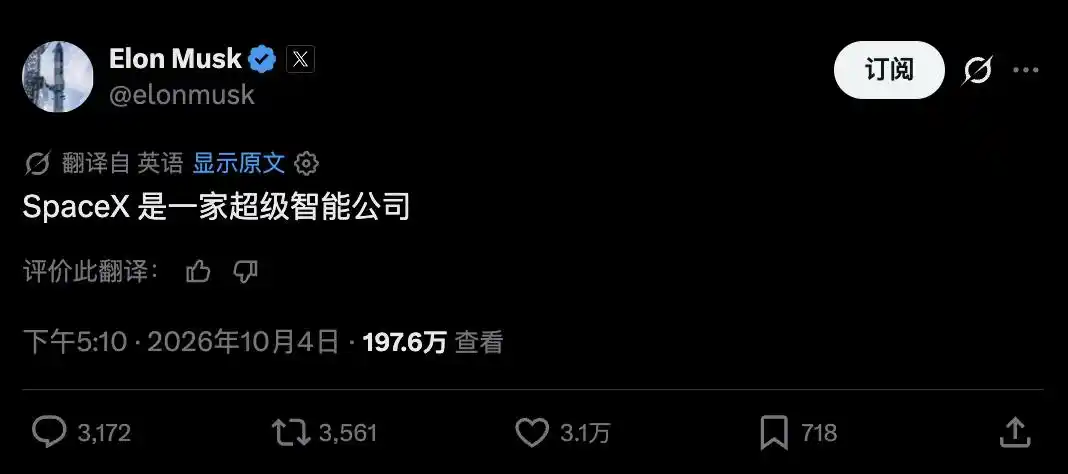
Earlier, Musk had also said on X that SpaceX is "a superintelligence company."
If the change goes through, it would be the company’s second rebrand within a year. The company was originally named xAI. After SpaceX acquired it in February this year, it was renamed SpaceXAI. Musk did not say when the new name would take effect, and SpaceXAI has not announced a new brand identity or new social accounts.
Three reasons cited in the source article
The source article lays out three main reasons behind the proposed rename.
A shift in capability
The first is capability. The article says RSI, or recursive self-improvement, is accelerating, and points to the Millennium Prize Problems as a landmark reference point.
According to the article, on Sept. 8 OpenAI disclosed that an internal model had produced a solution to the Navier-Stokes equation problem and included a Lean formal proof. The article says the model’s capability was clearly above GPT-6 Astra. It reportedly ran for 88 hours and used as many as 10,000 agents at the same time.
The article also says that in April this year, prediction markets put the probability of AI solving any Millennium Prize Problem before 2030 at less than 40%. In that framing, the term "artificial intelligence" no longer matches what these systems can do.
A fight over naming rights
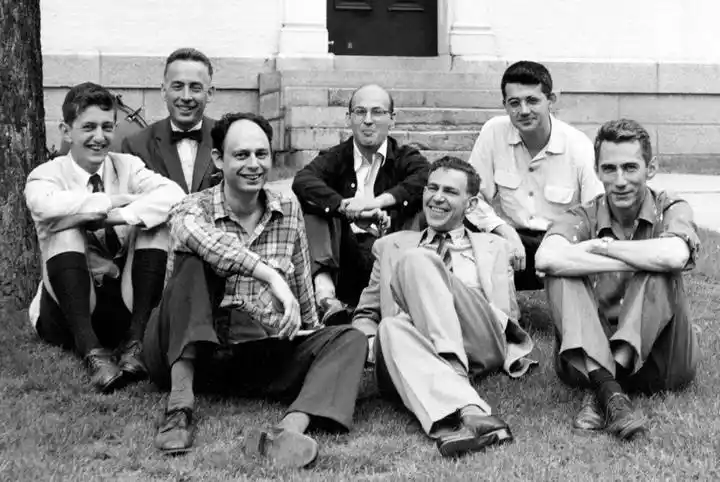
The second reason is naming rights. The article notes that the term "artificial intelligence" was coined by John McCarthy in 1955, and that the field has used that label for 70 years.
By that logic, whoever establishes SI first and puts it directly into a company name could claim the label of the next era. The article puts it this way: "Inventing SI" would carry weight comparable to "inventing AI."
A political signal
The third reason is political. The article says the starting point for the rename was the White House.
It says Trump publicly called at last week’s United Nations General Assembly for SI to replace the term "artificial intelligence," then signed an executive order directing administrative agencies to use "superintelligence" and "SI" in official communications, public statements, and policy documents instead of "artificial intelligence" or "AI."
Trump’s stated reason, according to the article, was that the word "artificial" sounds "fake." The same article adds that the executive order applies only to the federal government. It does not require private companies to rename products, nor does it ban businesses from continuing to use AI.
Against that backdrop, the article describes Musk as moving voluntarily. It says Musk left the Trump administration in May 2025 and later had a public falling-out with Trump. Now, it says, the relationship has clearly warmed: as head of xAI, Musk signed the White House "superintelligence" agreement alongside Sundar Pichai, Dario Amodei, Mark Zuckerberg, Greg Brockman, and Jensen Huang.
The article also says that while appearing with Trump, Musk accidentally said AI and immediately corrected himself: "SI, sorry, superintelligence."
In the article’s reading, renaming the company to SpaceXSI would directly align SpaceXAI with the White House’s current language system.
Whether SI catches on remains unclear
The article says it is still too early to tell whether SI will gain broad traction.
It cites a tech marketing expert as saying that because "superintelligence" already carries an established meaning, the rename is unlikely to be adopted across the whole industry. Even so, the article argues that for Musk, the act of renaming itself is the answer he needs to give right now.
The piece was originally published by the WeChat public account "Xinzhiyuan" (ID: AI_era) and credited to "ASI Qishilu."