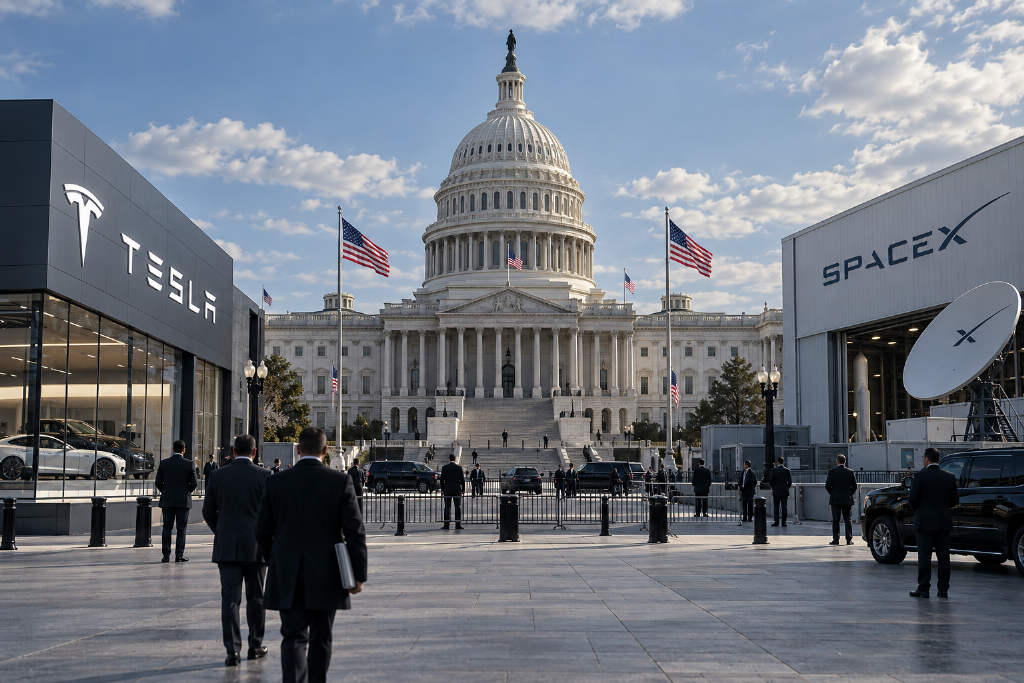
Elon Musk has floated a proposal this week to merge Tesla and SpaceX, according to U.S. financial outlet Semafor. The report says the idea, while still hypothetical, carries real antitrust risk. A former Justice Department official told Semafor that regulators often view vertical mergers as capable of improving supply-chain efficiency and supporting competition, but they could still move to block a deal if Tesla and SpaceX were seen as a vertically exclusionary combination. Semafor illustrated that concern with a scenario in which only Tesla vehicles could use SpaceX technologies such as Starlink, potentially harming rival autonomous-driving or electric-vehicle makers. The report added that the outcome would depend on the terms of any deal and on whether U.S. antitrust enforcers aligned with Donald Trump’s position would be willing to challenge Musk, whom it described as a major Republican donor. Even so, Semafor said Musk could face congressional scrutiny if Democrats retake control of the House next month.
Elon Musk floated a proposal this week to merge Tesla and SpaceX, according to U.S. financial outlet Semafor.
A former Justice Department official told the outlet that the proposal carries a real risk of antitrust issues. The official said regulators often treat vertical mergers as deals that can improve supply-chain efficiency and support competition. Still, if Tesla and SpaceX were judged to be a potentially vertically exclusionary merger, regulators could try to stop it.
Exclusion concerns are central to the case
Semafor described exclusion in this context as a company using its position to limit competitors at other levels of the supply chain. The report gave one example: if only Tesla vehicles were allowed to use SpaceX technologies such as Starlink in the future, other autonomous-driving or electric-vehicle manufacturers could be harmed.
Any outcome would depend on deal terms and enforcement posture
The report said the result would depend on the terms of what remains a hypothetical transaction. It would also depend on how willing U.S. antitrust enforcers aligned with Donald Trump’s position would be to confront Musk, whom the report described as a major donor to the Republican Party.
Semafor also said that even in that case, Musk could face a congressional investigation if Democrats retake control of the House next month, and lawmakers would closely examine any effort to combine his companies.
This article was originally published by Bit.Fan. For more cryptocurrency news and market insights, visit www.bit.fan. Disclaimer:
The market information, project data, and third-party content displayed on this platform are for industry information sharing only and do not constitute any form of investment advice or return commitment.
Cryptocurrency trading carries high risks. Users should fully assess their risk tolerance and make independent decisions. All profits, losses, and legal responsibilities are borne by the users themselves.