
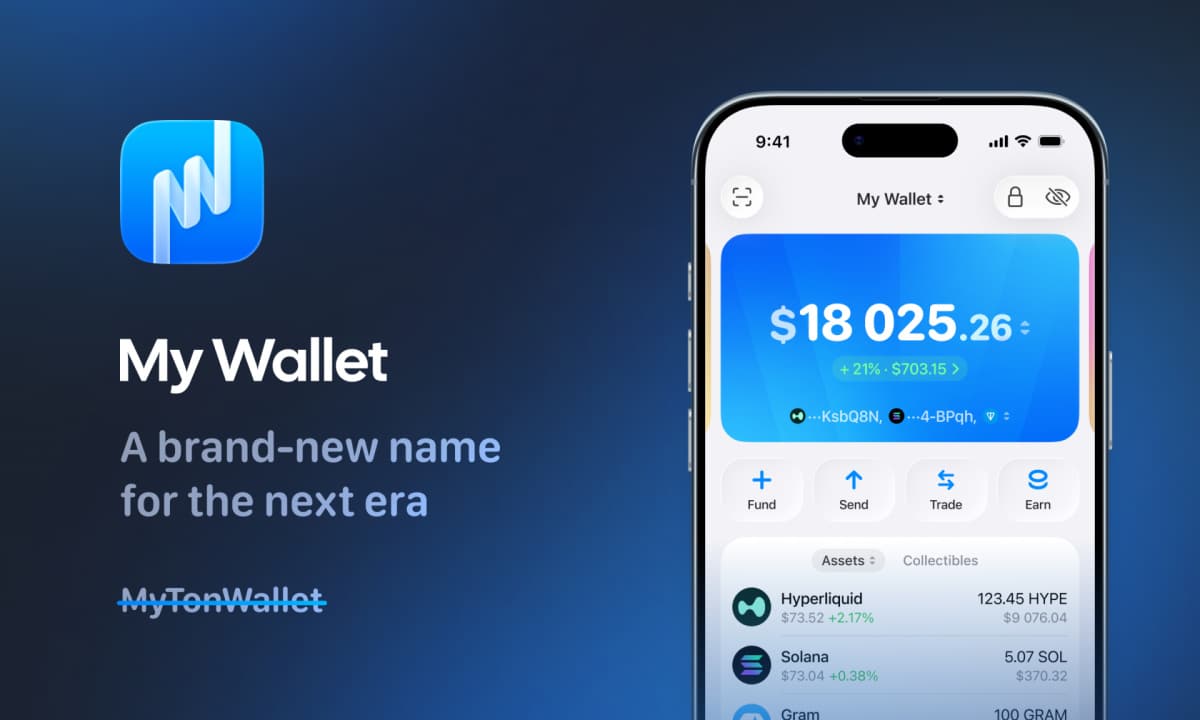
MyTonWallet has rebranded as My Wallet, reflecting its shift from a TON-only wallet launched in 2022 into a multichain self-custodial platform. The wallet now supports 11 blockchains: TON, TRON, Solana, Ethereum, Base, BNB Chain, Polygon, Arbitrum, Monad, Avalanche, and Hyperliquid. Bitcoin is listed as the next network on the roadmap.
The company says the product now serves more than 9 million users. Existing wallets, seed phrases, and account access remain unchanged under the new name, so users do not need to migrate funds or create new credentials.
Portfolio tracking built into the wallet interface
My Wallet is positioning its built-in portfolio layer as a key product change. Inside the wallet, users can monitor Total Value, Total P&L, Daily P&L, and Portfolio Share across all supported chains, with filters for date ranges, token-level views, and key events.
It also breaks holdings down by chain, asset mix, and staked positions, using actual on-chain balances as the base. The wallet supports viewing changes in holdings against a selected fiat currency. The company contrasts this approach with MetaMask, which keeps full portfolio analytics in a separate web app, and Phantom, whose built-in P&L tools are limited to Solana.
Instant-style transfers and gasless payments on TON and Solana
According to the team, My Wallet maintains persistent high-frequency connections to all 11 networks, including EVM chains. Combined with optimistic UI techniques, that setup is meant to make transfers appear instantly inside the app.
The wallet also supports gasless transfers on TON and Solana. In the Solana case, users can send USDC without holding SOL, with the transferred token covering the network fee. The same fee model is being developed for EVM chains.
Before a user confirms any dApp transaction, My Wallet displays a simulation of the smart contract interaction, including the assets leaving the wallet, the assets expected to arrive, and the contract being called. It also combines transaction history from all 11 supported chains into one unified activity feed rather than splitting records across separate network views.
AI agent inside the wallet and disclosed security standing
My Wallet has added a native AI Crypto Agent that lets users send assets, swap tokens, and stake crypto through natural-language prompts. The agent can also answer questions about token prices, portfolio performance, and market indicators such as the Fear & Greed Index.
On security, the company says My Wallet was ranked No. 7 on CertiK’s Wallet Security Leaderboard at the time of publication. It also states that a CertiK audit, an open-source codebase, and reproducible builds have been in place since launch. A $100,000 bug bounty on CertiK SkyShield has been active since March 2024, with no critical vulnerabilities reported so far.
The wallet is self-custodial by design, and the team says it cannot access user funds, seed phrases, private keys, passwords, or browser history. Features now in active development include Bitcoin support, Ledger hardware wallet integration across all supported chains, staking and lending on every network, and a headless wallet mode for AI agents. My Wallet is currently available on iOS, Android, macOS, Windows, Linux, web browsers, and as a Telegram Mini App.