
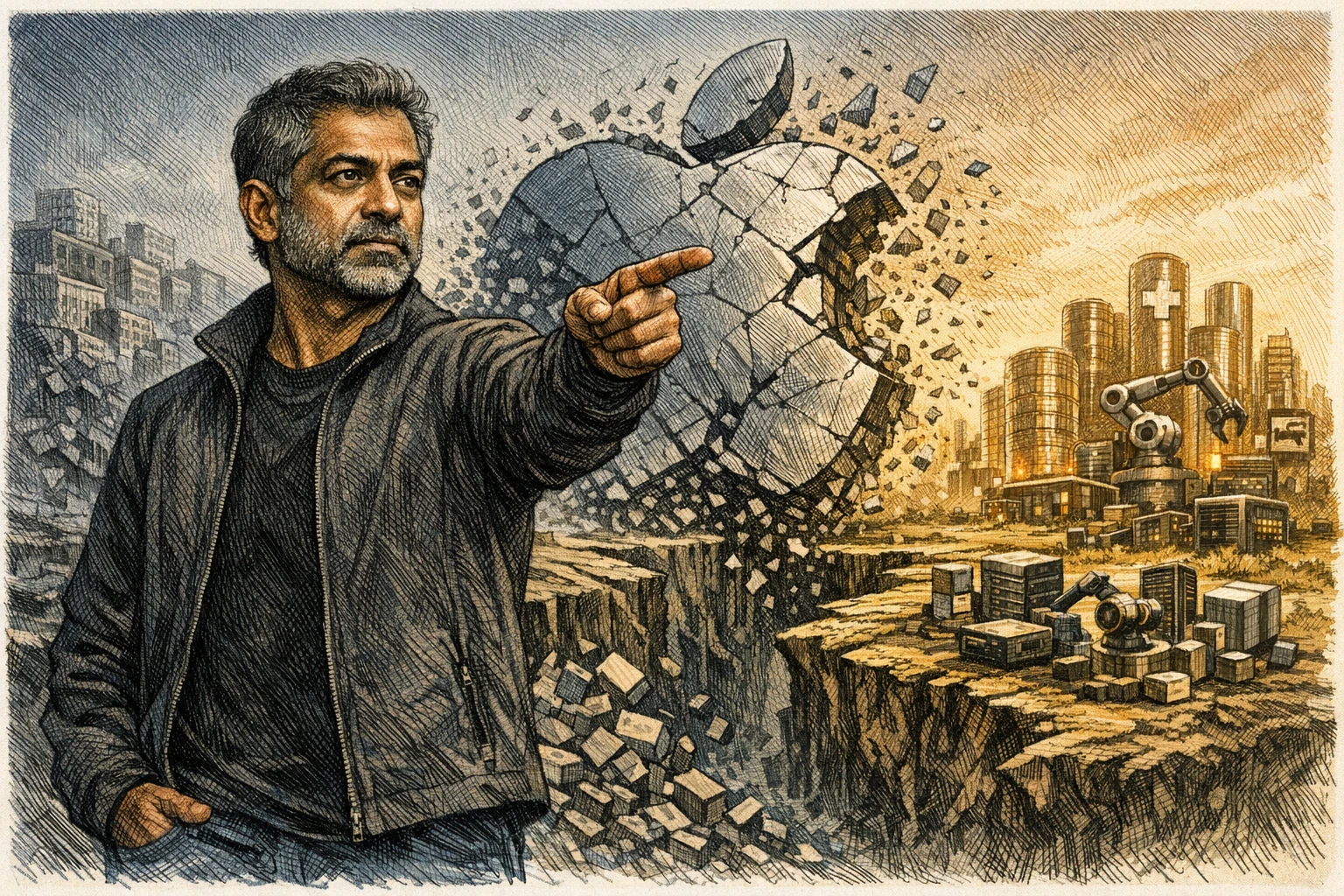
Naval Ravikant, the founder of AngelList and early investor in Twitter, Uber, and Notion, dropped a bombshell in a recent podcast: “Pure software is no longer investable.” His remarks are reshaping how the tech industry values companies.
Apple’s “Structural Death”
Naval’s “death” of Apple is not about bankruptcy but economics. Apple’s $3 trillion market cap rests on the premise that great software justifies premium hardware. Once the interaction layer is taken over by AI agents—users no longer open apps but talk to AI for instant interfaces—Apple’s App Store, design norms, and ecosystem moat erode fast. Apple licensing Gemini from Google means it’s outsourcing the experience layer to its biggest rival. This mirrors Microsoft’s missed mobile era: Apple is repeating the same mistake, betting its hardware-first DNA will carry it through the AI era. When OS and interface become commoditized, Apple’s margins will shrink to hardware commodity levels.
SaaS Moats Are Crumbling
What Naval didn’t elaborate: most SaaS companies that raised Series A/B in the last cycle are already dead, just not aware. A two-person team using Claude Code can replicate 80% of core features of most B2B SaaS products in 90 days. Adobe bought Figma for $20 billion in 2022; now independent developers have built design tools with 70% of Figma’s functionality in months. Salesforce, Workday, ServiceNow, Atlassian, Asana—all are targets of AI-native replacements with teams smaller than their own HR departments. The survivors won’t be the best coders; software value is trending to zero. Real moats: distribution channels, network effects, data flywheels, hardware integration, vertical depth.
The 18-Month Window and Three Paths
Pure software isn’t investable, but Naval’s most optimistic take: a renaissance for solo creators. One person can operate at the speed of a 50-person team—from user feedback to auto-fix, test, deploy, founder only reviews. Pieter Levels built multiple seven-figure businesses solo. The next unicorn may have one employee. Founders have three paths: ignore it (most will, and lose the cycle); panic (fire and pivot blindly); take the 18-month window seriously (audit moats, build AI-proof differentiation). Naval’s message is measured but clear: after 20 years of knowing what’s worth investing in, he believes most things being funded today are not.