

NEAR led the market higher on Sept. 21, climbing more than 20% over the past 24 hours and moving above $4.3 as Bitcoin rose past $84,000. Total value locked on the Near network also reached a record $256 million.
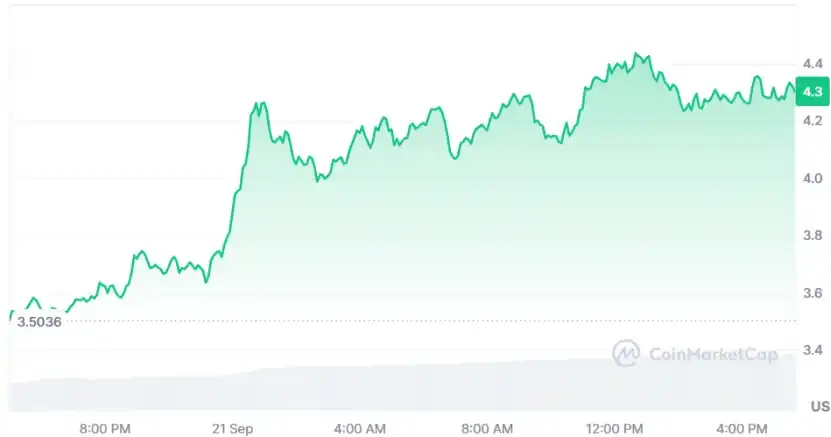
According to the original report by Jae for PANews, the move came after two product catalysts landed within a week: the rollout of a milestone-based incentive mechanism and the launch of privacy-focused perpetual trading. A broader bid for privacy-related assets added to the momentum.
Record TVL and two near-term catalysts
The report said Near’s outperformance was mainly driven by two developments that arrived in quick succession.
The first was the initial snapshot tied to the “NEAR@3.33” milestone incentive plan, which acted as the most immediate trigger for short-term capital inflows.
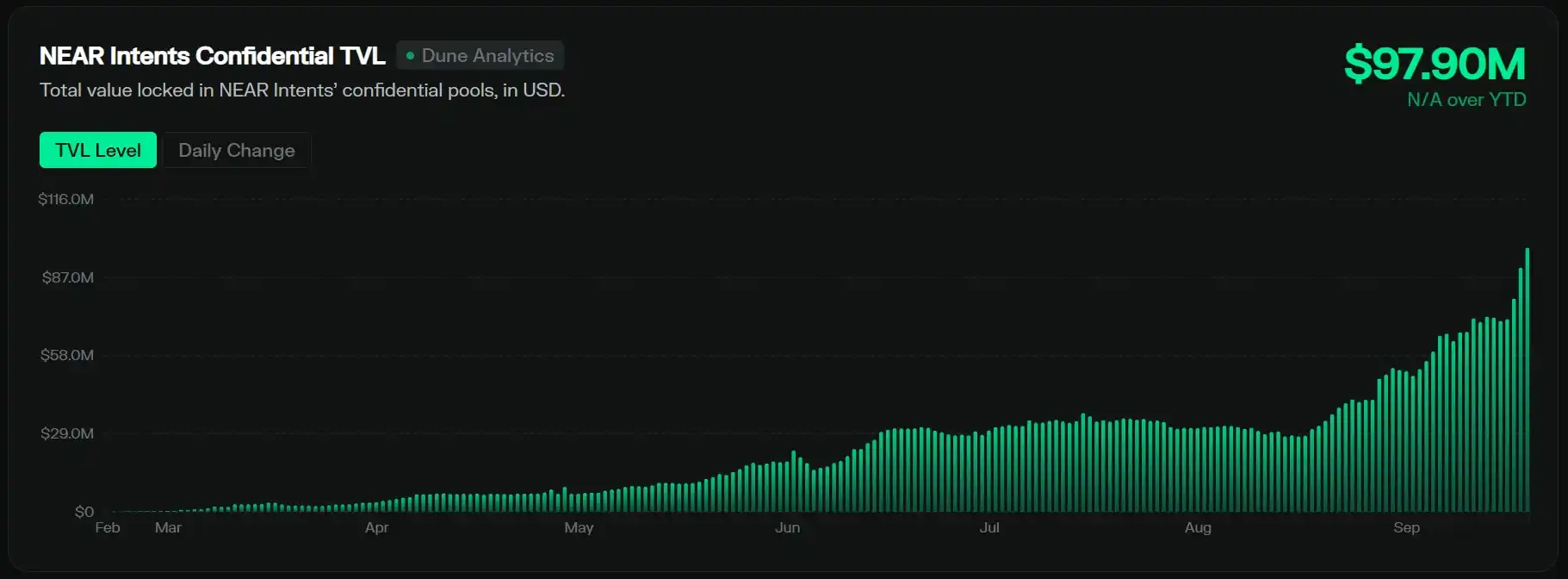
On Sept. 17, Near said total TVL in its Confidential Intents protocol had crossed the $70 million threshold and was approaching $98 million, activating a milestone reward program that had been previewed earlier.
Under the rules described in the report, addresses that keep more than $100 in private assets on the near.com frontend and complete at least one cross-chain private swap are eligible for a distribution of 333,333 milestone tokens. A single wallet is capped at 2% of the allocation to prevent whales from dominating liquidity.
The design goes beyond a standard airdrop. Instead of handing out tokens that can be sold immediately, the milestone tokens start out locked. Whether they can be converted 1:1 into liquid spot tokens depends on NEAR’s three-day volume-weighted average price, or VWAP, holding at or above $3.33 on a sustained basis.
That means users only receive fully tradable rewards if they help grow TVL and keep the token above the threshold. In the report’s framing, “NEAR@3.33” works much like a call option with a $3.33 strike price.
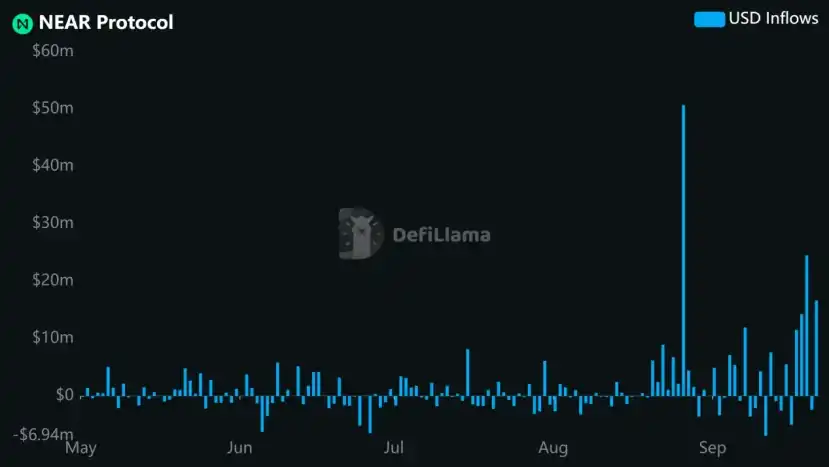
Early results were notable. DeFiLlama data cited in the piece showed that Near had attracted nearly $65 million in new inflows since Sept. 17, pushing the protocol into a period of elevated capital intake.
Private perpetuals go live with Hyperliquid liquidity
If the milestone incentive lit the fuse, the launch of private perpetual trading provided a deeper structural layer for the rally.
On Sept. 18, near.com launched confidential-by-default derivatives trading, with Hyperliquid integrated as the underlying clearing engine for the product.
The report argued that the product targets a long-standing weakness in on-chain derivatives markets: transparent order books expose whale and institutional positions, entry levels and stop-loss strategies on public ledgers, leaving traders vulnerable to MEV extraction and front-running.
Near’s answer is to use dedicated privacy sharding and cross-chain bridging based on trusted execution environments, or TEE, to separate trading accounts from the position data shown in the underlying order book. That setup hides sensitive information such as fund origin and account identity from outside observers.
Just as important, Near did not try to bootstrap liquidity from scratch. It plugged into Hyperliquid’s order book instead. The report said Hyperliquid handles more than $240 billion in monthly trading volume and offers more than 50 major perpetual markets with leverage of up to 40x.
Using NEAR Intents for multi-chain routing, traders can post assets held across different heterogeneous chains as initial margin, while the system settles them into USDC collateral in the background.
The model also changes Near’s revenue mix. The near.com frontend can keep a share of trading service fees through Hyperliquid’s Builder Code, turning Near into what the report described as a self-sustaining omnichain derivatives gateway.
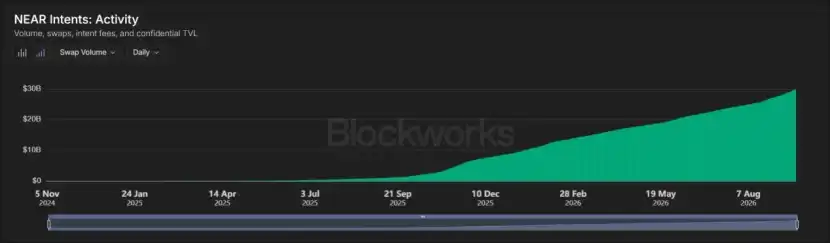
More broadly, the launch extends Near’s chain abstraction strategy into another use case. Users do not need to manage bridges, gas on different chains or asset conversions themselves. They express the trading objective through Intents, and the infrastructure handles cross-chain execution and settlement. Near has disclosed cumulative Intents trading volume of $29.8 billion across more than 35 blockchains.
Privacy rotation added another layer of demand
The report also linked NEAR’s rise to a broader rotation into privacy-related assets.
Zodl, an on-chain wallet for Zcash, uses Near Intents to handle private ZEC swaps and reduce friction. In that sense, Near serves as infrastructure in the ZEC usage path.
The piece also noted that Grayscale’s research on ZEC had argued that the privacy theme was not yet fully priced in. That set up a chain of market logic: ZEC rises, the market reassesses privacy as a theme, capital rotates into privacy-linked assets, and Near benefits because it is both infrastructure for Zcash and positioned at the center of the current sentiment window.
If that reading is correct, part of the recent capital flowing into NEAR may have been thematic rotation money rather than purely ecosystem-native demand.
Three risks stand out
The report did not treat the rally as purely fundamental. It said product delivery mattered, but sentiment and speculation also played a visible role. Three risks were highlighted.
1. Mercenary capital could leave after the airdrop conditions are met
Of the $70 million that flowed into Confidential Intents, a large share may have come from users targeting the milestone airdrop. Once the snapshot is complete, the VWAP condition is met and tokens unlock, those users may take profits quickly, putting pressure on both TVL and price at the same time.
2. Value capture remains limited
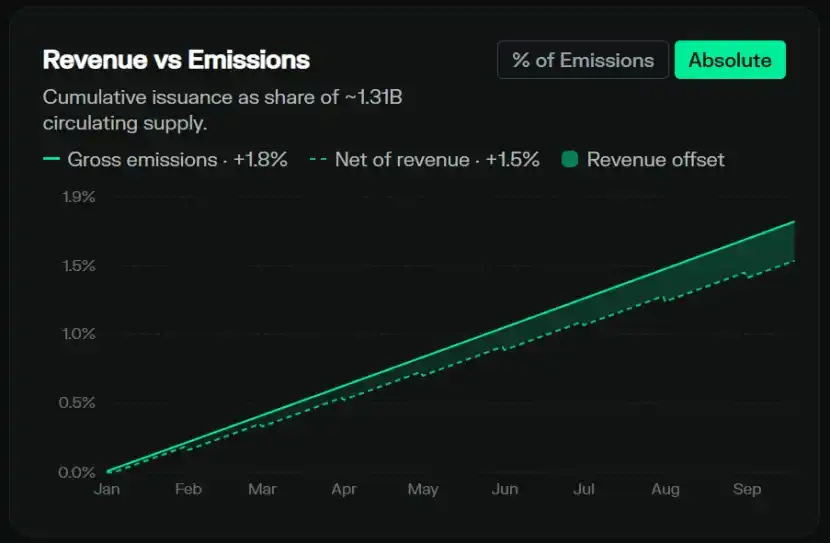
Near’s official revenue dashboard showed about $5.24 million in total revenue and about $1.82 million in net revenue over the past 30 days. While part of the net revenue generated by Intents is used to buy back NEAR, token emissions are still ongoing, and the gap between the buyback pace and the inflation rate is still widening, limiting the offset effect.
The report added that Near’s current revenue base amounts to less than 1% of total market capitalization, which on its own is not enough to support a lasting rise in the token price.
3. The privacy theme may cool off
Confidential Intents is privacy trading infrastructure, not a pure privacy coin. If the privacy narrative loses steam and market risk appetite weakens, some of the premium NEAR recently picked up could unwind.
Near also benefited from a broader market expansion cycle
The report placed Near’s TVL growth in a wider market context. Over the past 30 days, crypto as a whole has been in an expansion phase. Ethereum added more than $5.7 billion in TVL, Solana added more than $900 million, and Base added about $700 million.
Near’s TVL growth rate, at 63%, was much higher than those networks. But in absolute terms, the increase was only $165 million, still far behind the leading public chains.
That comparison suggests Near’s TVL growth was helped by a broad turn in market risk appetite rather than by a fully isolated, protocol-specific event.
What drove the rally
The report’s conclusion was straightforward: NEAR’s sharp move was the combined result of incentive design, product delivery and sector sentiment.
The option-like airdrop structure tied user interests to ecosystem growth and reduced the one-off sell pressure common in traditional token distributions. The private perpetual product, meanwhile, put Near’s chain abstraction stack into a higher-value derivatives market through a lighter strategy built around integrating with an established venue.
What comes next depends on factors the market has not resolved yet: where the incentive-driven capital goes after unlocks, whether the new product can lift revenue further, and how long the privacy trade can stay hot. Those points will shape whether this move proves to be a short burst or the start of a longer turn.