
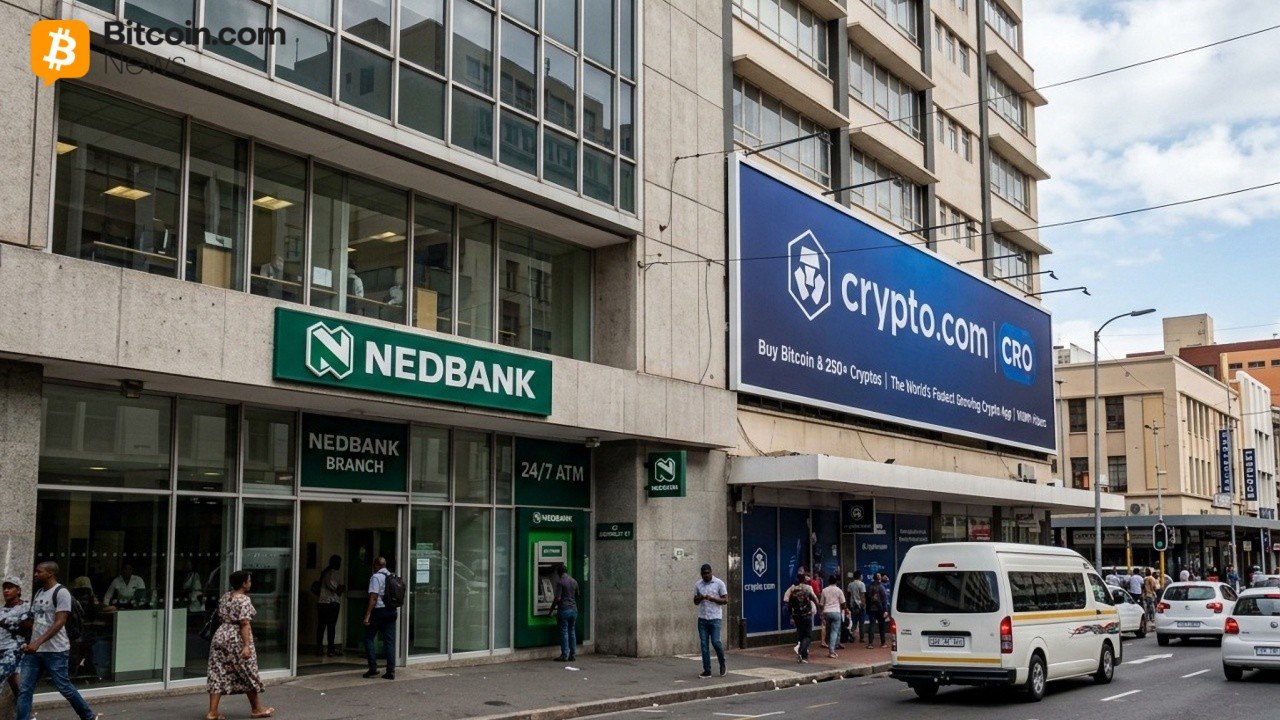
Nedbank has entered a strategic partnership with Crypto.com to develop blockchain-based payment and settlement services across Africa, with the project centered on faster cross-border transfers and lower transaction friction. The plan brings together traditional banking rails and digital asset infrastructure, targeting practical use cases such as payments, remittances, trade, and treasury operations.
Under the arrangement, Nedbank intends to use Crypto.com’s blockchain settlement stack and digital asset infrastructure to enable real-time conversion between the South African rand (ZAR) and USDC. The service is designed for individuals, small businesses, and large corporations. That makes the partnership less of a pilot in name only and more of an effort tied to specific financial workflows that already carry cost and settlement delays.
Retail launch comes first, corporate rollout follows
The initial rollout will start with retail customers in South Africa, with expansion to business and corporate clients planned over the next 12 months. Nedbank said daily net settlement between the bank and Crypto.com will be used to support operational stability while keeping regulatory oversight in place. The sequencing is clear: start with the consumer-facing side, then widen the model once the process is established.
Simon Marland, Managing Executive for Automation, Blockchain and Analytics at Nedbank, said the bank is building the foundation for a more resilient, inclusive and future-ready financial ecosystem by using Crypto.com’s blockchain capabilities. Karl Mohan, EVP of Financial Services and GM International at Crypto.com, said Africa is one of the most dynamic frontiers for digital finance and that the partnership is intended to give businesses and individuals secure, compliant and efficient access to digital assets.
Cross-border efficiency and digital dollar liquidity are the main targets
The strongest commercial angle in the announcement is cross-border settlement. Conventional international transfers often come with added time, fees and intermediary complexity. A blockchain settlement layer is being positioned here as a way to reduce that friction. Nedbank said the collaboration will expand access to digital dollar liquidity through USDC, supporting payment flows, trade activity and treasury management for users that need more flexible movement between currencies.
Compliance is also central to the design. Nedbank said the services will remain aligned with both local and international regulatory frameworks. In other words, the model is not being presented as a workaround to the banking system, but as a regulated extension of it. If the rollout works as planned, the bank could strengthen its role as a regulated gateway for blockchain-based finance in Africa.
Built against the backdrop of intra-African trade
The partnership was also framed in the context of the African Continental Free Trade Area (AfCFTA), which is aimed at increasing trade and economic integration across the continent. A dependable digital settlement network could make transactions between African businesses easier to execute. In that sense, blockchain is being used here as financial infrastructure, with the emphasis placed on settlement utility rather than market narrative.