
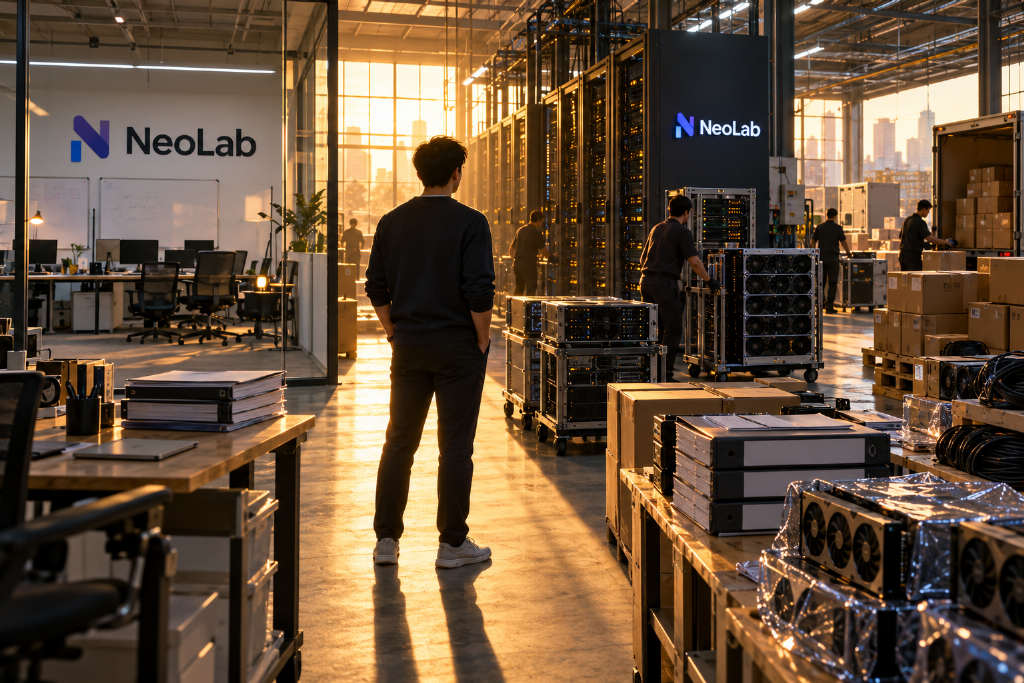
A new business model is coming into view around NeoLab AI startups: even if a lab fails to produce a strong model, the GPU capacity it locked in earlier may still be sold for profit.

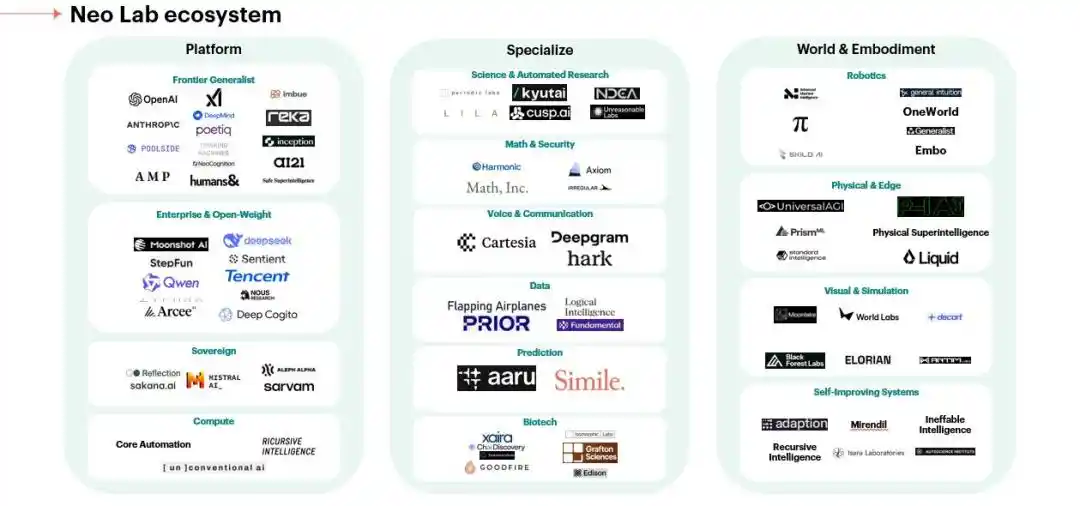
The report describes NeoLabs as a new class of AI companies founded by star researchers, raising large sums first and then pushing into model development. They are usually presented as frontier-technology ventures. The latest discussion is less about breakthroughs and more about what happens when those breakthroughs do not arrive on schedule: reserved compute itself can become inventory.
Reserved compute is being treated as a monetizable asset
According to the article, the founder of AI cloud unicorn Modal said the market may see a large number of NeoLabs turn into NeoCloud companies next year, meaning AI compute cloud providers.
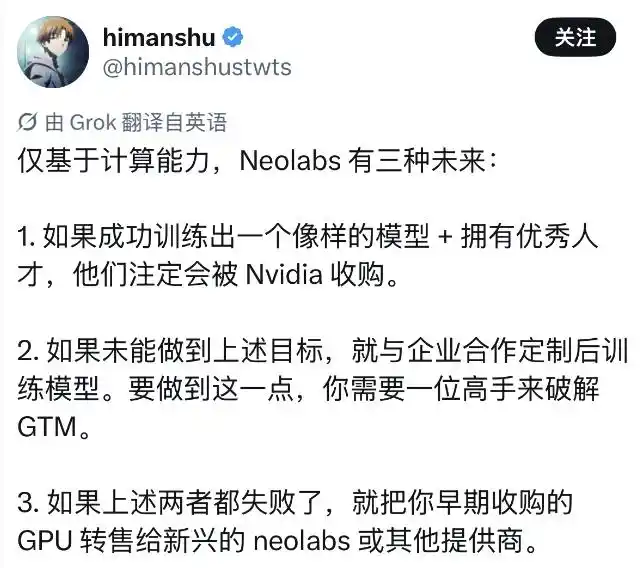
The piece also summarizes a view circulating online: the best outcome is a technical breakthrough and a path to becoming the next OpenAI; another route is to pivot into enterprise vertical agents; the worst case, if model training collapses, is to sublease GPU capacity and at least return some value to shareholders.
The economics behind that shift are straightforward. In large-model startups, compute is described as the biggest sunk cost, often accounting for half of total spending and in some cases more than 70%. To avoid losing access to clusters in the middle of training, many labs sign 1-3 guaranteed lease contracts with cloud vendors or large data centers soon after closing a seed or Series A round.
Tight spot supply has pushed GPU pricing higher
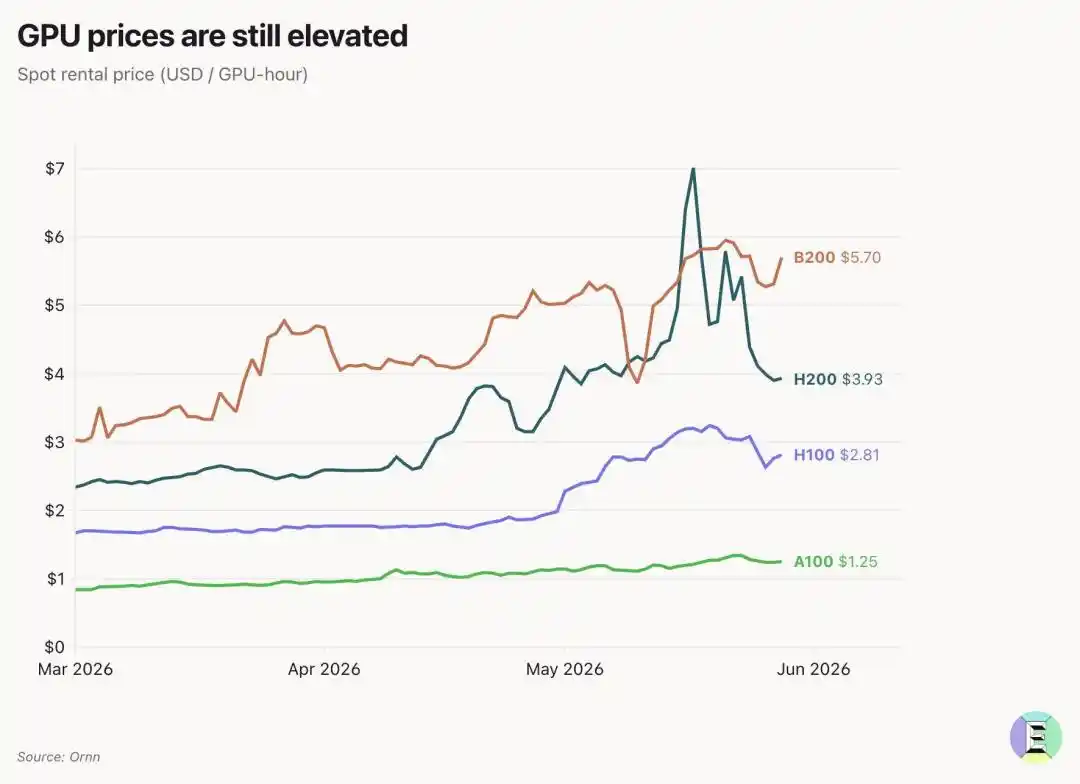
At the same time, the spot market for compute remains tight. The article cites rental increases of about 160% for H200, 120% for B200, and a roughly 35% premium for H100 spot pricing.
That spread has opened the door for labs whose research has stalled or whose models have not materialized to turn into compute middlemen.
The report lists three ways they are doing it:
- reselling long-term compute leases to brokers at a premium and capturing the spread;
- listing spot GPU instances, splitting idle nodes, and selling short-term capacity by the day or week to smaller teams that urgently need compute;
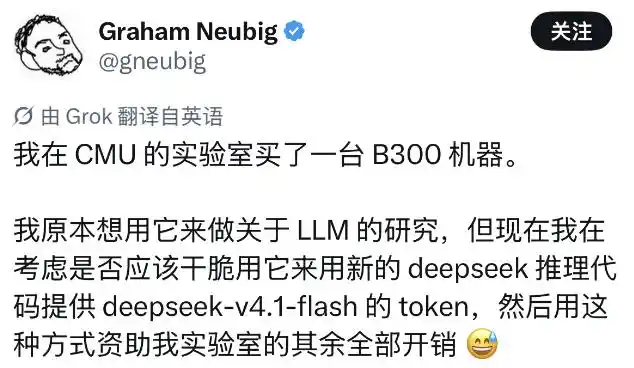
- dropping pretraining plans, running open-source models for inference instead, and offering API access priced by token usage.
The article also says an associate professor from Carnegie Mellon University acknowledged the appeal of monetizing compute on X, though the input does not include the full quote.
Funding is large, but commercialization remains limited
Over the past two years, NeoLabs have been one of venture capital's biggest magnets, the report says. These companies are often founded by star chief scientists from OpenAI, DeepMind, Meta and other major firms. Rather than building application-layer products first, they go straight after AGI and can raise hundreds of millions of dollars at the pitch-deck stage on the strength of their teams.
But the latest report from European venture data firm Dealroom, as cited in the article, shows that 29 representative AI NeoLabs have raised a combined $23 billion, or about RMB 166 billion. Fewer than 35% of them have launched commercial products for sale.
By that count, at least 19 labs are still in closed research mode or have released only technical white papers or demos.
SSI is presented as a representative case
The article points to Safe Superintelligence, or SSI, co-founded by former OpenAI chief scientist Ilya Sutskever, as a typical example. It says SSI reached a $32 billion valuation in less than a year after launch, with a team of fewer than several dozen people. The report adds that such a pace would have been hard to imagine before 2023.
From the outset, SSI said it would not build consumer or enterprise commercial products before achieving what it calls safe superintelligence.
That stance sharpens the question of payback. The article cites a Silicon Valley VC's calculation that a standard full training cycle for a foundation model now burns at least $10 million in compute.
If a company tries to recover that spending only through API revenue and token sales over time, then after electricity, bandwidth and depreciation, it would need to sell effective usage on the order of 10 trillion tokens to the market.
The report argues that this is especially difficult when leading tech companies are pushing open-source models into the market at subsidized prices or even for free. Without enterprise workflows and proprietary data, a lab that relies on API sales alone may struggle to break even.
Investors are questioning valuation and capital deployment
Business Insider is cited as saying that Matt Murphy, a Silicon Valley investor who took part in Google's early investment rounds and led Menlo's investment in Anthropic, views NeoLabs as one of the most overhyped areas in the market today.
He compared Google's early success to "throwing a match into a bonfire," while describing some NeoLabs as trying to "use a pile of bonfires to light a match." In his view, injecting tens of billions of dollars into frontier labs too early raises the bar for commercial success rather than lowering it.
Musk shifts the focus to power constraints
Elon Musk also commented on the idea of NeoLabs reselling compute. As paraphrased in the article, his point was that buying more GPUs may not solve the real shortage, because the bottleneck now is not only chips but electricity.
A Goldman Sachs study cited in the report projects that global data center power demand will rise 170% from 2025 to 2030, while grid construction, approvals and infrastructure expansion lag far behind.

As of October this year, 86 data center projects worldwide had been canceled or seriously delayed, according to the article.
The piece adds that Musk predicted a wave of consolidation and failures in the NeoCloud sector a day earlier.
With GPU pricing, fundraising pressure, commercialization challenges and power constraints all in play at once, the path from NeoLab to compute service provider looks difficult.



