
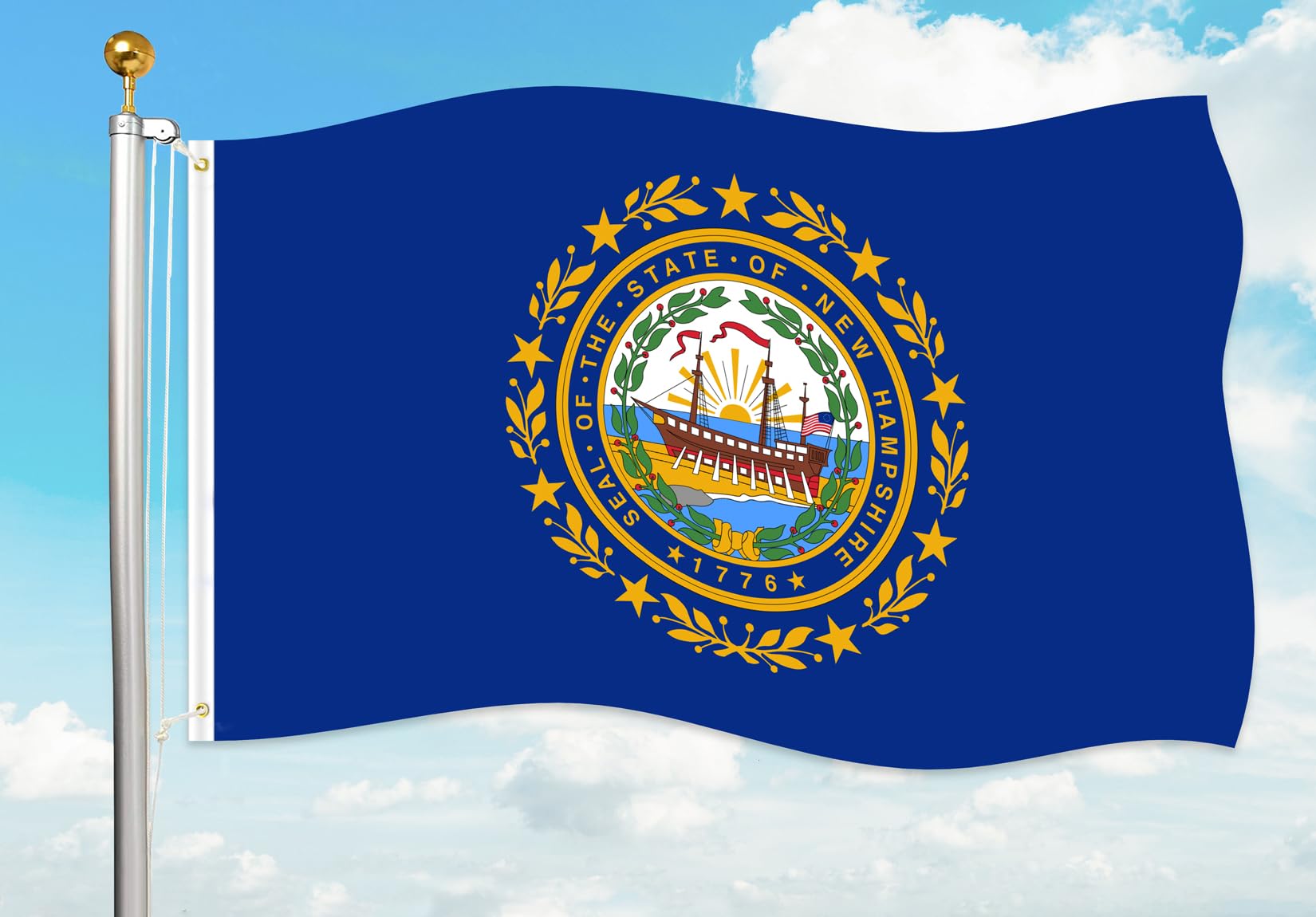
On July 1, New Hampshire completed the registration of HB639, a digital-asset bill that includes several market-friendly provisions. The law says local governments cannot restrict individuals from paying with digital assets, cannot impose additional taxes simply because digital assets are used, and cannot require money transmitter licenses for individuals running nodes, mining, or staking. It also states that such activity should not be treated as securities issuance.
The article argues, however, that the most important part of the bill is not the headline-friendly deregulatory language. Its most strategic clause is a final authorization allowing the state Supreme Court to establish a dedicated “blockchain disputes court” to hear related civil cases. In that reading, New Hampshire is not merely competing to be seen as a crypto-friendly state; it is trying to capture a more durable advantage by building specialized judicial infrastructure for on-chain disputes.
HB639 as New Hampshire’s third digital-asset move
HB639 was first introduced in January 2025, passed the House in April 2025, and after Senate revisions was not fully registered until July 2026, taking about a year and a half to complete. The legislative basis, according to the article, came from a report produced by the “Cryptocurrency and Digital Assets Commission” under former Governor Sununu.
New Hampshire had already positioned itself aggressively before HB639. It became the first US state to pass a strategic Bitcoin reserve law, HB302, allowing the state treasurer to allocate up to 5% of public funds into digital assets with a market capitalization above $500 billion. At present, only Bitcoin meets that threshold. Earlier this year, the state also launched a $100 million Bitcoin-backed bond plan, making it the first in the US to explore that type of capital markets instrument.
Viewed together, the article describes HB639 as New Hampshire’s third major card in digital assets. First came public-fund exposure to Bitcoin via HB302. Then came experimentation with Bitcoin-backed bonds. Now, with HB639, the state is moving to occupy the legal and judicial layer as well, attempting to secure an early-mover advantage in the next phase of crypto-related competition among US states.
Why the blockchain court matters: the Delaware benchmark
To explain the significance of a blockchain disputes court, the article points to the existing US corporate law map. Delaware currently hosts roughly 1.6 million registered companies, including about two-thirds of Fortune 500 firms. That dominance did not come mainly from low taxes. It was built on more than two centuries of legal development through the Court of Chancery, where expert judges rather than juries hear disputes and where a deep body of precedent provides a high level of predictability for companies and lawyers.
That predictability is itself an economic asset. In the article’s framing, Delaware monetizes judicial certainty just as much as it benefits from corporate law. But the strength of that system was recently tested. A Delaware Chancery Court judge invalidated Elon Musk’s $55 billion Tesla compensation package, citing conflicts of interest tied to his role as a controlling shareholder. The decision triggered real corporate migration: Tesla and SpaceX shifted their registration to Texas, while Neuralink moved to Nevada.
Other states responded quickly. Texas passed legislation in 2023 to establish its own business court system. Utah created a business and chancery-style court. Nevada also began pushing similar legislation. The article’s broader point is that capital does not necessarily move to wherever tax rates are lowest. Instead, when businesses choose where to incorporate, they often care deeply about who will decide disputes, how quickly cases can be resolved, and whether there is enough precedent to create confidence in outcomes.
Applying the same playbook to on-chain disputes
In that sense, New Hampshire is trying to apply the Delaware playbook to a new frontier. On-chain disputes still do not have a nationally dominant legal venue equivalent to Delaware in traditional corporate law. By authorizing a specialized blockchain disputes court before that market fully matures, New Hampshire appears to be betting that judicial specialization could become a decisive competitive advantage later.
The article suggests that this is the real target of HB639. The bill’s payment, tax, mining, node, and staking provisions are important, but they can also look like just another state-level deregulatory package. The court provision is what turns the law into something more ambitious: an attempt to shape where future blockchain-related civil litigation is heard and, over time, where digital-asset businesses may prefer to register or anchor their legal entities.
Wyoming as the closest precedent
New Hampshire is not inventing this strategy from scratch. The article points to Wyoming, which set up its own chancery-style court years ago for commercial and trust disputes, explicitly aiming to take some corporate registration business from Delaware. Wyoming also moved earlier than most states to target blockchain companies as a specific subcategory.
In 2019, Wyoming passed 13 blockchain-related laws in one sweep and has now enacted roughly 30 such measures in total, making it one of the most active crypto legislative jurisdictions in the US. In 2020, the state approved Kraken’s application to create the world’s first Special Purpose Depository Institution, or SPDI, known as Kraken Financial. That made it the first digital-asset company in US history to receive a bank charter recognized under both federal and state law, according to the article’s framing.
Wyoming’s lead was not maintained by a single license. It was reinforced by years of continuous legal work: clearly defining digital assets as property, providing statutory protection for private keys, and consistently staying ahead of other states in digital-asset policy. The article argues that this continuity is what ultimately made Wyoming’s model credible.
Kraken’s move shows how slowly legal infrastructure pays off
That long-term strategy produced a visible result in June 2025, when Kraken officially moved its headquarters from San Francisco to Cheyenne, Wyoming. Over the previous four years, Kraken had contributed $300,000 to crypto education programs at the University of Wyoming, co-hosted blockchain workshops, and received public support from US Senator Cynthia Lummis.
Even so, the article emphasizes that Kraken’s employees largely remained remote. The move was more about the legal entity and headquarters registration than a full physical relocation of the workforce. That distinction matters. From receiving the banking charter to formally moving its headquarters, the process took five years.
That timeline is central to the article’s thesis. Legal infrastructure does not usually produce immediate, cash-like results. Instead, it functions more like a long-dated option on future capital migration. And even when it pays off, the outcome may be legal relocation rather than a complete transfer of personnel and operations on the ground.
A longer contest than tax competition
Placed in the wider federal context, New Hampshire’s latest move fits into a broader state-level race. The article notes that in July 2025, Trump signed the GENIUS Act, allowing banks, non-bank institutions, and credit unions to issue their own stablecoins. In May of this year, Congress was also advancing the “American Reserve Modernization Act,” which would create a formal strategic Bitcoin reserve within the Treasury. Arizona and Texas have likewise been pursuing their own state-level Bitcoin reserve legislation.
Against that backdrop, New Hampshire is presented not as an isolated outlier but as one of the fastest-moving states in a nationwide contest for digital-asset positioning. Historically, interstate competition for business focused on taxes, subsidies, and land costs. Those tools, the article argues, have obvious ceilings: taxes can only be cut so far, and subsidies are constrained by public budgets.
Judicial infrastructure is different. Once a state accumulates enough precedent and enough judges with recognized expertise, its advantage can become much harder to replicate. That is why a single high-profile Delaware ruling could trigger legislative responses in several states, and why Wyoming’s legal strategy took years before translating into a headline headquarters move by Kraken.
The article concludes that digital assets have simply opened a new front in an old war. On-chain disputes do not yet have their own Delaware. The state that first builds sufficient case law and judicial specialization could eventually reshape how crypto firms choose their registration home, their legal venue, and their long-term regulatory alignment in the decade ahead.