

In a lawsuit that could rewrite the rules of digital asset ownership, the New York State Supreme Court has accepted a case that blends 19th-century lost property statutes with 21st-century cryptocurrencies. In March 2026, a plaintiff using the pseudonym Noah Doe, along with two unnamed Wyoming limited liability companies (ABC Corp and XYZ Corp), filed a complaint seeking a declaratory judgment that he is the rightful owner of 39,069 dormant Bitcoin addresses containing over 3.7 million BTC—worth approximately $293.5 billion at filing. Most shockingly, the list includes 21,744 addresses widely attributed to Bitcoin's mysterious creator, Satoshi Nakamoto, holding about 1.09 million BTC, valued at $83.7 billion.
The Digital Twist on Lost Property Law
The lawsuit rests on an audacious legal theory: Article 7-B of New York’s Personal Property Law, an old statute designed for physical lost items, can be applied to Bitcoin addresses. Noah Doe claims to have "found" these addresses, not by possessing private keys, but by compiling public addresses onto a USB drive and handing it over to the NYPD’s 17th Precinct—an act he equates to turning in a found object. To satisfy the notice requirement, he broadcast an OP_RETURN transaction on the Bitcoin blockchain and issued a press release, treating these as substitutes for contacting the original owners.
To hasten the process, an unnamed expert assessed each address's "as-is" value at less than $10. Under Section 257(2), items valued under $100 require the police to hold them for only three months before the finder can claim ownership after a one-year waiting period; even faster processes apply for items worth less than $20. Doe simultaneously invoked both pathways the statute provides, aiming for the shortest possible vesting of title.
Anatomy of the 39,069 Addresses
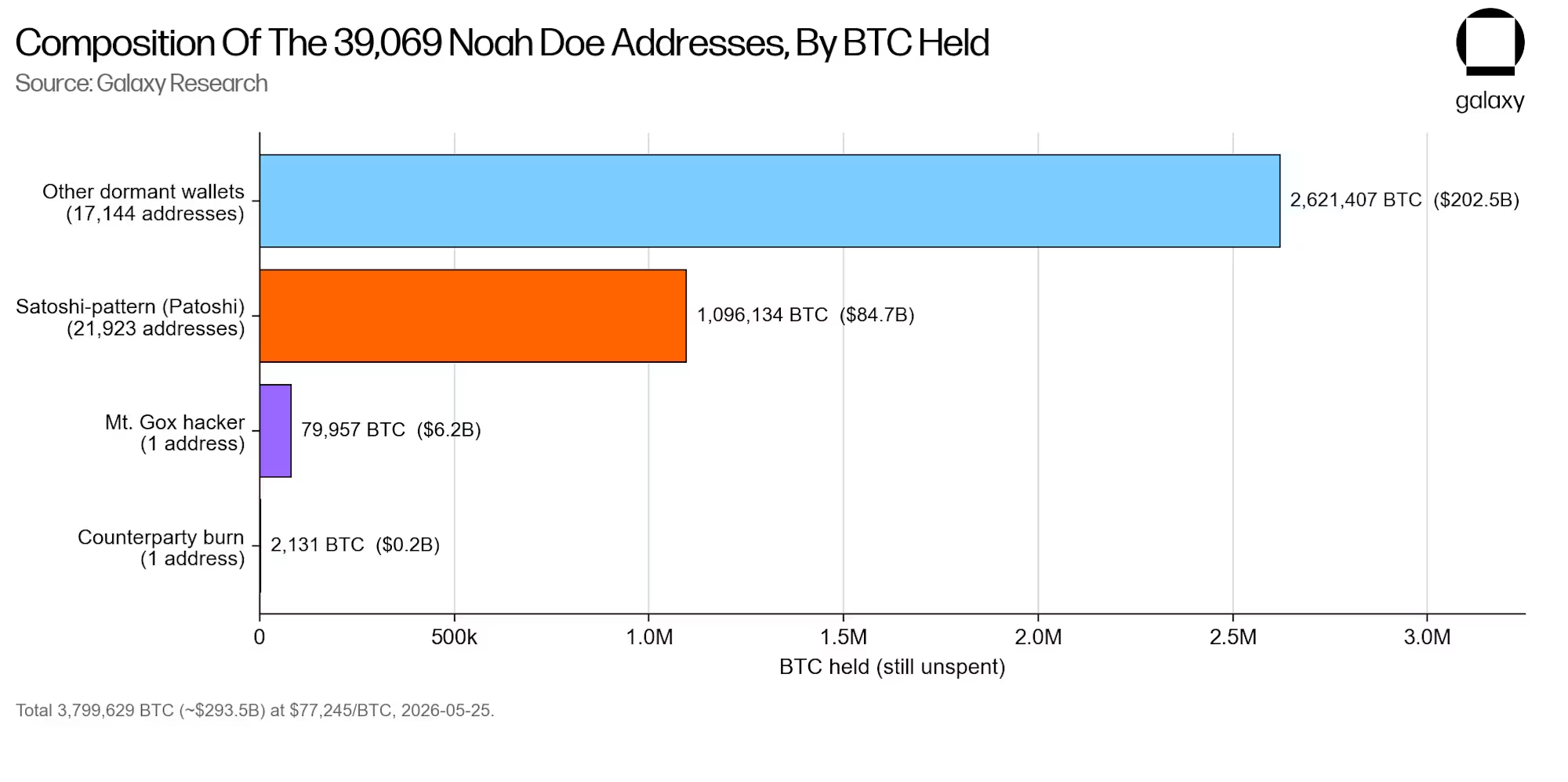
Galaxy’s research team analyzed the entire set using their full Bitcoin node and internal databases. As of May 25, 2026, the Noah Doe addresses collectively held 3,799,629 BTC, valued at around $293.5 billion. Holdings are sharply concentrated across distinct clusters:
Patoshi (Satoshi) addresses: 21,923 addresses containing 1,096,134 BTC ($84.7 billion). These early-mined coins are linked to Bitcoin’s creator via the distinctive "Patoshi" nonce pattern and have never moved.
Mt. Gox stolen funds (John Doe #1): One address holding 79,957 BTC ($6.2 billion), the proceeds of the 2011 Mt. Gox hack, untouched for over a decade and already the subject of years-long law enforcement tracing.

Provably unspendable burn address (John Doe #104): 2,131 BTC ($160 million) in an address for which no private key can ever exist by design—a recognized cryptographic dead-end.
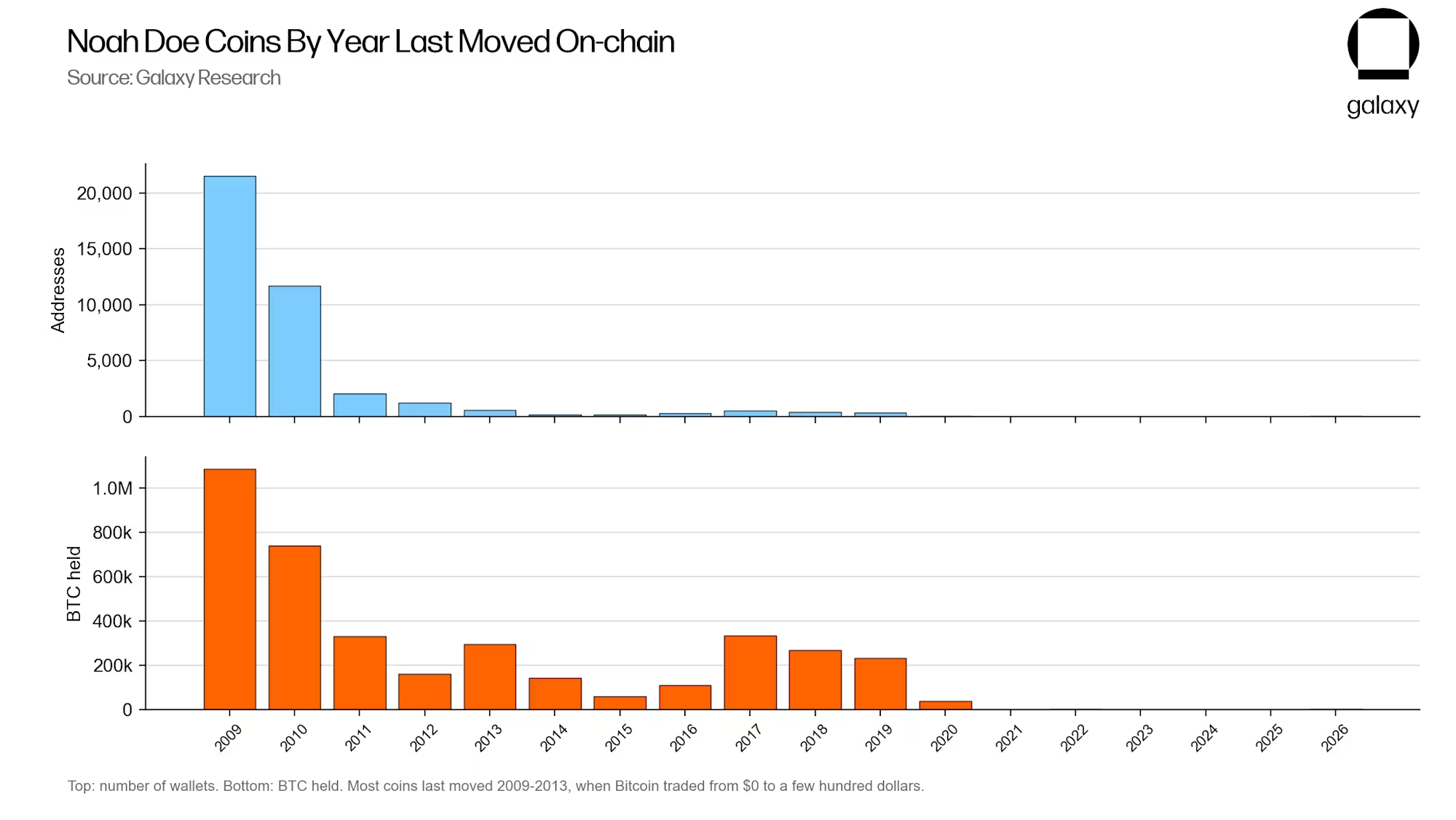
Other dormant whale addresses: 7,144 addresses with 2,621,407 BTC ($202.5 billion), representing early adopters and exchange-era leftovers, with last on-chain movement overwhelmingly clustered between 2009 and 2013.

Craig Wright’s Prior Claim
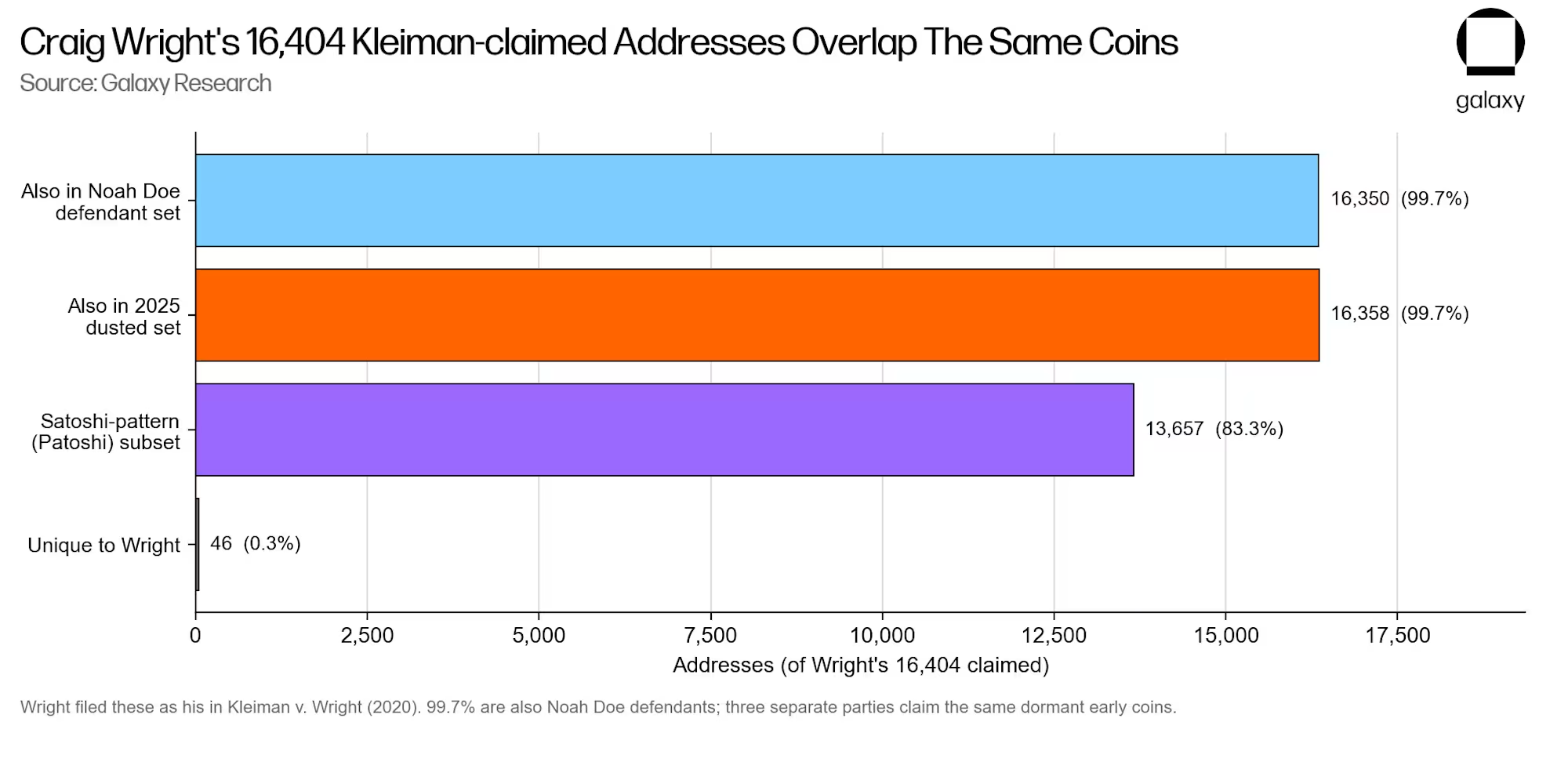
These addresses are far from unclaimed. During the 2018 Kleiman v. Wright case in Florida, Australian businessman Craig Wright submitted a list of 16,404 early block addresses he asserted were his own. Galaxy’s cross-referencing revealed substantial overlap between Wright’s claimed addresses and the Noah Doe set—underscoring that these addresses have been publicly contested for years and are anything but ownerless.
Fundamental Legal Flaws
The lost property framework simply does not fit digital bearer assets. The statute envisions a finder who physically possesses and delivers a tangible object. Noah Doe never held a single satoshi or private key; he merely read public addresses from an open ledger—something anyone can do. Handing over a USB stick with addresses is not the same as surrendering lost property. The law assumes the finder can return the item if the true owner appears; Doe cannot transfer these bitcoins to anyone—not the police, not the rightful owners. Losing a private key does not strip ownership rights, as demonstrated by the hundreds of real owners who have eventually moved long-dormant coins.
The valuation scheme is equally indefensible. The average holding per address is 97.25 BTC (about $7.5 million), and the median is 50 BTC ($3.86 million). To claim each address is worth less than $10 is a transparent artifice to force the case into the statute’s abbreviated timeline. Even more troubling, the expert who provided this figure remains unnamed, making a critical number that dictates the entire case timeline immune to scrutiny or challenge.
Anonymous Plaintiffs, Exposed Defendants
Noah Doe requests anonymity, arguing he fears being targeted as a large holder. Yet the very relief he seeks would force real address owners to publicly reveal themselves to defend their crypto. The two Wyoming shell companies, ABC and XYZ, also hide behind anonymity, flouting New York’s LLC Transparency Act, which mandates disclosure of beneficial ownership. The protection the plaintiff demands is precisely what he aims to strip from every defendant.

The Real Threat: Cloud on Title
The true danger of this case does not lie in the plaintiff literally seizing Satoshi’s coins. With the defendant addresses pseudonymous and not publicly served, a default judgment is nearly inevitable by the end of June 2026. What Noah Doe likely seeks is a New York court order that can be wielded as a "cloud on title." Should any of the targeted bitcoins ever move to a centralized exchange or custodian, the plaintiff could present this judgment and attempt to encumber the assets—potentially freezing them, triggering multi-year litigation, and forcing long-inactive holders to come forward and prove ownership, thereby destroying the very anonymity they’ve carefully guarded for decades. That leverage over regulated intermediaries is the prize worth fighting for, even if the coins themselves cannot be directly seized.