

Lost Property Law Meets the Blockchain
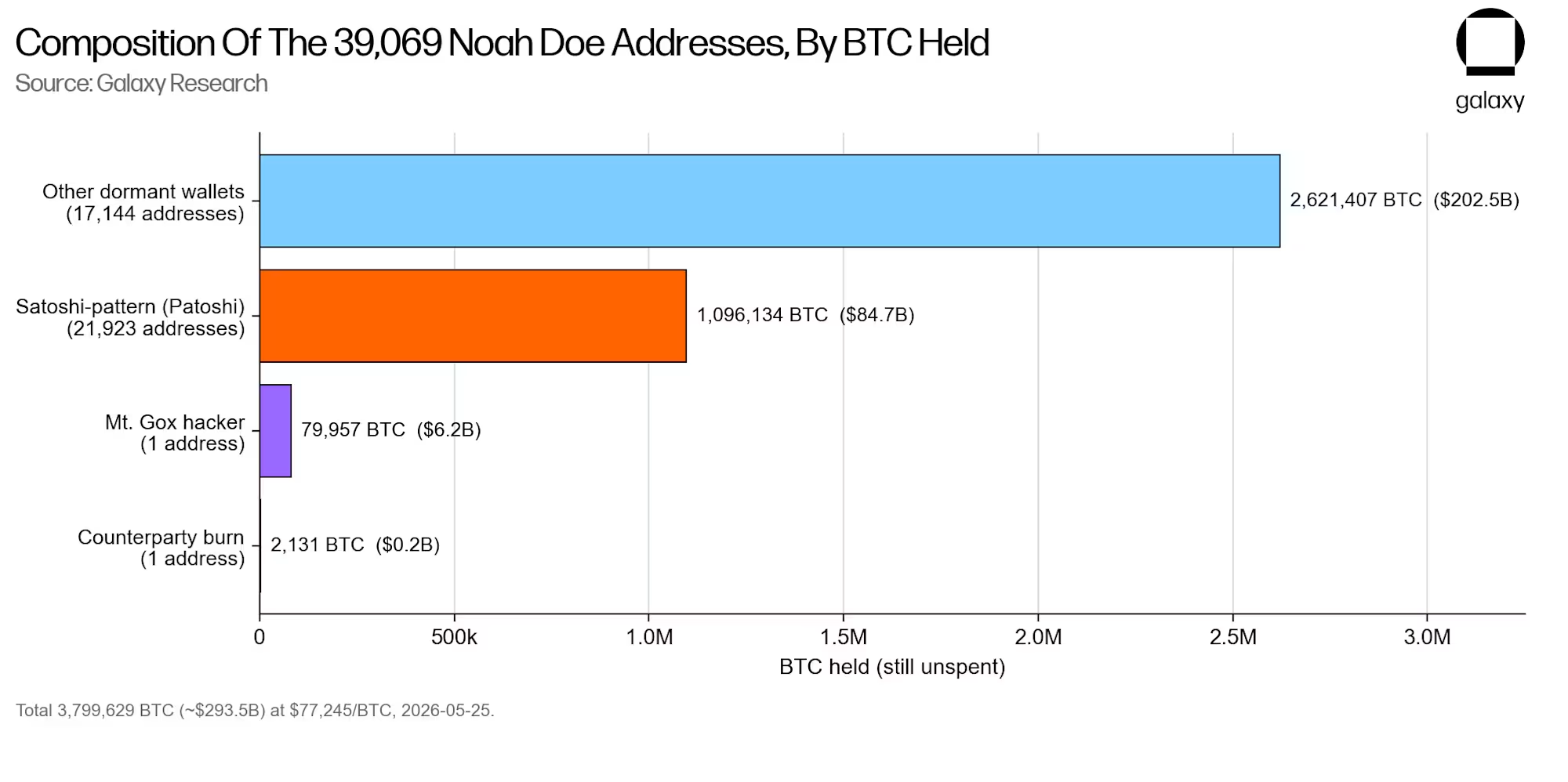
In March 2026, the New York State Supreme Court accepted an unprecedented lawsuit. A pseudonymous plaintiff, Noah Doe, along with two unnamed Wyoming LLCs (referred to as “ABC Corp.” and “XYZ Corp.”), petitioned the court to declare their ownership of all assets in 39,069 dormant Bitcoin addresses. At the time of filing, these addresses collectively held approximately 3.8 million BTC (worth about $293.5 billion). Among them, 21,923 addresses were identified as belonging to Bitcoin creator Satoshi Nakamoto via the “Patoshi” nonce pattern, containing around 1,096,134 BTC (over $84.7 billion). The legal basis is New York’s Personal Property Law Article 7-B, which governs found property, attempting to force an analog-era framework onto digital assets.
The plaintiff’s maneuver went as follows: Noah Doe submitted a USB drive containing only the public addresses (no private keys or proof of control) to the New York City Police Department, thereby satisfying the requirement to hand over found goods. Then, an OP_RETURN message was posted on the Bitcoin blockchain and a press release was issued, serving as a substitute for notifying the true owners. Next, an unnamed “independent expert” evaluated each address, concluding that their “as-is recoverable value” was less than $10, thus placing the case under a shortened procedure that requires police custody of only three months and a one-year vesting period. This sequence was carefully designed to pass public blockchain records off as tangible lost property.
What the “Found” Addresses Contain and Their Tangled History
Using a full Bitcoin node and internal research database, Galaxy categorized the 39,069 addresses:
—Satoshi addresses: 21,923 addresses with 1,096,134 BTC (~$84.7 billion), tied to Bitcoin’s creator through the Patoshi pattern and never moved since mining.
—John Doe #1: a single address containing 79,957 BTC (~$6.2 billion), originating from the 2011 Mt. Gox hack. These funds are known stolen property that investigators have tracked for years.
—John Doe #104: a single address with 2,131 BTC (~$160 million), provably unspendable because the address was designed without any private key—a “burn” address.

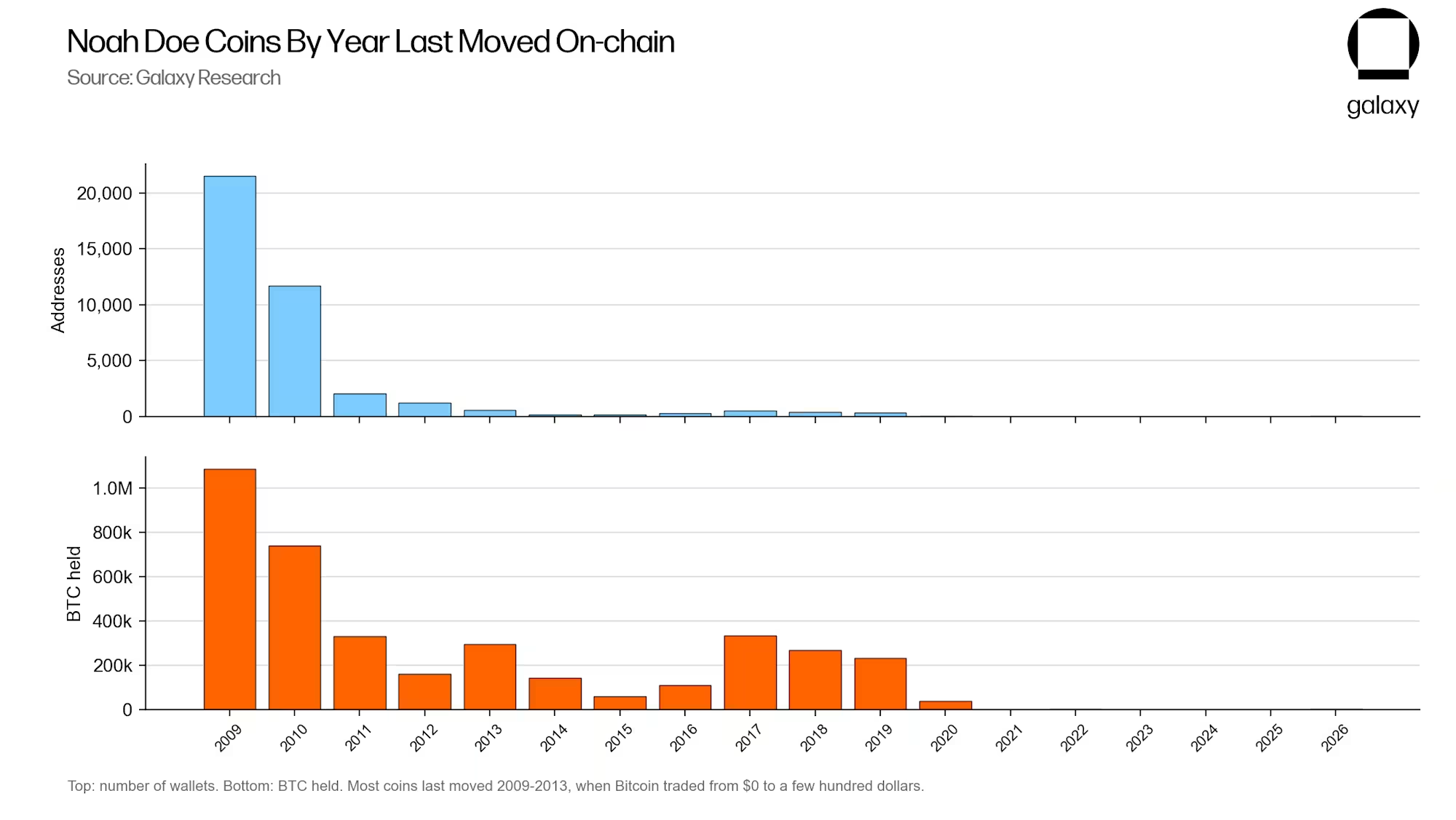
—Other early addresses: 7,144 addresses holding around 2,621,407 BTC (~$202.5 billion), containing assets from early adopters and exchange-era users. The vast majority of these coins last moved on-chain between 2009 and 2013.
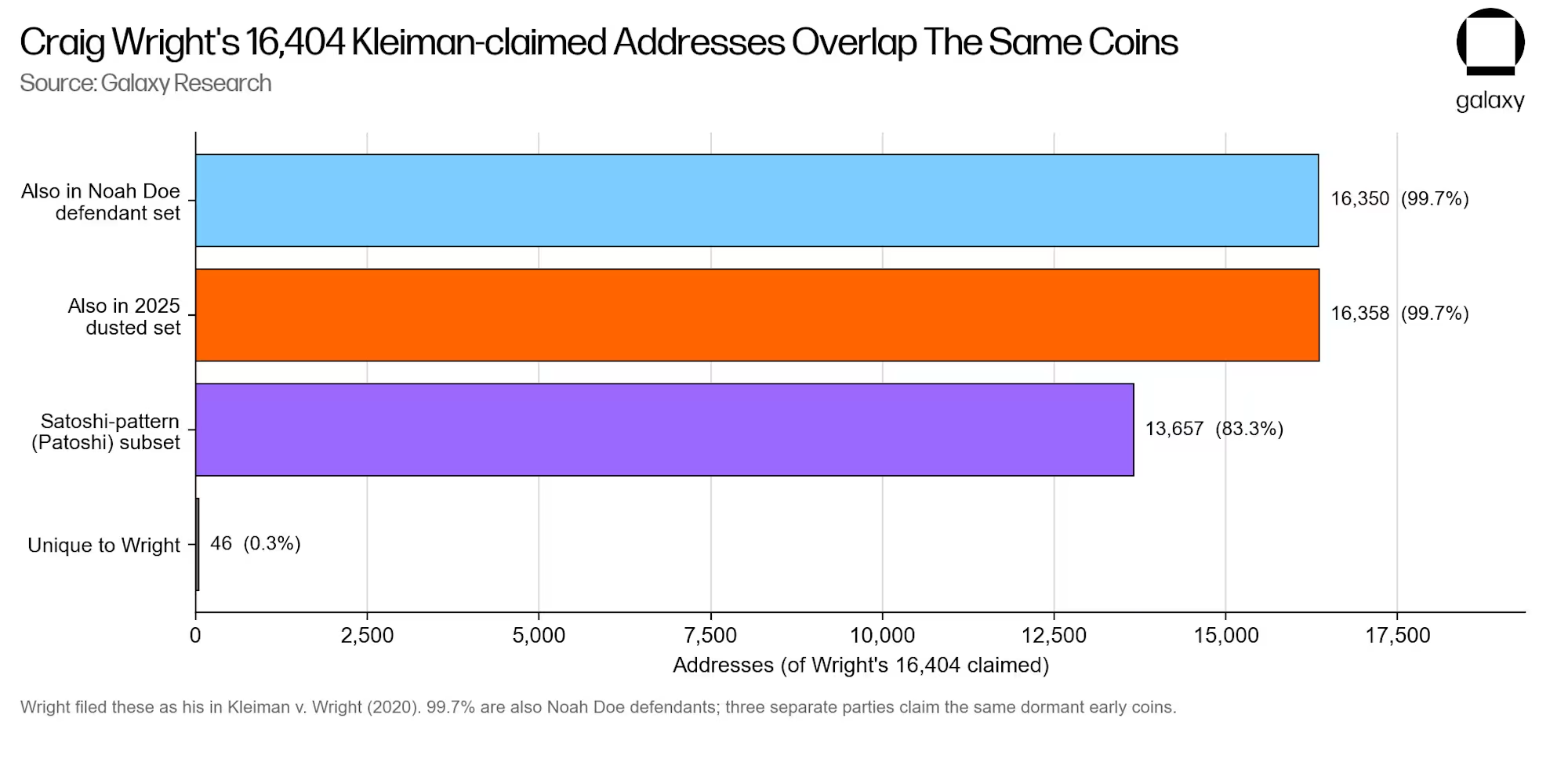
Importantly, these addresses are not entirely unclaimed. During the 2018 Kleiman v. Wright case in the Southern District of Florida, Craig Wright submitted a list of 16,404 early block addresses that he asserted belonged to him. Galaxy cross-referenced Wright’s list with Noah Doe’s and found significant overlap. Even though Wright’s claims were ultimately rejected, the overlap shows that many of these addresses had already been involved in public disputes, undermining the “ownerless” premise.

Legal and Logical Flaws in Abundance
On a fundamental legal level, the lost property statute is designed for tangible items that the finder physically possesses and turns over to police. Noah Doe never held any bitcoin or private keys; he merely read publicly available addresses on the blockchain. Handing over a USB drive with addresses is not the same as handing over the property itself. Moreover, losing a private key does not extinguish the true owner’s ability to move the coins—anyone who holds the key can still transact at any time. Many supposedly lost Bitcoin wallets have been reactivated by their owners years later.
The valuation claim is another glaring issue. The unnamed expert’s “under $10” figure was used to fast-track the case, yet the average Noah Doe address holds 97.25 BTC (about $7.5 million) with a median of 50 BTC (~$3.86 million). This extreme undervaluation seems designed solely to manipulate the legal timeline. Moreover, if the “as-is recoverable” logic were applied uniformly, virtually all self-custodied Bitcoin would be valued at zero—a conclusion that contradicts the very act of the plaintiff’s costly litigation.

Anonymity concerns also arise. Noah Doe requested to remain anonymous out of fear of being targeted as a major holder, but the relief sought would force the true owners to come forward publicly to defend their property. The two Wyoming LLC shell companies, which have no physical person to threaten, were also allowed to proceed under pseudonyms while claiming hundreds of billions of dollars in assets, a stance that clashes with New York’s LLC Transparency Act requiring disclosure of beneficial ownership.
The Real Danger: A Title Defect Weapon
New York courts are generally reluctant to entertain novel and sweeping claims, especially regarding disputed property. Because all defendant addresses are pseudonymous and deliberately not disclosed, a technical default judgment is almost certain once the service period expires around the end of June 2026. However, the court is unlikely to quickly grant the full declaratory relief the plaintiff seeks. The true risk is not that the plaintiff can seize Satoshi’s coins or any other bitcoins from these addresses, but that a favorable ruling would function as a “title defect” document. If any of the coins later appear on centralized exchanges or regulated custodians, the plaintiff could present the New York judgment to those intermediaries and seek to place a lien on the assets, potentially leading to frozen funds and multi-year litigation. The real holder would then be forced to expose their identity to prove ownership—exactly the de-anonymization they have spent years avoiding.

In this sense, the lawsuit’s danger lies in its potential use as leverage against regulated intermediaries, even if it cannot change the on-chain ownership itself. For holders of dormant addresses, understanding this legal gambit is the first step toward mitigating its threat.