
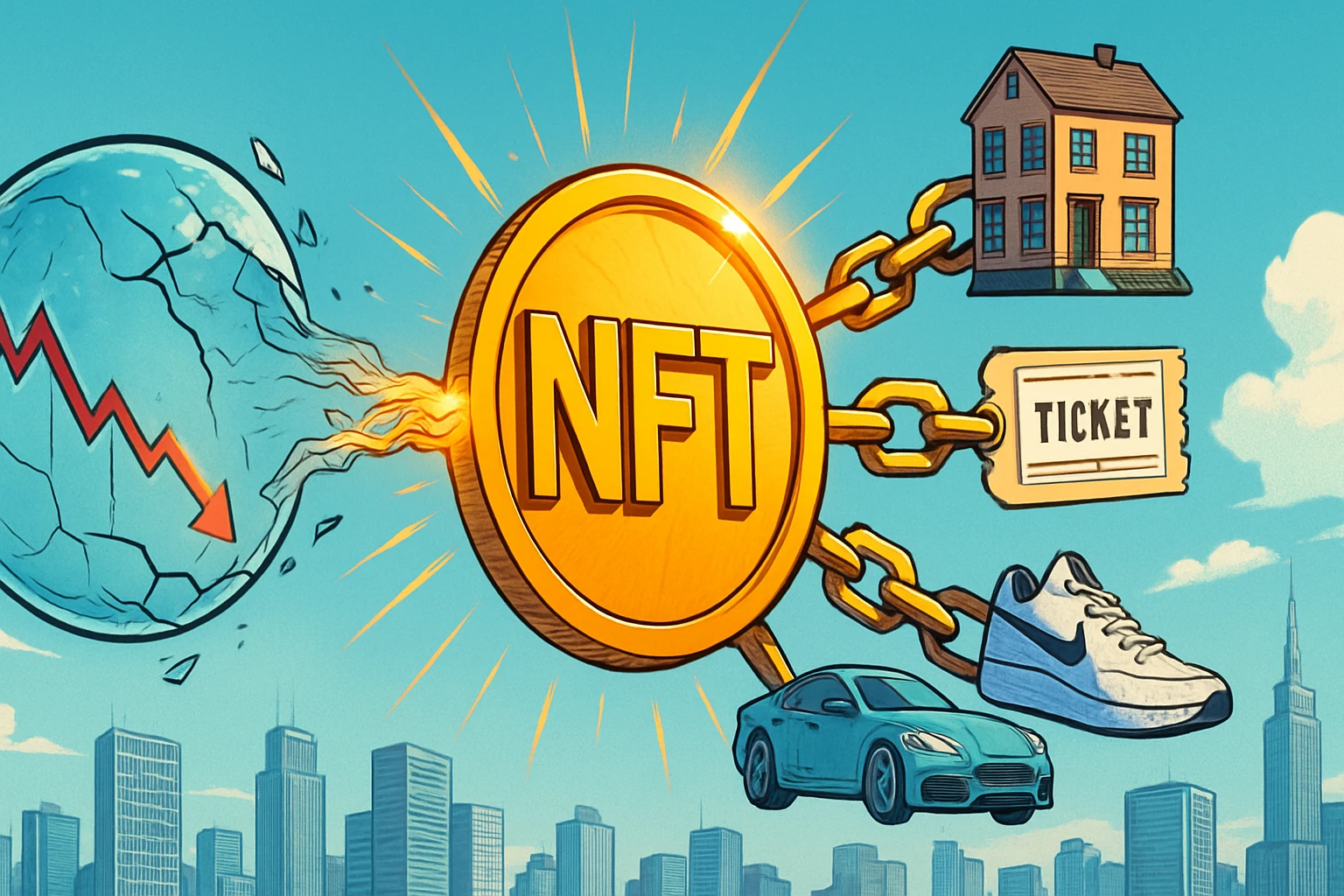
The NFT market has been in retreat for years, and the scale of the decline is now hard to ignore. CoinGecko data cited in the source shows total NFT market capitalization fell from about $17 billion in April 2022 to roughly $2.4 billion by the end of 2025, a drop of about 86%. In 2025 alone, the market shrank from around $9.2 billion in January to year-end levels, down 68% over the year. The pressure has hit industry events as well: NFT Paris canceled its developer conference on January 5, saying the market crash had damaged operations beyond what aggressive cost cuts could absorb.
The contrast with the boom years is stark. Beeple’s Everydays: The First 5000 Days sold at Christie’s for $69.3 million, while CryptoPunks and other collections traded at prices that helped define the NFT mania. What followed was not a sudden collapse, but a long unwind that stripped away speculative premium.
Supply expanded while sales and pricing moved lower
CryptoSlam data in the source points to a severe supply-demand imbalance. NFT supply in 2025 was up 35% from the 1 billion units recorded in 2024. Over the past four years, the total number of NFTs rose from 38 million to 1.34 billion, an increase of roughly 3,400%. More assets came to market, but buyer demand did not keep pace.
Sales volume moved the other way. Total NFT sales in 2025 reached about $5.63 billion, down from $8.9 billion in 2024, a decline of about 37%. As minting became easier and liquidity spread across more collections, the market shifted toward frequent low-priced trades. Average sale prices dropped from $124 in 2024 to $96 by the end of 2025. During the 2021-2022 frenzy, average prices were above $400, which puts the current level at roughly one-quarter of that period.
Blue-chip collections were not spared. CryptoPunks floor prices fell to about 30 ETH from a 125 ETH peak in 2021, down 78%. BAYC dropped from about 30 ETH to around 5 ETH, a decline of 83%. Azuki slid from roughly 12 ETH to 0.8 ETH, down 93%.
Marketplaces are changing course as the old model weakens
Trading venues have had to respond to the same contraction. OpenSea, once the dominant NFT marketplace, saw monthly platform revenue fall from $50 million to $120 million during the peak period to less than $1 million. The company has since said it will move beyond being only an NFT marketplace and become a broader on-chain hub under a “Trade Everything” model, covering physical collectibles and tokenized digital assets. It also confirmed plans to issue a token.
Other platforms are under similar strain. Blur’s TVL has continued to weaken, and its token price is down 99% from its high. Magic Eden, which built its name on Solana NFTs, launched a token after a year of operations, but trading activity began to contract as NFT conditions softened and airdrop expectations were priced in. Its token price has fallen more than 98% from peak levels. X2Y2, one of the older NFT marketplaces, has shut down entirely, with the team moving into AI.
Some projects are building brands instead of relying on token hype
One of the clearest exceptions is Pudgy Penguins. The project’s approach has centered less on token mechanics and short-term speculation, and more on turning a digital IP into a consumer brand with offline distribution. Under CEO Luca Netz, the project combined IP licensing with physical merchandise, placing products in more than 10,000 retail outlets globally, including Walmart, Target, and Walgreens.
According to AInvest, that model generated about $50 million in annual revenue. During Christmas 2025, Pudgy Penguins also spent about $500,000 on a giant animated display at the Las Vegas Sphere. The campaign avoided crypto terminology and NFT branding, presenting the characters as a mainstream family-friendly IP. Over the following 14 days, the collection’s floor price rose 25% and trading volume increased by about 33%.
A similar shift can be seen elsewhere. In May of last year, Yuga Labs transferred the IP rights of CryptoPunks to the nonprofit Infinite Node Foundation, aiming to separate the collection from short-term price speculation and place more emphasis on long-term art preservation and cultural stewardship.
RWA links and ticketing show where NFTs are still being used
Outside brand building, NFTs are also being used as an infrastructure layer for real-world assets. Courtyard.io stores authenticated physical Pokémon cards in insured vaults and tokenizes them as NFTs. In a 30-day period near the end of 2025, the platform processed more than 230,000 transactions and generated about $12.7 million in sales. The appeal here is not image-based speculation; it is the combination of physical backing and on-chain transferability.
Functional ticketing is another example. FIFA has introduced “priority purchase right” NFTs for 2026 World Cup ticket sales. In this case, the NFT serves as a verification tool designed to reduce scalping premiums and pricing fraud in secondary markets. Used this way, NFTs are no longer expected to create standalone value. They act as a proof layer for ownership, transfer, access, and verification.
What has faded is the idea that NFTs could keep minting value through narrative alone, detached from any underlying use or real-world anchor. What remains is more practical: licensed IP, consumer products, tokenized collectibles, and ticketing systems. The speculative stage has cooled, but the tool itself is still being adapted for narrower, more functional roles.