
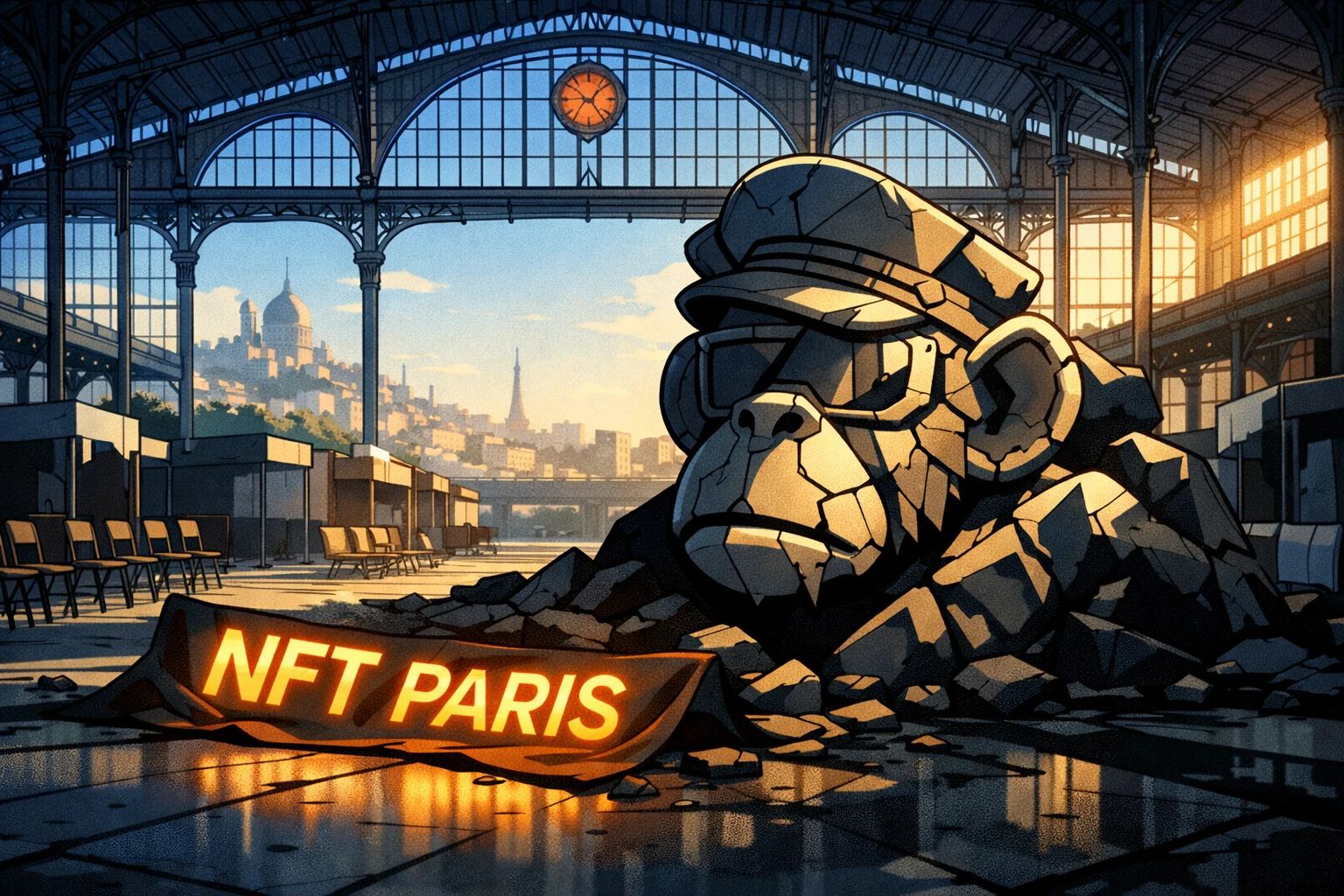
NFT Paris, a long-running blockchain event in France, has been canceled ahead of its scheduled January 5 opening at La Villette. Organizers said the decision was driven by a market collapse and mounting cost pressure. They told attendees that standard ticket purchases would be refunded within 15 days, but some business partners said they received a different message.
The event had built a reputation over four editions and was set to host a large in-person gathering. Its cancellation immediately affected 20,000 tickets and more than a hundred sponsored booths. In its statement, the team said it had cut costs sharply and spent months preparing, yet still failed to make this year’s event viable. The organizers also apologized to people who had already booked flights and hotels.
Ticket refunds promised, sponsor payments caught in contract terms
Public-facing ticket prices ranged from $231 to $1,161, and the refund promise applied to those buyers. Sponsors and B2B partners appear to be in a different position. Generative artist Serc said a budget exemption clause in the sponsorship agreement had been triggered, with organizers arguing that sponsor funds had already been used for non-recoverable expenses and could not be returned.
One sponsor shared part of an email citing Clause 12 of the agreement. The message said non-refundable costs tied to the event had exceeded the total sponsorship amount received, leaving no refund available at this stage. That shifted attention from the cancellation itself to a more basic issue: how thin liquidity has become across NFT-linked businesses.
NFT weakness stands out as Bitcoin recovers
The timing of the cancellation also lines up with a wider split in the digital asset market. According to the report, Bitcoin has stayed on a recovery path since late 2025, while NFT trading activity remains depressed. Total NFT sales volume is down about 95% from the 2021 peak. Blue-chip collections including Bored Ape Yacht Club and CryptoPunks have continued to fall, showing how capital has rotated away from pure speculation.
The same change is visible at the platform level. The report said OpenSea has been moving closer to a general aggregation model, a sign that user demand no longer supports the traffic levels seen during the boom years. NFT Paris did not create that trend, but its shutdown puts the downturn in plain view.
Web3 event economics are under pressure
From ticket sales to sponsorship revenue, venue costs and event execution, the cancellation shows that Web3 conferences are tightly tied to market cycles. A model once supported by community hype, profile-picture projects and sponsor budgets is now facing a much harsher test. For NFT Paris, four years of brand recognition did not shield the event from this year’s breakdown.
The report also said capital is now focusing more on areas that can connect with AI, tokenized assets, or real-world industries. Projects and events relying mainly on NFT narratives are finding it harder to secure budget commitments. The cancellation of NFT Paris is the latest example of that shift.