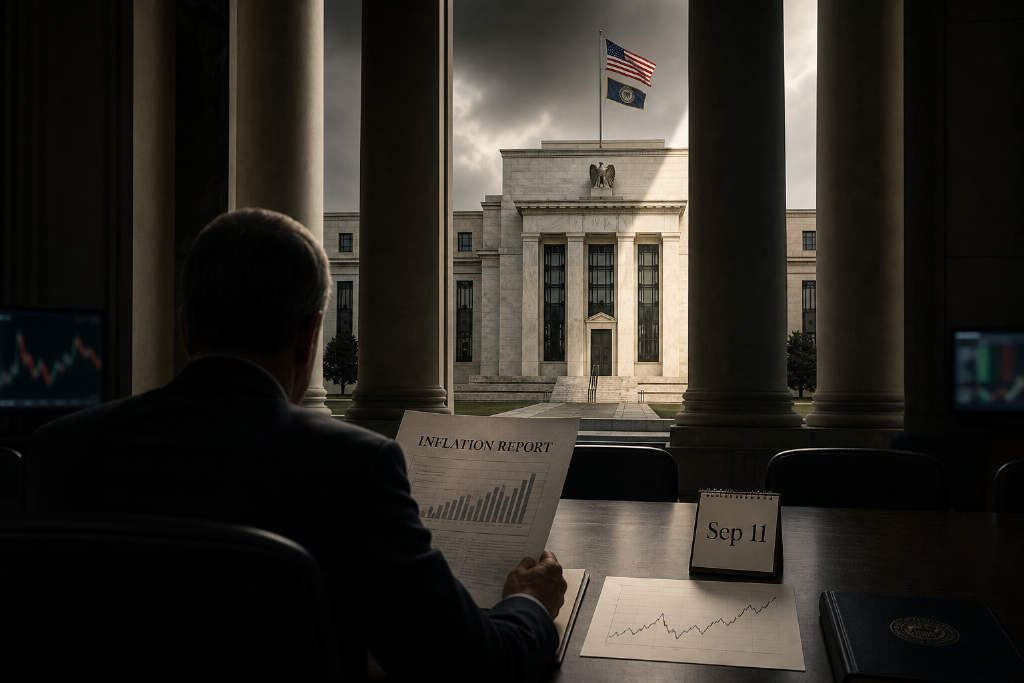
BlockBeats reported on Aug. 31 that Nick Timiraos, widely known on Wall Street for his close coverage of the Federal Reserve, said Fed Chair Waller sent a distinctly hawkish message at last week’s global central banking conference. According to Timiraos, Waller argued that current financial conditions are hard to describe as restrictive, while recent inflation improvement is still not enough to show that underlying price pressure has materially eased. That shift has led markets to raise expectations for a September rate hike, with some institutions even looking for one increase in September and another in December this year. Timiraos said the August Consumer Price Index, due on Sept. 11, will be the key data point for the Fed’s September decision. If inflation keeps cooling, the Fed may have grounds to leave rates unchanged. If CPI strengthens again, Waller could face heavier policy pressure, making it harder to justify standing still. He also noted that divisions inside the Fed are widening, after three officials dissented at the last policy meeting and other officials publicly backed further tightening.
BlockBeats reported on Aug. 31 that Nick Timiraos, often seen on Wall Street as a closely watched Fed reporter, said Federal Reserve Chair Waller delivered a clearly hawkish signal at last week’s global central banking conference.
Timiraos said Waller argued that current financial conditions are difficult to define as restrictive, and that recent improvement in inflation is still not enough to prove that underlying price pressures have materially eased. Markets have since raised expectations for a Fed rate increase in September, and some institutions now expect one hike in September and another in December this year.
August CPI seen as the key trigger for September
Timiraos said the August CPI report, scheduled for release on Sept. 11, will be critical to the Fed’s September policy decision. If inflation continues to cool, the central bank may have reason to keep rates unchanged. If CPI turns stronger again, Waller could face greater policy pressure, making a decision to hold rates steady harder to defend.
Divisions inside the Fed are widening
At the same time, differences between hawkish and dovish officials inside the Federal Reserve are becoming more visible. Three officials dissented at the last policy meeting, while other officials have publicly supported additional rate hikes.
Markets are also watching inflation data alongside tariffs, the situation in the Middle East, and the AI investment boom to see whether they add to price pressure.
This article was originally published by Bit.Fan. For more cryptocurrency news and market insights, visit www.bit.fan. Disclaimer:
The market information, project data, and third-party content displayed on this platform are for industry information sharing only and do not constitute any form of investment advice or return commitment.
Cryptocurrency trading carries high risks. Users should fully assess their risk tolerance and make independent decisions. All profits, losses, and legal responsibilities are borne by the users themselves.