

Reform UK leader Nigel Farage has come under fresh pressure after The Sunday Times reported that he accepted undisclosed benefits from George Cottrell, a longtime adviser linked to a crypto gambling venture and previously convicted in the United States on a fraud-related offense. According to the report, the support included staffing, security, transport and accommodation provided before Farage entered Parliament in July 2024.
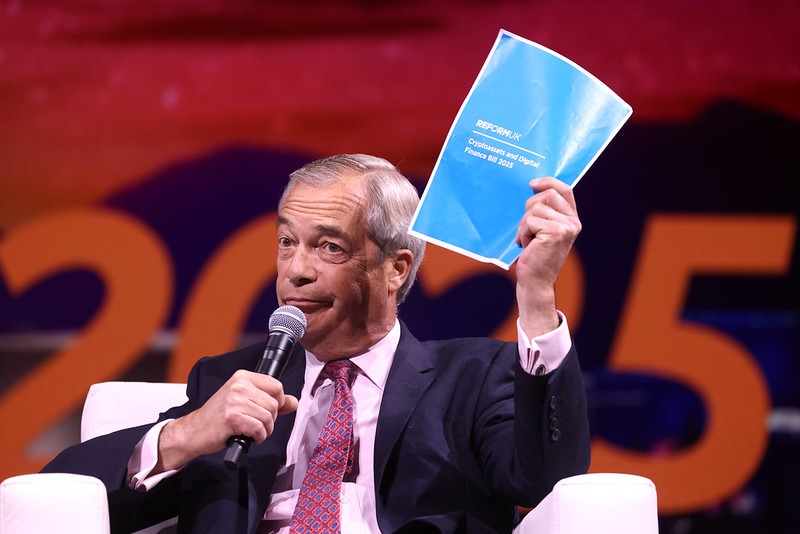
Farage responded on Sunday by saying he had “followed the rules” in relation to the benefits and described the newspaper’s reporting as a “hit job.” His defense centers on timing: he argues that the support was received before he became an MP, and therefore did not trigger the same disclosure obligations that would apply to sitting members of Parliament. Even so, the report has intensified questions around his financial and political ties to figures connected to the crypto sector.
Report details support tied to George Cottrell
According to The Sunday Times, Cottrell provided Farage with drivers and a security detail made up largely of former soldiers. The newspaper also said Cottrell recruited and paid for three staff members who helped manage Farage’s social media operations. In addition, since the election, Cottrell has reportedly allowed Farage to use a rented five-story property near Buckingham Palace.
A Reform source told the paper that Farage almost always stayed at his own home and did not routinely use that property. After entering Parliament, Farage reportedly registered only one benefit connected to Cottrell: support worth less than 9,300 pounds, or about $12,400, covering travel, security and accommodation for an event in Belgium.

Cottrell’s background has made the matter especially sensitive. He is involved in Tether.bet, an offshore gambling site that uses the Tether stablecoin, USDt. In 2016, he was arrested in the US and charged with 21 offenses for his role in a money laundering scheme. Under a plea agreement, he pleaded guilty to a single wire fraud charge and served eight months in prison.
Second crypto-linked disclosure controversy for Farage
The latest allegations arrive as Farage is already facing scrutiny over another crypto-connected financial relationship. In May, a parliamentary standards watchdog opened an inquiry into whether he failed to declare a 5 million pound gift, approximately $6.7 million, from crypto billionaire Christopher Harborne. Harborne is also a part owner of stablecoin giant Tether.
Farage has argued that he did not need to declare that payment because it was made before he became an MP and was intended to cover personal security costs. However, critics say the pattern raises broader questions about transparency, especially given Farage’s prominent support for the crypto industry while serving in Parliament.
The political context has also shifted. In March, the UK Treasury temporarily banned political donations made in cryptocurrencies, reflecting a tougher regulatory posture toward digital assets and their role in public life. That backdrop has increased pressure on lawmakers to fully explain any relationships with major crypto donors or business figures tied to the sector.

Separate complaint targets alleged CBDC lobbying
The Sunday Times report follows another controversy reported by The Guardian on Friday. Labour MP Phil Brickell, who chairs a parliamentary anti-corruption group, urged the standards commissioner to investigate whether Farage lobbied the Bank of England to soften its stance on a central bank digital currency, or CBDC.
Brickell said Farage had “claimed credit for persuading the Bank to soften its position” on a state-backed digital currency. He further argued that Harborne could stand to benefit from opposition to a public digital currency, because a state-backed alternative could compete with privately issued stablecoins.
In Brickell’s words, the issue is no longer just about cryptocurrency policy in the abstract. It is also about whether an MP who has received millions from a single individual should be advocating policies that might increase the value and profitability of that donor’s investments. Those comments have added a lobbying dimension to what was already a disclosure and ethics debate.

Farage and Reform have openly backed crypto policy
Farage and Reform UK have positioned themselves as strongly pro-crypto. Last year, the party published draft legislation aimed at making the UK “the world’s premier hub for cryptocurrency.” Reform also became the first British political party to accept donations in Bitcoin, underscoring how central digital asset policy has become to its political branding.
Farage has separately proposed cutting capital gains tax on crypto from 24% to 10% and has called on the Bank of England to establish a Bitcoin reserve. Those proposals have helped him build a reputation as one of the most crypto-friendly figures in UK politics, but they also sharpen concerns over whether donor relationships could intersect with policy advocacy.
For now, the reports do not establish wrongdoing in a legal sense, and Farage continues to deny any breach of rules. Still, the combination of undisclosed-benefit allegations, ongoing standards inquiries and questions over crypto-linked influence is likely to keep him under political and regulatory scrutiny in the weeks ahead.