
August employment and inflation data will be the key inputs for the Federal Open Market Committee's September decision.
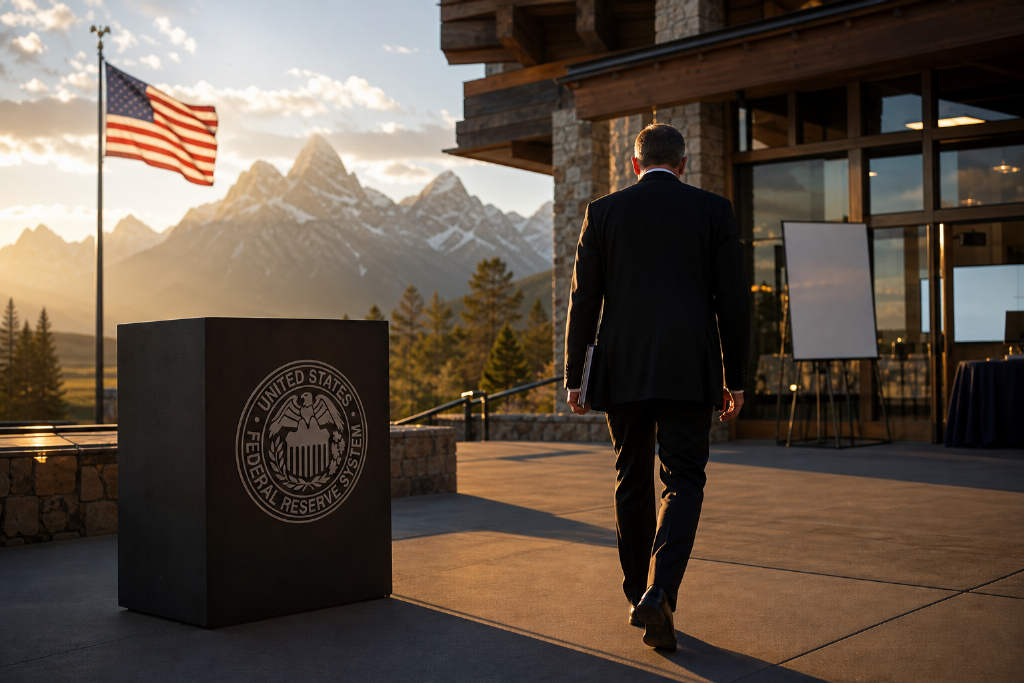
According to a TechFlowPost report summarizing Nomura's Aug. 28 U.S. economic weekly, Federal Reserve Chair Warsh delivered a hawkish debut at Jackson Hole but did not clearly signal a near-term rate increase. Nomura said Warsh placed clear emphasis on the inflation target and suggested that policy may need to respond if inflation does not fall fast enough.
Nomura estimates August core PCE rose about 0.2% month over month. In the firm's view, that would still support a wait-and-see stance from the Fed, though sensitivity to incoming data has risen sharply.
Warsh downplayed recent dovish readings in inflation and labor data
Nomura said Warsh was unconvinced by recent softer signals in inflation and employment data. He played down the importance of favorable recent inflation prints and said he does not believe the trend has meaningfully improved.
He also unexpectedly minimized the significance of slower wage growth, saying wages have long failed to serve as an effective indicator of the underlying inflation trend.
On inflation expectations, Warsh said they look stable overall, but added that 「economic history is littered with measures of inflation expectations that looked strong and durable until they no longer were」 and said they 「must be watched closely.」
Warsh also acknowledged the confusion in markets after the July press conference and tried to explain why the Fed wants to avoid forward guidance. He withdrew his earlier suggestion that limited guidance could generate 「unfiltered」 market signals, saying market participants will always try to anticipate the Fed's next move.
Three key data points still support a Fed hold
August jobs report is expected to show resilience
Nomura expects nonfarm payrolls to rise by 60,000 in August, arguing that July's negative reading was likely temporary. Private payrolls are projected to increase by 45,000, while government hiring is expected to rebound after weakness in local government education employment in July.
The unemployment rate is forecast to fall to 4.0%, which would mark the lowest level since January 2025. Average hourly earnings are expected to rise 0.4% month over month, helped in part by a favorable calendar effect in August.
The report also said initial jobless claims remain low, ADP employment is stable, and the services PMI employment index climbed to its highest level since January 2025. Warsh described the labor market as 「quite stable」 and 「consistent with full employment.」
Capital spending continues to accelerate
On investment, core capital goods shipments rose 1.4% month over month in July, while June growth was revised up to 2.4%. The three-month average growth rate was the fastest since January 2022.
Capital goods imports posted the largest monthly increase on record. Nomura said data from trading partners suggest technology-related imports may rise further.
With personal consumption and business investment both coming in stronger than previously expected, Nomura raised its third-quarter GDP tracking estimate to 3.6% from 2.7%.
Upside inflation risks remain in focus
Nomura expects core inflation to slow gradually in the second half of the year, driven mainly by easing tariff pressure, lower oil prices, and slower wage growth. It forecasts fourth-quarter core PCE inflation at 3.3%, or about 3.1% after accounting for Bureau of Economic Analysis methodology changes.
Still, the firm flagged several upside risks. It said the AI investment boom could add to price pressure, while AI-driven shortages in storage chips and supply-chain disruptions caused by the Iran war could trigger a second round of goods inflation.
Nomura keeps its hold call, with risks tilted to tighter policy
On policy, Nomura expects the Fed to remain on hold indefinitely, with risks tilted toward tightening. The report said most officials are comfortable with a wait-and-see stance.
It also said Warsh's Jackson Hole speech was more hawkish in tone than markets had expected, but still stopped short of delivering a clear signal of a near-term rate hike. Benign inflation data would be enough to keep policy unchanged.
Even so, uncertainty around the policy path has increased materially. Nomura's reading is that Warsh currently prefers to watch the data rather than act immediately, but rate hikes could return to the agenda if disinflation stalls.
This article is a summary and interpretation by Chaoxiang Research of a third-party brokerage report from Nomura Securities dated Aug. 28, 2026, combined with public market information. The ratings, target prices, earnings forecasts, and related judgments cited in the text are the views of the brokerage analysts and represent only the position of their institution, not that of Chaoxiang Research, and do not constitute investment advice.
Markets involve risk, and decisions should be made independently. This article should not be used as a basis for buying or selling any security.