
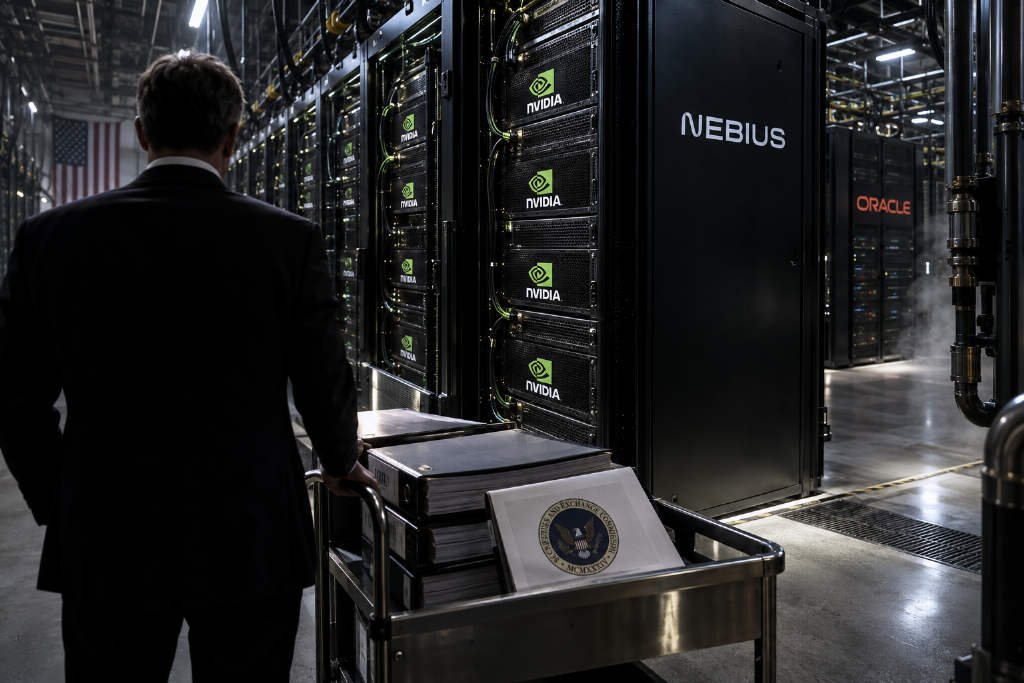
WuBlockchain’s WhiteLine Daily said the AI compute market is still showing signs of pricing strength, even as the money required to expand capacity keeps rising. The digest pointed to OpenAI’s projected cash burn over the next five years, Nscale’s widening losses ahead of a U.S. IPO, pressure on debt tied to an Oracle-linked data center project, and another round of GPU rental price increases from Nebius.
OpenAI projects negative free cash flow of $278 billion from 2026 to 2030
According to the Financial Times, OpenAI expects cumulative free cash flow of negative $278 billion between 2026 and 2030. The report said the main driver is the scale of spending needed for model training, inference, and related infrastructure.
OpenAI projects revenue of about $36 billion in 2026 and $350 billion by 2030. Over the same five-year period, spending on compute and related infrastructure is expected to total about $856 billion. The figures cited in the report are internal projections, not realized results.
The Financial Times also said OpenAI has recently begun discussing a new fundraising round with investors. WhiteLine Daily’s takeaway was that even with fast revenue growth, operating cash generation would still fall short of planned compute investment, leaving the company reliant on external financing.
Nscale files for a U.S. IPO, with first-half revenue up 1,252%
UK-based AI cloud and data center company Nscale filed IPO registration documents with the U.S. Securities and Exchange Commission on Sept. 18 and plans to list on the New York Stock Exchange.
The filing showed first-half revenue of $140.6 million, up 1,252% from a year earlier. Net loss widened to $1.02 billion from $368.9 million in the same period last year. The report noted that the loss included fair-value adjustments and other non-cash items, so it should not be treated as a direct cash outflow.
As of Aug. 31, Nscale disclosed about $103.4 billion in total value across effective and signed contracts, but only about $2.6 billion of that amount was already effective. The company also said its largest customer accounted for 52% of first-half revenue. WhiteLine Daily noted that total contract value spans multiple future years and does not equal current revenue, while future growth still depends on delivery under large customer contracts.
$18 billion in loans tied to Oracle-linked data center project faces pressure
The digest also said roughly $18 billion in loans tied to Project Jupiter, a data center project in New Mexico leased by Oracle, is under pressure.
Syndicated banks including Santander and Jefferies have marked the debt at 89 to 91 cents on the dollar, and efforts to distribute the loans to a broader group of investors have stalled. The project is part of Oracle’s compute partnership with OpenAI, and banks had previously provided financing for construction.
The report said investor concerns have been aggravated by Oracle’s rising debt load, a credit rating downgrade, and local construction resistance facing the project. Oracle and the banks involved did not comment on the report. WhiteLine Daily said the stalled loan distribution means banks may have to hold more Oracle-related debt on their own books, showing that financing strain in AI data centers has reached lenders as well.
Nebius raises some GPU rental prices for the second time in three months
AI cloud provider Nebius said it will raise on-demand rental prices for some Nvidia GPUs starting Oct. 1. It is the second increase in three months.
The H100 price will rise from $3.85 to $4.50 per GPU hour, an increase of about 17%. The H200 will move from $4.50 to $5.40, up 20%. B200 and B300 pricing will increase to $8.50 and $9.50, respectively. The adjustment also covers some CPU and memory resources.
Reuters reported that Nebius recently signed four customer contracts with an average value of more than $1 billion, while rival CoreWeave also said pricing on newly signed compute contracts had increased. WhiteLine Daily added one caveat: the latest changes apply to on-demand quotes for specified regions and models, while long-term reservation customers can still receive discounts. That means the quoted price increases should not be read as a direct proxy for company-wide revenue growth.
WhiteLine Daily’s main takeaway
The digest summed up the day’s theme this way: GPU rental prices are still moving higher, but the capital required for compute expansion is becoming larger as well. Nebius has lifted on-demand pricing again, OpenAI expects $278 billion in cumulative free cash flow outflows over five years, and debt tied to Oracle’s data center project is trading at a discount and proving harder to distribute. Demand is still sending pricing signals, but whether projects can secure financing, stay on schedule, and turn capacity into revenue will shape the next phase of expansion.