
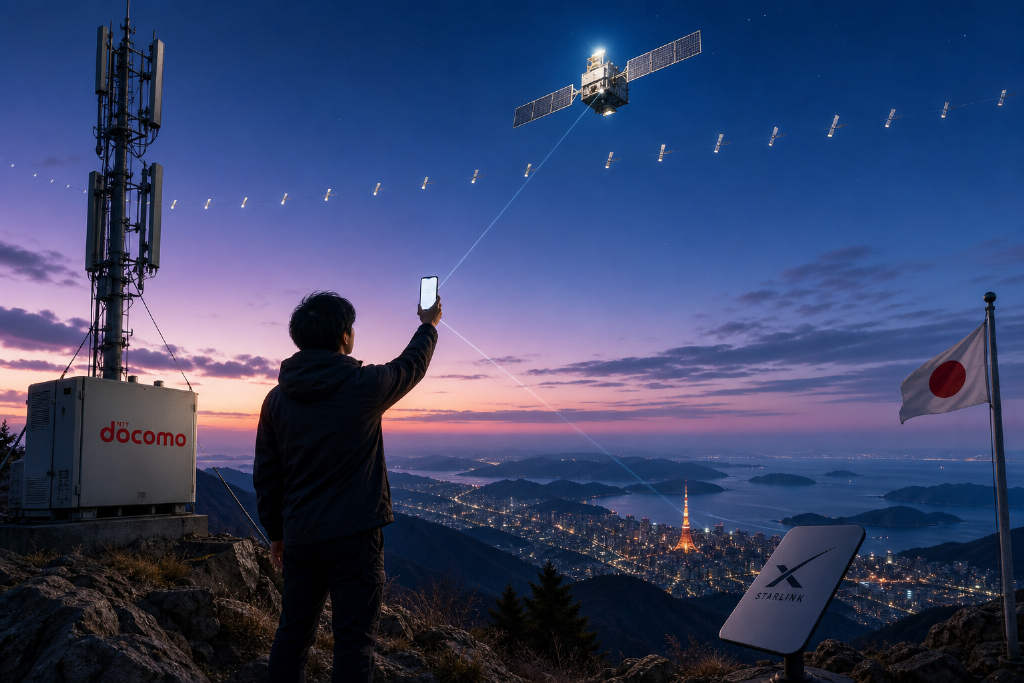
NTT Docomo has reached an upgrade agreement with Starlink Japan and plans to adopt SpaceX’s next-generation Starlink Mobile V2 satellite system, with a broader rollout of its Docomo Starlink Direct service scheduled for 2028. The plan is meant to extend connectivity to places where ground-based mobile coverage is unavailable, including mountain areas, remote islands, and offshore locations, allowing smartphone users to access internet services and place calls.

Docomo plans to add Starlink Mobile V2 to expand service functions
According to ABMedia, NTT Docomo said it signed an agreement with Starlink Japan, the Japanese subsidiary of U.S. space company SpaceX, to introduce the Starlink Mobile V2 satellite. The current docomo Starlink Direct service mainly supports outdoor text messaging and a limited number of designated applications.
After the next-generation satellite system is added, the service is set to support voice calls, web browsing, and direct connectivity for Internet of Things, or IoT, and machine-to-machine, or M2M, devices. That would allow users to remain connected even in mountain zones, outlying islands, and at sea, where terrestrial mobile communication base stations do not provide coverage.
Service launched on April 27 and reached 6.5 million users by late July
Docomo’s Starlink offering, branded as Docomo Starlink Direct, launched on April 27. It is available free of charge to all NTT Docomo subscribers, including users on the Ahamo plan. As of the end of July, the service had accumulated 6.5 million users in Japan within three months of launch.
Direct-to-smartphone satellite services are expanding globally
Satellite connectivity for smartphones has become a fast-growing communications segment for telecom operators globally. T-Mobile US launched a satellite text messaging service with SpaceX in 2024, while Apple had already integrated Emergency SOS via Satellite into the iPhone lineup.
In Japan, KDDI launched a Starlink-based satellite communications service in January last year. SoftBank, for its part, has been pushing ahead through a partnership with U.S.-based AST SpaceMobile.
Hardware compatibility remains a constraint
The report noted that direct-to-cell satellite service still requires compatible hardware. At present, Docomo Starlink Direct supports only a limited range of smartphones.