
Nanyang Technological University (NTU) in Singapore is pitching its Master of Science in Blockchain (MSBT) as a hands-on path for professionals who want to build Web3 tech from the ground up instead of just consuming whatever tools the industry throws at them.
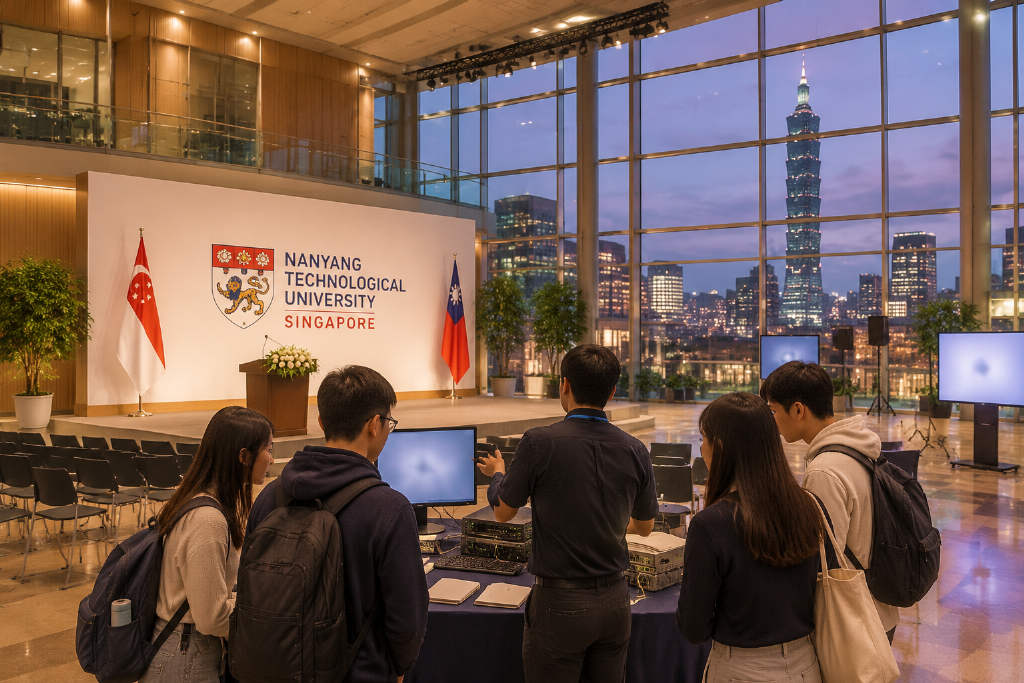
On November 6, NTU rolled out the program at an information session held alongside the “Linking the Future: Blockchain Industry Trends and International Talent Summit Forum” at National Taipei University of Technology in Taiwan. The NTU Centre for Computational Finance (NTU-CCTF) hosted the event, with National Taipei University of Technology and the Taiwan Blockchain University Alliance helping organize it. Speakers included Fan Shu-Kai, Dean of the College of Management at Taipei Tech, MSBT program director Li Yi, and NTU adjunct lecturer Dr. Song Ying, who oversees the Capstone project.
NTU-CCTF was launched in April 2022 as a university-level center under NTU’s Graduate College. Li explains that the center exists as part of Singapore’s national push into fintech and advanced technologies, and is meant to link industry, academia and government instead of leaving each siloed. The center rests on three pillars: research, education and community. Research follows a “lab-over-centre” model, meaning companies fund joint labs operating under the center’s umbrella. MSBT sits inside the education pillar and started running in 2023.
Li calls MSBT the first fully built-out blockchain master’s program in the Asia-Pacific region. The aim is not to churn out graduates who just know how to operate existing platforms; the idea is to train people who can pull apart what they learn, recombine it, and push out the next wave of blockchain technology.
The program requires 30 Academic Units (AU) to graduate. NTU’s official information says core courses carry 3 AU, run for 12 weeks and include 39 teaching hours, while electives carry 1.5 AU and run for six weeks. Full-time students can finish in as little as one year by studying across three consecutive semesters, with a maximum duration of 2.5 years. Part-time students typically need between two and four years. Most classes start after 6:30 p.m., so people with full-time jobs can actually attend without blowing up their work schedules.
The curriculum hangs on three main components:
- Blockchain Fundamentals (core): introductory blockchain technology and cryptography, distributed systems, smart contract security, plus blockchain privacy and scalability.
- Blockchain Development (elective, engineering focus): blockchain solutions and smart contracts, decentralized application (DApp) development, software project management and AI-related scenarios.
- Blockchain Management (elective, business focus): token economics, emerging topics in fintech, blockchain business applications, blockchain ethics and law, and blockchain finance.
Li is blunt that shipping a real blockchain application is more than “learn to code and done.” Developers need to make sure systems are secure, trustworthy, and actually solve a problem anyone cares about. So students on the technical track are expected to stack up security courses, not skip them. Business-focused students, on the other hand, have to understand how tech collides with society, regulation and institutions, not just token charts.
One alumnus gave concrete examples from the coursework: building an Algorand-based website that lets users mint NFTs, including front-end work, wallet integration and smart contracts; a mini DApp that handles deposits and transfer records; on-chain certificate verification; and lending and anonymous voting DApps. These assignments make it clear the program wants students to handle end-to-end implementation, not just toy snippets.
One of MSBT’s standout features is the Blockchain Innovation Project, better known as the Capstone. The project carries 3 AU and runs for at least six months. NTU’s website lists it as a one-year project and points out that it is not compulsory. Each Capstone team involves NTU-CCTF, MSBT students and an industry partner.
Dr. Song says that even though the Capstone carries the same credits as a core course, he strongly urges students to take it because it’s useful whether they want to start a company, look for a job or move into research. The project runs through four stages:
- Initiation: NTU-CCTF publishes official project guidelines, and corporate partners submit letters of intent that spell out what they need.
- Selection: NTU-CCTF holds a project briefing; students submit resumes, and companies pick candidates they want to work with.
- Execution: students and companies agree on project terms and start working. Academic supervisors and industry mentors guide the team together, and students must deliver the project plus a mid-term report within roughly six months.
- Closure: students submit a final report and present their results. Companies and supervisors grade the work using evaluation forms.
There are two ways into Capstone projects. In the first path, the center screens and offers projects directly to students. In the second path, which looks a lot like an internship, students go to companies themselves and pitch projects, though the bar is higher. Slides at the event listed partners such as Mastercard, the Ethereum Foundation, Polkadot, HashKey Capital and Kaia. Song added that some projects come from companies in China and the United States, so students have to get used to cross-border and cross-time-zone collaboration.
Tuition is heavy. NTU’s AY2026-27 schedule puts total MSBT tuition, including tax, at S$65,748.80, plus a S$50 application fee.
For full-time students, the MSBT Postgraduate Scholarship offers several options:
- ASEAN Award: up to S$30,000, limited to applicants from ASEAN member countries.
- Study Award (Gold): up to S$15,000, open to all nationalities, aimed at candidates with strong academic performance and leadership.
- Study Award (Silver): up to S$10,000, for applicants with excellent grades and industry or entrepreneurial experience.
- Study Award (Bronze): up to S$5,000, for students with good academic records and clear potential.
For Taiwanese applicants, the Gold Study Award can cover up to S$15,000 of tuition if they meet the criteria.
On admissions, Li explains that applicants must hold a good bachelor’s degree in a computer-related discipline, or a bachelor’s degree in any field plus at least two years of programming work experience. Graduates from programs not taught in English must submit TOEFL iBT scores of 100 or above, or IELTS scores of at least 6.5.
At the same time, she is clear that the program is not a walled garden reserved for computer science majors. Applicants from other disciplines can get in if they have relevant internships or professional experience. Two Taiwanese alumni make the point. Both come from humanities backgrounds, one with a philosophy degree. He hesitated to apply because he had no programming experience, but eventually sent in his application and was admitted. The other also had no coding background before enrollment but, after a year in the program, was able to serve as team leader on the final project, assigning front-end, back-end and smart contract tasks.
The alumni boiled down their advice to two main points. First, they recommend actively joining local hackathons, teaming up with engineering classmates to build portfolios and maybe pocket some prize money. Second, they urge students to make full use of the English-speaking environment in Singapore, which they see as a strong chance to practice spoken English instead of just reading.
Li also shared employment outcomes for MSBT graduates. The data covers 50 graduates from the 2024 and 2025 fall cohorts, as of June 2026.
By location, 76% of graduates work in China, 20% in Singapore, 2% in Kuala Lumpur and 2% in Hong Kong.
By industry, 60% work in technology, software and AI; 12% in blockchain, Web3 and digital assets; 10% in banking and finance; and 6% in government, education and research. For 12% of graduates, employment data is not tracked.
Salary bands in Singapore dollars look like this: 18% earn under S$3,000 per month; 48% earn between S$3,001 and S$5,000; 32% earn between S$5,001 and S$10,000; and 2% earn more than S$10,001.
Li points out that most students now come from mainland China, so many head back there after graduation, while around 20% stay in Singapore. She doesn’t sugarcoat the local market: finding a job in Singapore is not easy, even if there are comparatively more openings. Anyone planning to stay long term has to secure a work visa.
According to Singapore’s Ministry of Manpower, the minimum monthly salary for an Employment Pass is now S$5,600, or S$6,200 for financial services. From January 1, 2027, minimum salaries for new Employment Pass applications will rise to S$6,000, or S$6,600 for financial services.
So who should seriously look at MSBT? The two alumni think that anyone interested in Web3 and technology, and willing to spend long hours writing code, can apply. Before deciding, they suggest getting your hands dirty: learning to use centralized exchanges (CEX) and DeFi platforms, studying how crypto assets and blockchain are used by institutions, and figuring out your own interests and preferred roles. They also advise thinking hard about lifestyle preferences, because heavy coding and international collaboration can be exhausting and not everyone wants that grind.
Once you’re in, they recommend building networks early: get to know classmates, join campus clubs and show up at blockchain events across Singapore. Their argument is simple—what you learn in class and the network you build are both equally important.
The application window for the August 2027 intake runs from September 1, 2026 to February 26, 2027. There is also a November intake, with applications typically open from March to the end of May each year. Prospective students can find full details on NTU’s official MSBT program page.
This article draws on coverage by ABMedia titled “Do You Need to Code to Enter Web3? A Look at NTU’s Blockchain Master’s Tuition and Career Outcomes in One Go.”





