
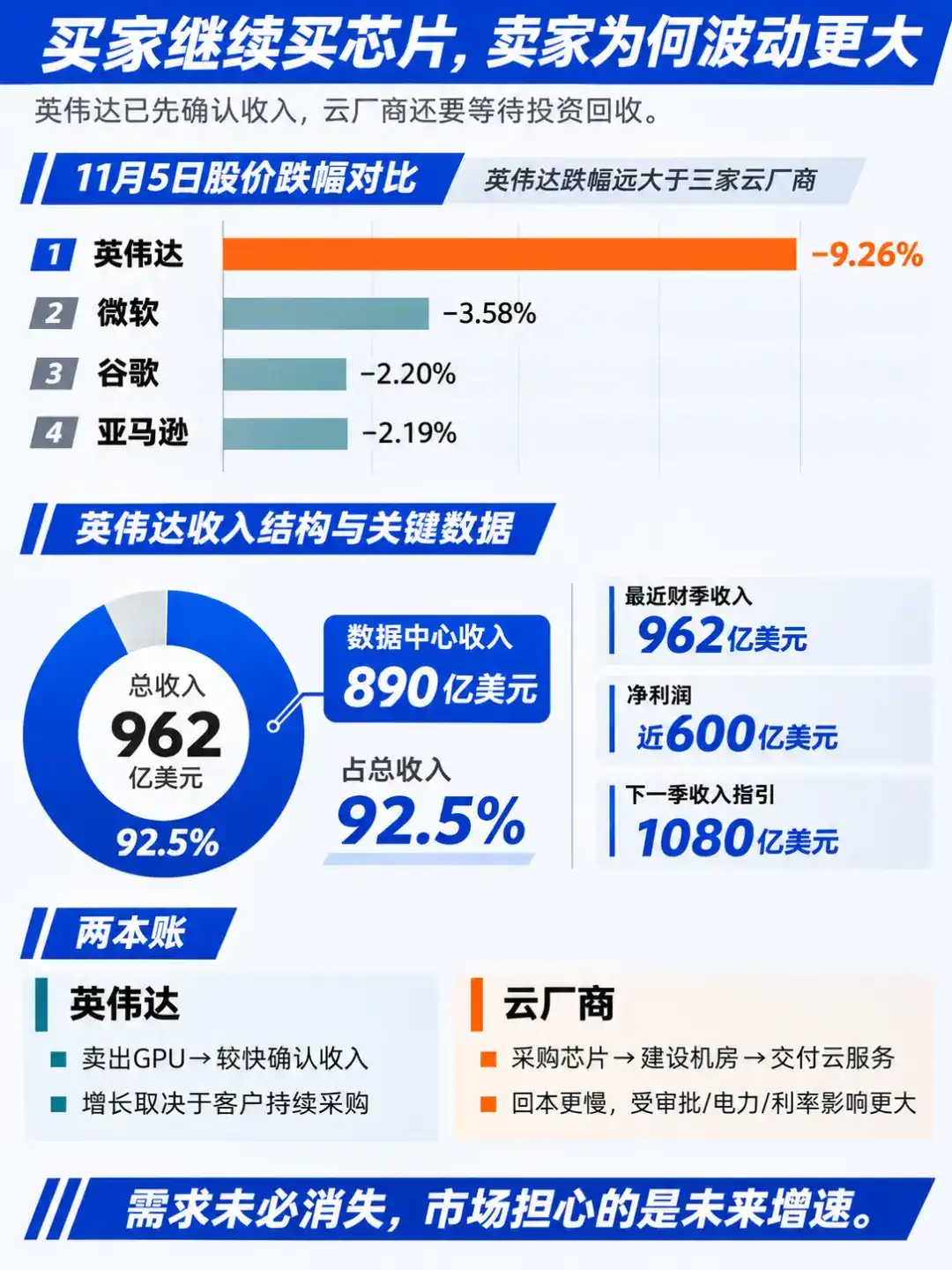
US midterm election results have forced investors to rethink the cost, timing and regulation of the artificial intelligence buildout. On Nov. 5, the so-called Magnificent Seven lost about $1.04 trillion in combined market value. Apple slipped 1.53%, Tesla plunged 10.77%, and Nvidia fell 9.26%, wiping out more than $440 billion in one session. Nvidia’s drop was two to four times deeper than the declines at major chip buyers such as Microsoft, Alphabet and Amazon.
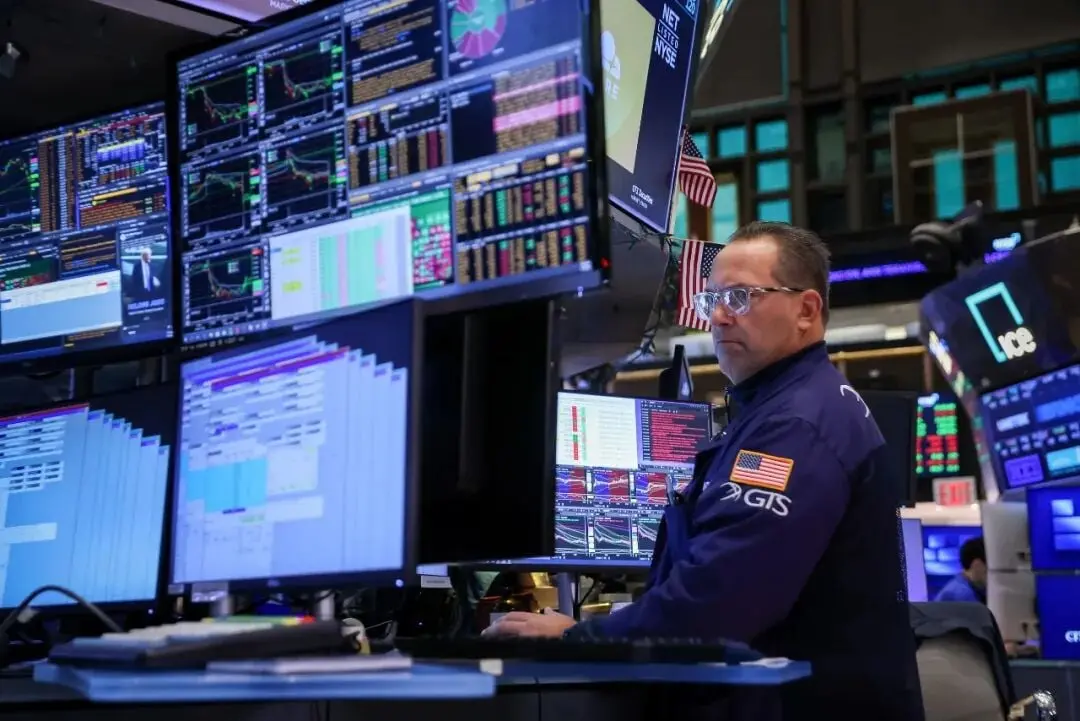
The market initially reacted positively after Democrats won control of both chambers of Congress on Nov. 3. By Nov. 5, that response had reversed. Investors began weighing the possibility of tighter AI rules and slower data-center construction under the new Congress and at the state level. The Nasdaq Composite fell 5.52% that day.
Technology shares recovered on Nov. 6. The Nasdaq rose 1.09%, Nvidia gained 2.78% and AMD jumped about 11%, while Apple and Microsoft continued to fall. The Nasdaq still ended the week down 3.4%.
Except for Tesla, the major companies’ operating fundamentals had not deteriorated at the same pace as their share prices. Nvidia’s revenue doubled year on year, Apple posted a record for the comparable period, and cloud operations at Microsoft, Alphabet and Amazon continued to grow, as did Meta’s advertising business.
Economist Song Qinghui said policy uncertainty and anxiety over AI investment returns had reinforced each other. Valuations at the largest technology companies already assume strong AI growth, but the companies’ heavy spending has not yet produced equivalent profits.
Data-center delays would hit Nvidia first
Microsoft, Alphabet, Amazon and Meta all increased spending on data centers and other infrastructure in the third quarter. Their capital expenditure grew much faster than operating cash flow. Every large infrastructure order can become revenue for Nvidia. If buyers slow their spending, the durability of Nvidia’s growth becomes the central question.
The answer starts with whether data centers can be completed on schedule. After the election, investors were not only asking whether AI investment would generate adequate returns. They were also asking whether federal and local rules could slow new construction. Nvidia is more exposed to that risk than cloud operators because its revenue depends heavily on downstream purchases.
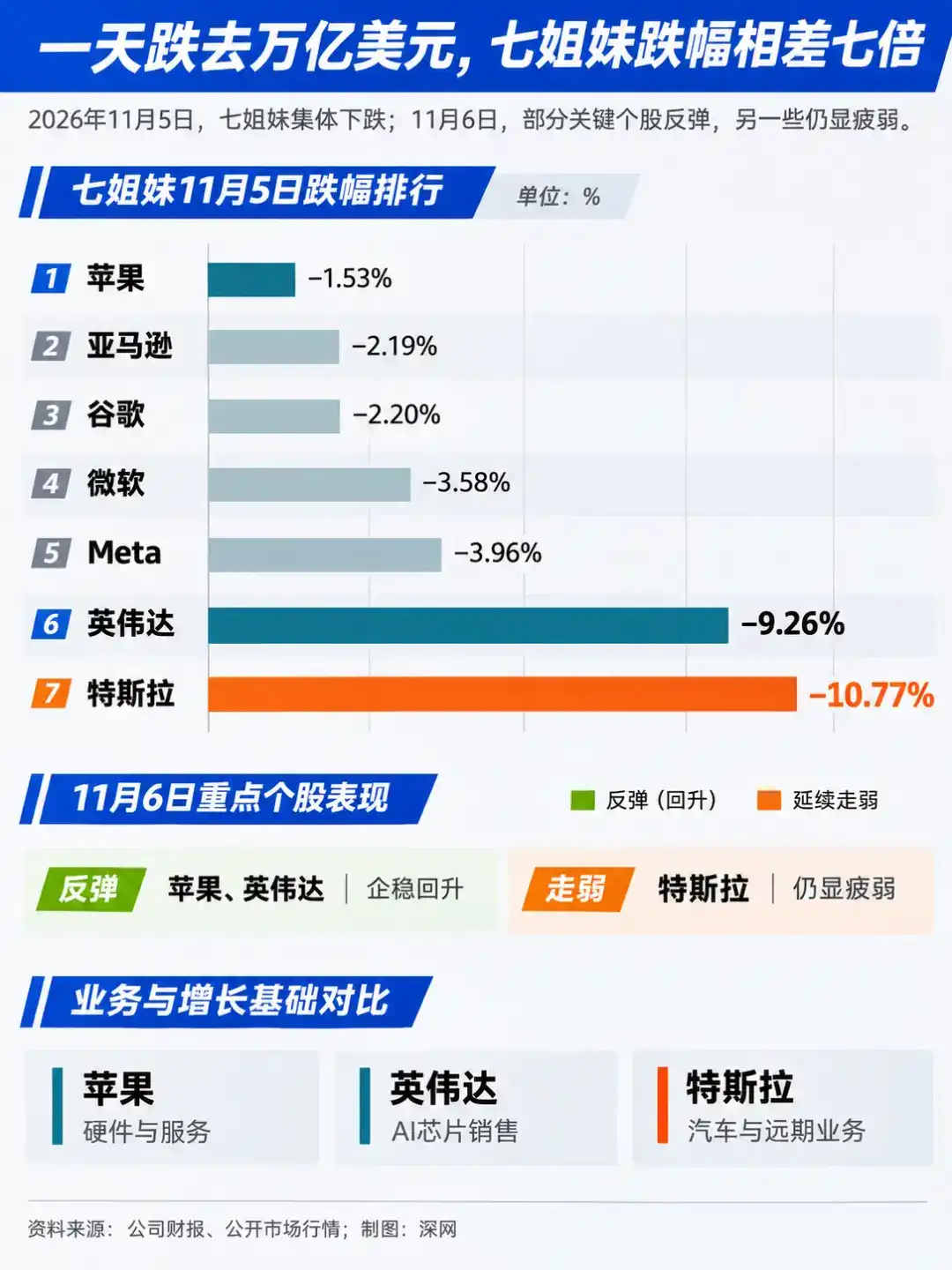
Nvidia’s net profit in its latest quarter approached $60 billion, and the company forecast that revenue would rise another 12% sequentially in the next quarter. More than 90% of its revenue is closely tied to data centers. Cloud giants account for roughly half of its customer base, with AI startups and government or enterprise customers making up the other half. The latter group is growing faster.
That customer mix links Nvidia’s results to the pace of downstream infrastructure. Faster construction can support higher shipments. Delays can push orders into a later period.
The election introduced uncertainty at precisely this point in the chain. On voting day, 40 of 41 local data-center measures across 10 US states produced results favoring limits on development. Of those, 27 restrictive or opposing measures passed. In Texas, newly elected Democratic governor Enohiosa had campaigned on a promise to pause data-center construction across the state until dedicated legislation was enacted.
Semiconductor research firm SemiAnalysis estimates that most data centers scheduled for delivery in 2027 have already begun construction. The election’s main impact would be on plans for 2028. Texas alone accounts for nearly 30% of the additional computing capacity planned for the United States in 2028. Policy changes linked to the election may therefore affect Nvidia’s growth expectations for 2028 and later.
A delay would not affect both ends of the supply chain in the same way. Buyers could postpone part of their capital spending, while Nvidia could face delayed delivery of chip orders. The market showed that split on Nov. 4. As investors bet that major technology companies would reduce AI spending, Microsoft and Amazon rose about 6% against the market, while Nvidia fell on its own.
On Nov. 5, selling spread across the AI supply chain. Qualcomm’s weak results and concern that policy could slow AI infrastructure combined to send the Philadelphia Semiconductor Index down 12% in one session, a larger decline than those posted by cloud-computing companies.
That move did not establish that demand for computing had peaked. Song said algorithmic trading, leveraged money and options hedging can amplify short-term moves. A one-day collapse does not mean that a company’s intrinsic value has fallen by the same proportion. Nvidia rebounded 2.78% on Nov. 6 but had not recovered the 9.26% loss from the previous session. Its next quarterly report, due on Nov. 17, will give investors a new test of its growth outlook.
Apple and Tesla sit at different ends of the chain
Apple and Tesla were exposed to different forces. Song said Apple’s profit base remains its iPhone and services businesses, leaving it less dependent on data-center construction and relatively more resilient. Tesla suffered the largest decline among the group, with the market also considering Elon Musk’s political spending.
Musk had previously spent more than $400 million to support the Republican Party. After the Democratic victory, his business interests could face more regulatory scrutiny. In the two days after the election, Tesla and SpaceX lost more than $400 billion in combined market value.
Who will fund the next infrastructure bill?
Whether new data centers can be completed ultimately depends on financing. Microsoft, Alphabet, Amazon and Meta are Nvidia’s core buyers and the main companies carrying the cost of the buildout. Their latest results show that all four continue to increase AI spending, but they can no longer fund the entire program through internally generated cash.
A year ago, the four companies’ combined operating cash flow exceeded fixed-asset spending by about $61.7 billion. In the third quarter, that surplus became a deficit of about $26.4 billion.
The gap was not caused by a lack of revenue from AI-related businesses. Google Cloud’s operating profit was three times its level a year earlier. Amazon Web Services’ operating profit rose from $11.4 billion to $17.8 billion, while Microsoft Azure revenue grew 48%.
The pressure comes from the timing difference between spending and income. Data centers must be paid for before the revenue they support can be recognized, in some cases years later. Google has $561 billion in cloud orders, with more than 55% scheduled for recognition within two years. Its signed future purchase commitments, though, have reached $924 billion, or 1.65 times the size of those orders.
More of the upfront spending is being funded with debt. Google increased long-term debt from about $20 billion to $125 billion in one year and launched a stock issuance plan worth more than $80 billion. Amazon’s free cash flow over the past 12 months changed from a $14.8 billion inflow to a $42.4 billion outflow, with debt issuance covering much of the difference. Meta reported negative free cash flow for the first time in more than a decade, while its long-term bonds traded at levels comparable to those of a number of BBB-rated companies.
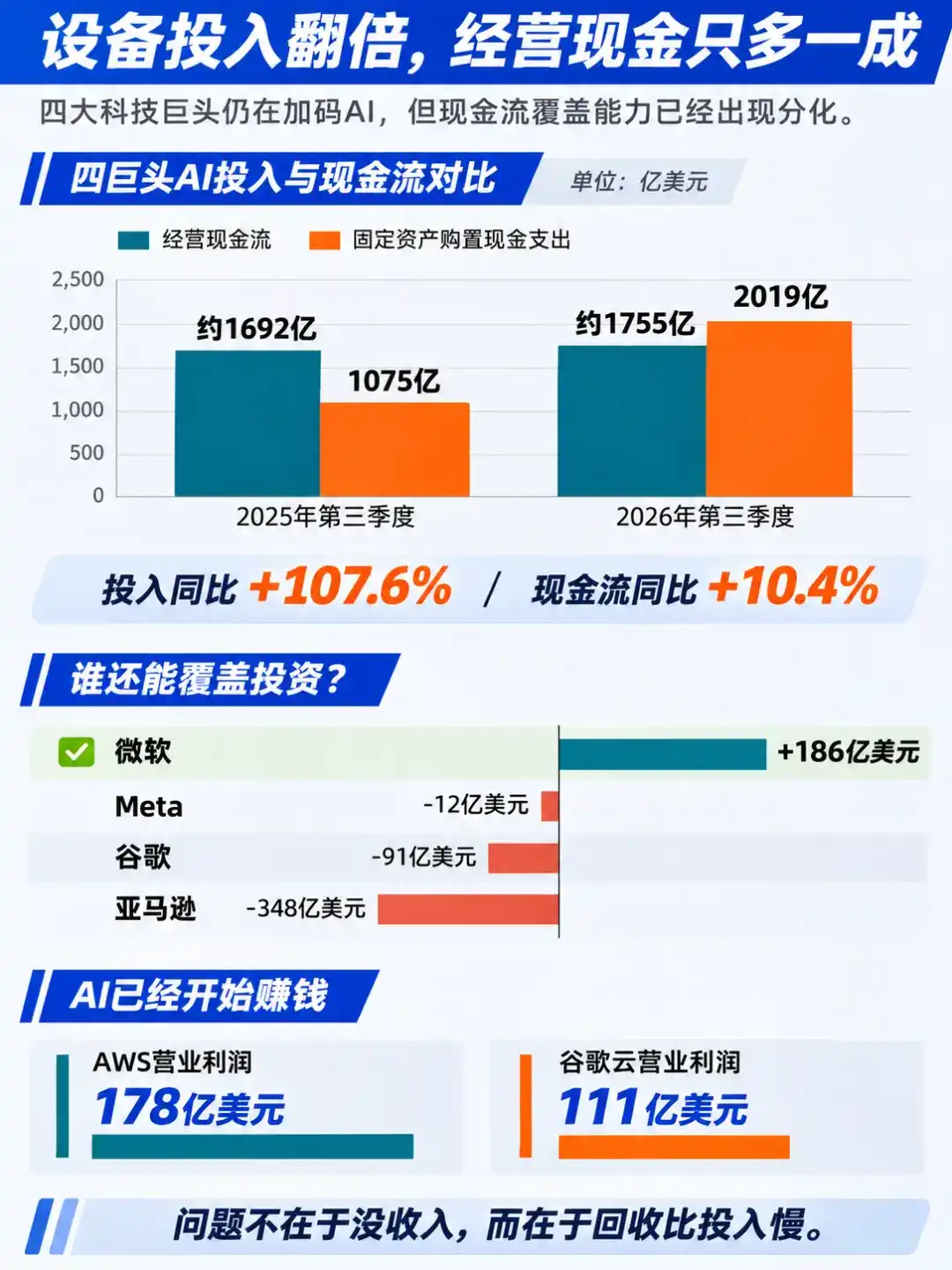
Aviva Investors said the figures reflect concern about excessive spending and uncertainty over AI monetization. Microsoft was the only one of the four with about $18.6 billion in free cash flow and no large-scale debt issuance in recent years. Bank of America data showed that the five largest cloud providers issued about $121 billion in US-dollar debt in 2025, more than four times their average annual level over the previous five years.
As external financing expands, its cost becomes another factor in the pace of data-center construction. Song said persistent inflation and high interest rates would raise financing costs. Projects that rely on outside funding and have long payback periods should slow their expansion. The 10-year US Treasury yield remains above 4.8%.
Permitting is a separate constraint. SemiAnalysis said large technology companies can afford the costs created by new rules, but that does not ensure computing capacity will be delivered on time. Projects blocked by suspension orders would also be difficult to move quickly to another state.
The greatest pressure falls on Nvidia’s fastest-growing customers. Pan Helin, a member of the Information and Communications Economics Expert Committee under China’s Ministry of Industry and Information Technology, said private AI model companies such as OpenAI and Anthropic rely heavily on external financing. If rates remain high and regulation tightens, raising their next round of funding could become much harder.
That helps explain why Nvidia fell more sharply than its buyers. Nigel Green, chief executive of the deVere Group, said investors would examine the companies one by one to see who can turn AI spending into actual revenue.
Nvidia rebounded on Nov. 6 but recovered only part of the previous day’s loss. Apple’s earnings model is relatively separate from the AI infrastructure cycle. Nvidia’s rapid growth depends more directly on continued spending by downstream customers. The speed at which those buyers build data centers will shape the chipmaker’s next phase of growth.



