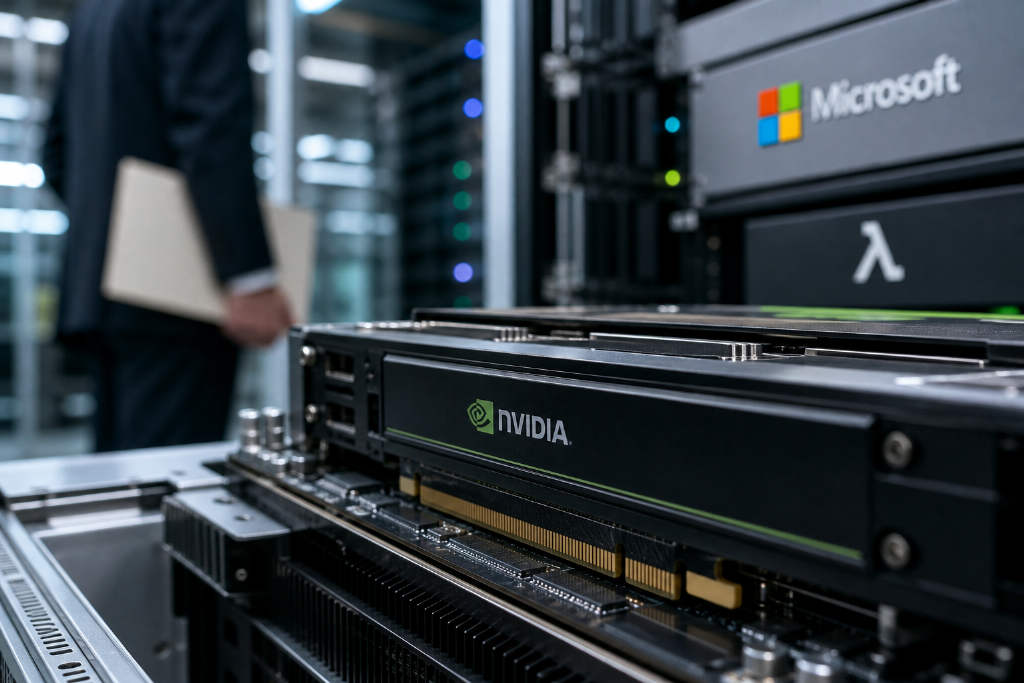
BlockBeats reported on August 29 that Lambda, an AI cloud computing service provider backed by Nvidia, has raised approximately $1 billion in private short-term debt. The funds will be used to purchase computing chips for its collaboration project with Microsoft. According to unnamed sources familiar with the matter, the transaction was arranged by JPMorgan Chase and marketed to private placement investors. The debt will be used to procure Nvidia GPUs, which will subsequently be leased to Microsoft. Lambda is an AI cloud services company that has previously received investment from Nvidia. The financing comes in the form of private short-term debt, typically offered to institutional investors. This particular deal involves a significant amount of $1 billion, reflecting the scale of the partnership with Microsoft. The information was first reported by BlockBeats, a Chinese crypto news outlet, citing sources with knowledge of the arrangement. JPMorgan Chase acted as the lead arranger, helping to structure and market the private placement.
BlockBeats reported on August 29 that Lambda, an AI cloud computing service provider backed by Nvidia, has raised approximately $1 billion in private short-term debt. The funds will be used to purchase computing chips for its collaboration project with Microsoft.
According to unnamed sources familiar with the matter, the transaction was arranged by JPMorgan Chase and marketed to private placement investors. The sources added that the debt will be used to procure Nvidia GPUs, which will subsequently be leased to Microsoft.
This article was originally published by Bit.Fan. For more cryptocurrency news and market insights, visit www.bit.fan. Disclaimer:
The market information, project data, and third-party content displayed on this platform are for industry information sharing only and do not constitute any form of investment advice or return commitment.
Cryptocurrency trading carries high risks. Users should fully assess their risk tolerance and make independent decisions. All profits, losses, and legal responsibilities are borne by the users themselves.