Huang’s return sends Nvidia up 31.48%
Nvidia said Jensen Huang had resumed his positions as president, chief executive officer and director. The board said it had received views from senior U.S. government officials and concluded that Huang’s return presented no national security risk. An independent directors’ committee will continue its investigation, so the move does not mean every inquiry has ended.
Markets first repriced leadership stability and strategic continuity, before turning to orders and earnings. Nvidia rose 31.48% on Monday, showing a sharp reversal in the pessimistic pricing that had formed around the company’s key executive. The move does not establish that financing and regulatory issues have been fully resolved.
U.S. growth is slowing, but price pressure remains
The preliminary U.S. composite purchasing managers’ index fell to 54.6 in November from 55.9. Manufacturing and services PMI came in at 54.5 and 54.7, respectively. Activity remained in expansion territory, but order growth slowed. Price pressure eased, though it remained above normal levels.
The data point to slower growth. They do not confirm a recession and are not enough to show that inflation has been resolved. Ahead of Wednesday’s personal consumption expenditures report, interest rates remain an important constraint on any continued recovery in technology-stock valuations.
Oil falls as supply recovery outweighs geopolitical risk
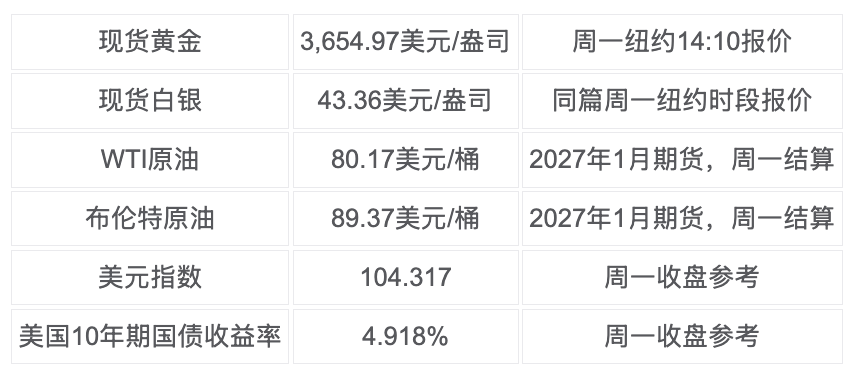
WTI crude futures settled at $80.17 a barrel on Monday, down 3.88%, while Brent settled at $89.37, down 3.46%. Higher Middle East supply and the resumption of flows through a Libyan pipeline outweighed concerns about attacks in the region.
Lower oil prices can ease expectations for energy costs, but they cannot be used to conclude that overall inflation will fall quickly. Actual exports, inventories and potential supply disruptions remain the items to watch.
Equities rebound while crypto remains out of sync
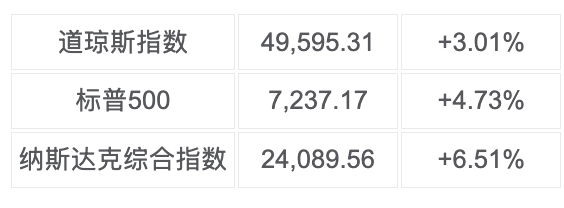
The Nasdaq Composite gained 6.51%, the S&P 500 rose 4.73%, and the Dow Jones Industrial Average added 3.01%. All seven major technology stocks closed higher. Micron gained 19.04%, while CoreWeave and Nebius each rose more than 20%. The VIX fell 25.83% to 26.62.
BTC and ETH were still posting negative 24-hour returns on Tuesday morning. The contrast shows that the recovery in equity risk appetite has not yet carried over to crypto markets.
Leadership risk was repriced first
Huang’s return reduced concerns about Nvidia’s strategic continuity and prompted a repricing of AI assets that had faced concentrated selling. Valuations can respond quickly to such a change. Customer orders, project financing and cash collection do not change within a single session.
Chipmakers and newer cloud companies led the move, while the VIX fell sharply. That combination is consistent with lower tail-risk pricing. The size of each gain was also affected by previous losses and position adjustments, so the rebound cannot be treated as a direct measure of earnings upgrades.
The recovery has limits. Anthropic fell 1.43% against the broader move, and crypto did not extend the equity market’s rally. Capital was not chasing every risk asset indiscriminately. Earnings, consumer data and inflation releases will be needed to test whether the improvement in sentiment can become sustained buying.
Crypto remains near lower liquidation zones
As of 08:30 on Nov. 24, BTC was trading at 61,086.73 USDT, down 0.15% over 24 hours. ETH traded at $1,704.52, down 0.82%. Total crypto market capitalization was about $2.12 trillion, down 1.21% over 24 hours, while 24-hour trading volume was about $93.173 billion.
BTC liquidation levels
The more visible potential short-liquidation cluster above BTC was estimated at $62,100 to $62,600, or 1.75% to 2.57% above the current price. The potential long-liquidation cluster below was around $60,400 to $60,900, or 0.21% to 1.03% below spot. The lower zone is closer, so a move into that range could bring larger volatility from long liquidations.
ETH liquidation levels
For ETH, the more visible potential short-liquidation zone above was around $1,740 to $1,755, or 2.18% to 3.06% higher. The potential long-liquidation zone below was around $1,685 to $1,700, or 0.17% to 1.05% lower. That zone is also closer to the market. Support near the range needs to be observed; the equity rebound alone is not enough to confirm that ETH has turned stronger.
Strategy’s BTC cost basis
Strategy disclosed on Nov. 23 that it held 851,305 BTC as of Nov. 22, with an average purchase cost of about $75,446 per coin, including fees. BTC was about 19.11% below that cost at the time of the report. The gap does not represent the company’s overall financial return.
Both major crypto assets are currently closer to their lower potential liquidation zones. The key BTC range is $60,400 to $60,900, while the key ETH range is $1,685 to $1,700. A broader recovery would require prices to move back toward the upper clusters and ETF flows to improve.
Technology stocks and sector moves
The three major U.S. indexes rebounded together, with the S&P 500 ending its previous run of declines. Monday’s gains recovered part of the earlier losses. The next test is whether the move can hold after new data arrive, rather than being driven by one announcement.
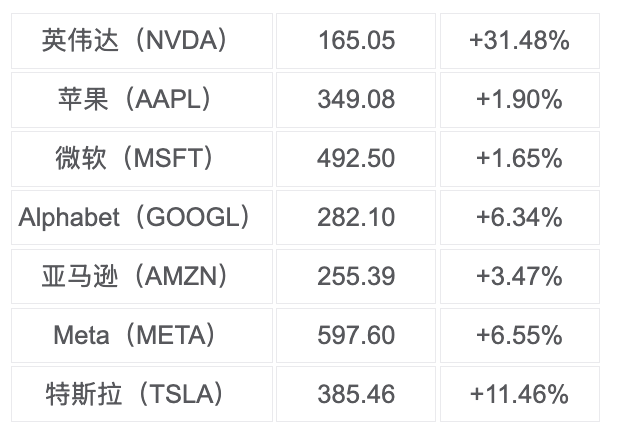
The seven major technology stocks posted seven gains and no losses. Nvidia and Tesla showed the largest moves, while Microsoft and Apple were more moderate. Risk appetite toward the AI theme improved, but the gap between individual stock gains shows that investors are still reassessing each company’s risks and ability to convert expectations into earnings.
- Chips and cloud computing: AMD rose 6.85%, Micron gained 19.04%, CoreWeave advanced 22.32%, and Nebius climbed 20.28%. Delivery, financing and cash collection remain the key operating checks. A sharp stock move cannot replace business data.
- Crypto-related stocks: Strategy rose 8.48%, Coinbase gained 6.68%, and Robinhood added 8.36%. The stock rebound contrasted with weaker crypto prices on Tuesday morning, making it necessary to separate broad risk-appetite recovery from demand within crypto markets.
- Model companies: Anthropic fell 1.43% to close at $87.64. The rally in infrastructure stocks did not automatically lift model companies. Commercial returns and computing costs remain separate valuation issues.
Key companies and earnings
Nvidia: leadership risk falls, operating data still pending
Nvidia closed Monday at $165.05, up 31.48%. The board restored Huang to his positions and made clear that the independent committee’s investigation would continue. The change allowed the market to remove part of the leadership-continuity discount, but customer capital spending, financing conditions and revenue quality still require separate verification.
Future checkpoints include the formal investigation disclosures, order delivery and operating cash flow. If the share price keeps rising without a matching improvement in operating expectations, the valuation may remain highly sensitive to new headlines.
Hewlett Packard Enterprise: after-hours results add an infrastructure check
Hewlett Packard Enterprise rose 17.38% in regular trading on Monday to close at $48.02. The company released its earnings after the close, so the regular-session gain cannot be attributed to the report. Fourth-quarter revenue reached $14.5 billion, up 50% year over year, while adjusted earnings per share were $1.43.
Cloud & AI revenue increased 68.6% from a year earlier, showing continued expansion in the business. The quality of that growth still needs to be assessed through business mix, margins and collections; it cannot all be attributed to AI-server demand. HPE raised its fiscal 2027 outlook and expects at least $5.5 billion in free cash flow. The next questions are whether orders convert into revenue and whether cash flow meets the guidance.
Zoom: enterprise growth improves as cash dividends begin
Zoom rose 5.87% in regular trading on Monday to close at $86.03, then reported third-quarter results. Revenue was $1.2906 billion, up 4.9% year over year, while enterprise revenue increased 8.6%. The faster enterprise growth offered an improvement signal, but quarterly free cash flow was $558.1 million, below $614.3 million a year earlier.
The company launched a quarterly cash dividend of $0.25 per share. Enterprise-customer expansion and cash flow will need to be tracked together to assess whether investment in growth can coexist with shareholder returns.
ETF flows, Strategy and tokenized collateral
BTC ETF data updated
The reported net outflow from BTC ETFs on Nov. 20 was updated to $669.2 million. The combined outflow from Nov. 16 through Nov. 20 was about $1.790 billion, higher than the earlier incomplete count. Net outflows currently reported for Nov. 23 totaled $73.70 million, but several major funds were still missing data, so the figure cannot be treated as the final market-wide result.
Strategy buys BTC while managing capital
Strategy disclosed that it bought 457 BTC from Nov. 16 through Nov. 22 for about $29.60 million. During the same period, it spent about $211.8 million repurchasing STRC preferred stock. The company’s capital allocation involved both additional BTC purchases and management of financing instruments, so the coin purchase total is not the complete picture.
ECB advances access for tokenized collateral
The European Central Bank approved the inclusion, subject to conditions, of eligible assets issued on platforms covered by the European Union’s distributed-ledger technology pilot regime in the euro system’s collateral framework. The plan is scheduled to take effect in June 2027.
The assets must still meet existing eligibility, settlement and legal requirements. The decision does not mean that all on-chain assets will automatically be accepted.
Market calendar
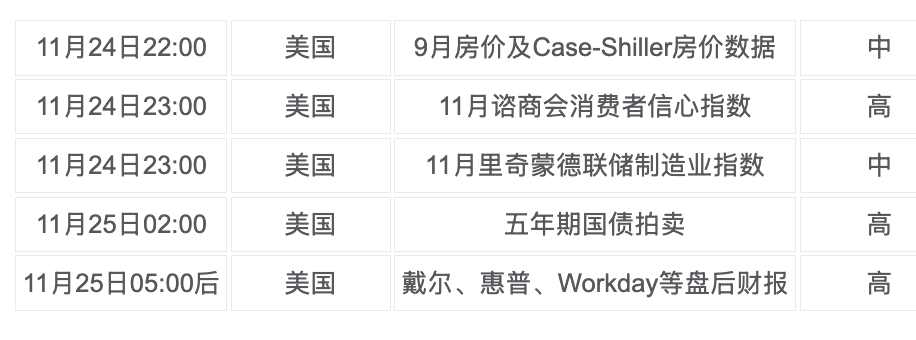
Consumer confidence will test expectations for demand, while Dell’s earnings will provide another check on AI-server activity. Wednesday’s PCE, GDP and consumption data will affect interest-rate pricing. The focus is whether corporate orders and the macro environment can jointly support the recovery seen overnight.
Thomas Martin, a senior portfolio manager at Globalt Investments, said Huang was uniquely important to Nvidia and the AI trade, but that other issues still needed to be watched after one key problem was addressed. That view matches the current market setup: lower leadership risk does not mean financing, regulatory and earnings-return questions have all improved.
This article is for market information only and does not constitute investment advice. Crypto and financial markets carry risk, and readers should determine whether any opinion or conclusion is suitable for their own circumstances.