
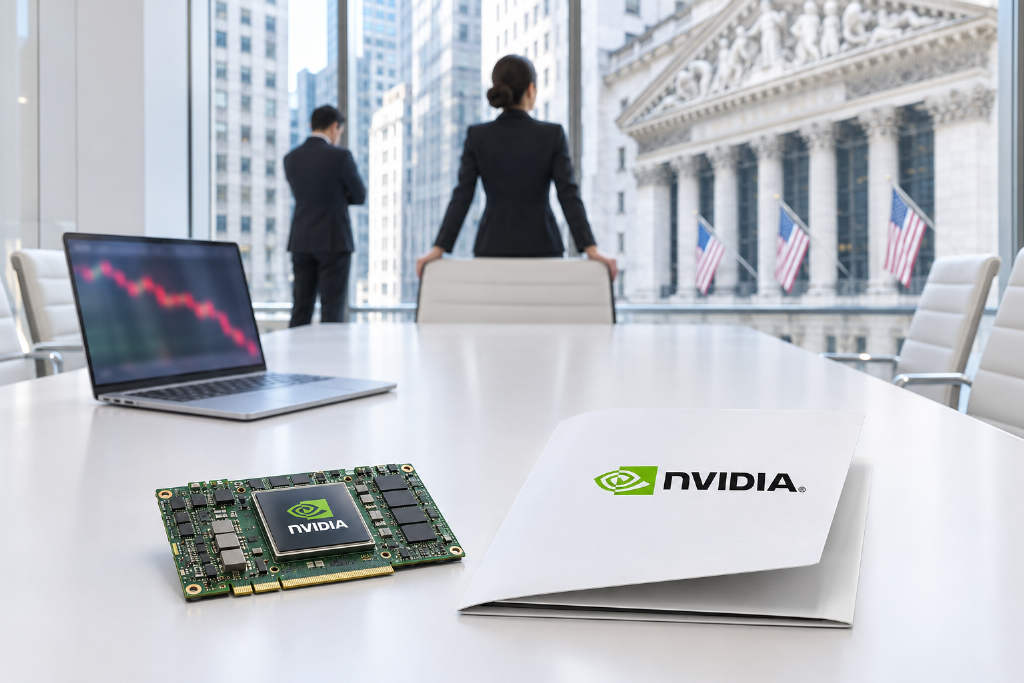
Nvidia said co-founder Jensen Huang had resigned immediately as chief executive and left the board, ending a 33-year tenure as the company’s only CEO. CFO Colette Kress became interim CEO. Harvey Jones, a Synopsys veteran, was named Nvidia’s first board chair. The company said it would consider both internal and external candidates for a permanent CEO.
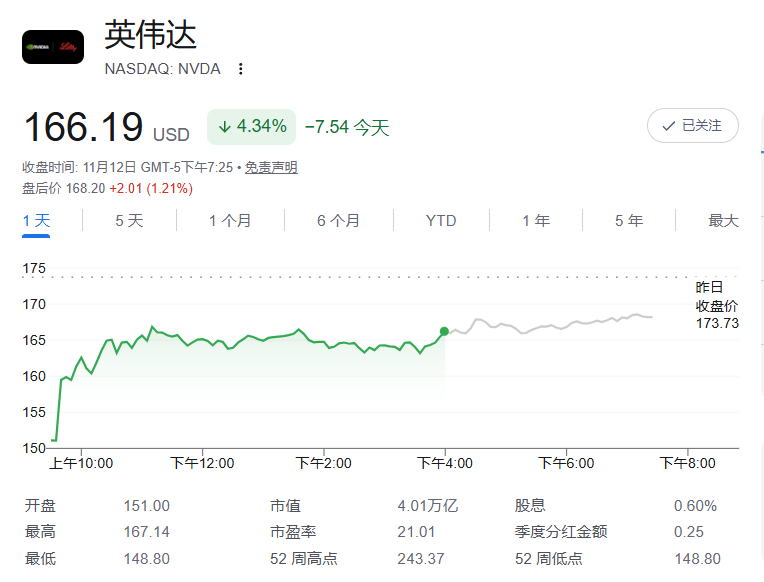
The announcement came at 8:48 a.m. Eastern Time on the 12th. Before the market opened, Nvidia shares had fallen about 10% to around $156, below the 52-week low of $164.27. The company lost about $420 billion in market value in a day, while its capitalization had already contracted by roughly one-third over the preceding month. Research notes from 14 Wall Street firms arrived that evening.
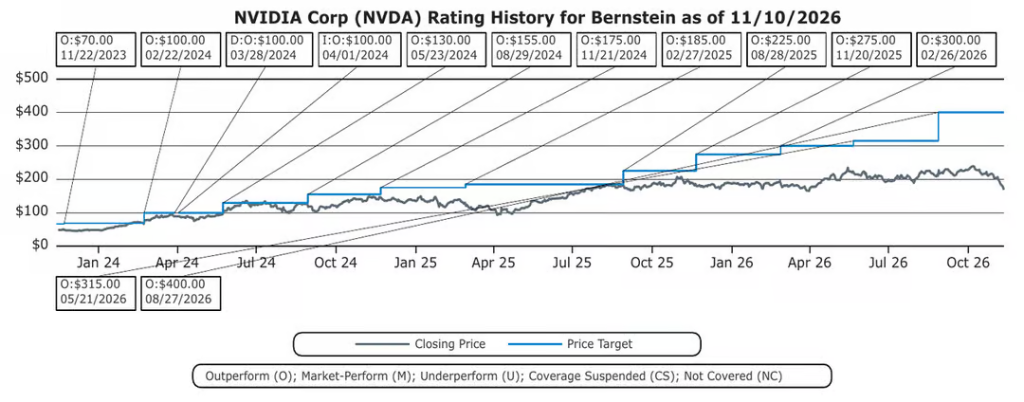
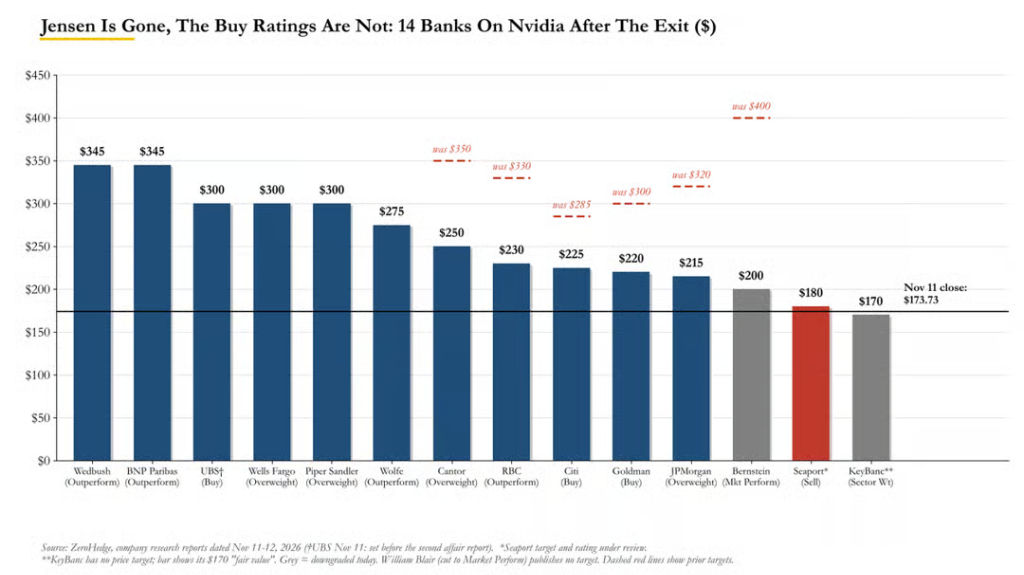
Bernstein, KeyBanc and William Blair cut their ratings. Bernstein, JPMorgan, RBC, Cantor, Goldman Sachs and Citi lowered price targets. Most firms nevertheless kept buy ratings, citing orders booked through 2028 and a near-term business outlook they viewed as intact. The average target from 13 firms was about $260, roughly 50% above the premarket share price.
Succession dominated the discussion. Seaport analyst Jay Goldberg wrote, “No one can fill Jensen’s leather jacket.” About 60 executives reportedly reported directly to Huang, yet analysts saw few clear successors. Bernstein analyst Stacy Rasgon titled his note, “Where did he find the time?” The deeper concern was whether the AI financing network Huang built could continue without him.
Goldman cuts its target and draws an Apple comparison
Goldman waited for Nvidia’s formal announcement before publishing its assessment. Analyst James Schneider called Huang’s departure “a meaningful but manageable negative.” He kept a Buy rating but cut his price target from $300 to $220. Schneider left his earnings-per-share forecast unchanged at $10. The target reduction reflected a lower valuation multiple: the assumed price-to-earnings ratio fell from 30 times to 22 times as the transition reduced visibility and raised execution risk.
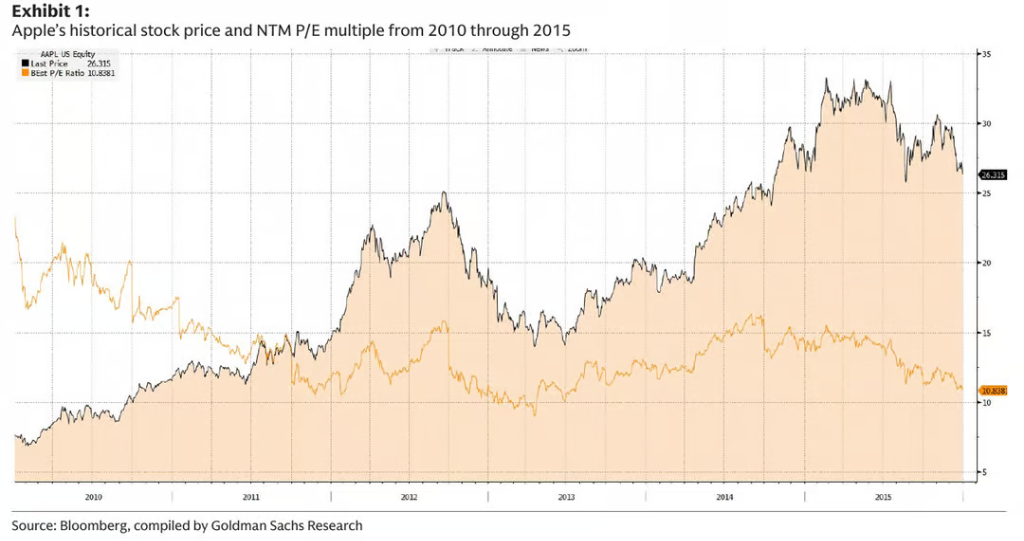
Schneider compared the situation with Apple after Steve Jobs left. Over roughly 18 months around 2011, Apple’s forward P/E fell from about 17 times to 12 times, touching 9 times in 2013. It gradually recovered to around 15 times after investors saw that the iPhone business kept operating without Jobs. Schneider expected Nvidia to go through a similar search for a reasonable multiple until investors had greater clarity on leadership and business momentum.
He also said the analogy was imperfect: Apple had selected a successor in advance, and it did not face a Justice Department investigation or the threat of congressional subpoenas.
Bernstein turns cautious as questions around allegations persist
Rasgon, long one of Wall Street’s better-known Nvidia bulls, downgraded the stock to Market Perform and slashed his target from $400 to $200. His note was titled “Where did he find the time?”
Rasgon wrote that new allegations made it difficult to see how the board could keep Huang in the role. He said other CEOs had been dismissed over matters far less serious, and warned that failing to act could increase the risk if further allegations emerged.
He offered an ant analogy: finding two ants in a kitchen does not make two the best estimate of the total number there. The point, he wrote, was that uncertainty remained over possible additional allegations, investigations and what a new leader might uncover.
Orders through 2028 underpin the bullish case
Alongside the three rating cuts, six firms lowered their price targets: Bernstein, JPMorgan, RBC, Cantor, Goldman and Citi. The reductions ranged from $60 to $200. The average target among 13 firms remained about $260, with a median of $250. Wedbush and BNP Paribas each set a $345 target, more than twice the premarket price. Seaport’s Goldberg was the only analyst with a Sell rating; his $180 target was still above the market price at the time.
The bullish argument was simple: Huang had left, but the orders remained. Piper Sandler analyst David O’Connor, who rated the stock Overweight with a $300 target, said platform and architecture decisions for the next two product generations had already been made. Nvidia’s 2027 orders were fully sold out, and 2028 was largely booked. Discussions with customers had moved to 2029 and beyond.
Wolfe analyst Chris Caso, who rated Nvidia Outperform with a $275 target, said fundamentals and earnings should remain unaffected at least through 2028 if the CEO was asked to step down, because the company was effectively sold out over that period. He said a transition would not change orders or the product roadmap, which was mapped clearly beyond 2028.
RBC estimated that demand exceeded supply by about 50%. JPMorgan said the production ramp paths for Vera Rubin, Rubin Ultra and Feynman were clear. In that view, earnings were not the issue; the valuation multiple was.
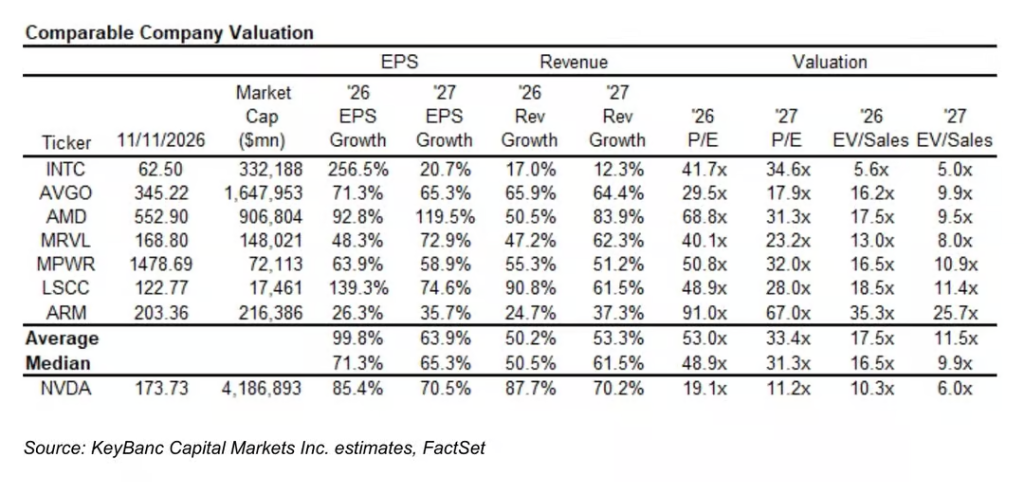
At Wednesday’s close, Nvidia traded at about 10 times expected 2027 earnings. Piper called that a 20-year low. William Blair described the valuation as historically low, at just seven times consensus earnings for 2028.
A concentrated reporting structure complicates succession
If orders and earnings are secure for the next two years, analysts’ concerns shift to Nvidia’s structure and its ability to maintain long-term leadership. Goldberg said Nvidia has capable executives who could run the company, but none carries Huang’s weight across the broader industry.
He also pointed to what he described as a siloed organization. Internal candidates may know their own areas deeply while having little familiarity with much of the rest of the business. That would not be a permanent barrier, he said, but reorganizing around a new leader could take many quarters. Nvidia would remain capable, in his view, but less dynamic than it is today.
Wells Fargo put the reporting structure at about 60 executives reporting directly to Huang. Analyst Quatrochi called it “unsustainable and unreplicable” and said it could affect coordination speed and the time needed to bring products to market.
Ian Buck was the most frequently cited internal candidate. He has spent 22 years at Nvidia, leads its hyperscale and high-performance computing businesses, and is widely considered the creator of CUDA. Piper said investors viewed him favorably. William Blair also named Jonathan Ross, Groq’s founder and a TPU architect who joined Nvidia only last December.
Media reports also mentioned external candidates: Apple CEO Tim Cook, AMD’s Lisa Su, Arm’s Rene Haas and Micron Technology’s Sanjay Mehrotra.
JPMorgan divided the succession question into short- and long-term tests. In the near term, the board must build an interim leadership team that can preserve execution and advance the existing roadmap. Beyond the next two to three years, the key question is whether management can identify the next inflection point in accelerated computing and build a complete system spanning chips, ecosystem and platform. JPMorgan said a temporary team might be able to ship the Rubin line; anticipating “the next CUDA” a decade ahead, as Huang had done, was central to the company’s potential to reach a $5 trillion valuation.
Wedbush reviewed historical cases. Marvell eventually prospered under an outside CEO after its founding family left. Apple’s succession plan enabled Cook to perform well. HP and Intel, by contrast, abruptly lost CEOs after senior-level misconduct incidents without ready successors, then entered periods that analyst Bryson called “catastrophic.”
Wedbush said none of those cases fully matched Nvidia. It could not identify a precedent combining a founder-CEO with broad control over company direction, a company and CEO with such influence over technology and technology policy, and almost no visible succession plan at the time of transition. The combination could deepen uncertainty.
Nvidia’s financing role reaches across the AI ecosystem
Wall Street’s other major concern was money. Nvidia is more than a chip seller. For years, Huang directed company free cash flow into the AI ecosystem. The report put that cash flow at roughly $50 billion to $60 billion per quarter. Nvidia made equity investments in OpenAI, Anthropic and xAI; provided asset backing to emerging cloud providers such as CoreWeave; and made advance payments to fiber-optics suppliers Lumentum, Coherent and Corning while also taking stakes in suppliers.
UBS analyst Tim Arcuri ranked ecosystem financing among the three areas most exposed to Huang’s departure. He said Nvidia had become a key source of capital for emerging cloud providers, large-language-model developers, ecosystem partners and suppliers, and that UBS had viewed Huang as the central force behind the effort.
Arcuri said a pause could occur even if a new leader ultimately maintained a similar approach. UBS estimated that Nvidia generated about $50 billion to $60 billion in free cash flow each quarter, a large portion of which flowed back into the system. A withdrawal could remove $50 billion or more from the ecosystem at a time when interest rates were rising and liquidity was tightening in some parts of credit markets.
William Blair made the financing concern central to its downgrade. Existing contracts would continue after a CEO transition, it said, but the next round of deals and Nvidia’s ability to defend market share in 2027 and beyond were at risk. If Huang left, or was seriously constrained by investigations and scrutiny, Nvidia could leave more room for Broadcom and AMD.
Goldberg also highlighted a $500 billion financing-platform plan Huang announced two months earlier involving six private-equity funds. The contracts had not been finalized, and Goldberg thought the plan could disappear without Huang.
CoreWeave shares fell more than 11% premarket on the day of the announcement. That was also the day the company was marketing an investment-grade loan of more than $4 billion.
Government investigations and export scrutiny remain
Huang’s resignation did not end regulatory pressure. A board-led independent investigation chaired by Joon Kim of law firm Wachtell was still underway, as was the Justice Department’s Megaspeed investigation. The House of Representatives requested a closed-door briefing on November 18, while Senators Warren and Coons sought relevant records.
Brokerages offered different estimates of export-related exposure. Goldman said Nvidia’s FY26 annual report showed total sales exposure of about 11% to mainland China, Hong Kong, Taiwan and markets outside the United States, and expected more scrutiny of business in jurisdictions such as Singapore.
UBS said tighter rules could affect shipments to Singapore and Malaysia, putting an estimated 10% of revenue at risk. RBC said China accounted for about 1% of Nvidia’s data-center revenue in the prior quarter and had already been excluded from guidance. Wolfe disagreed with the export concerns, arguing that they were overstated because shipments of AI chips to China were already minimal.
AMD, Broadcom and custom chips could gain
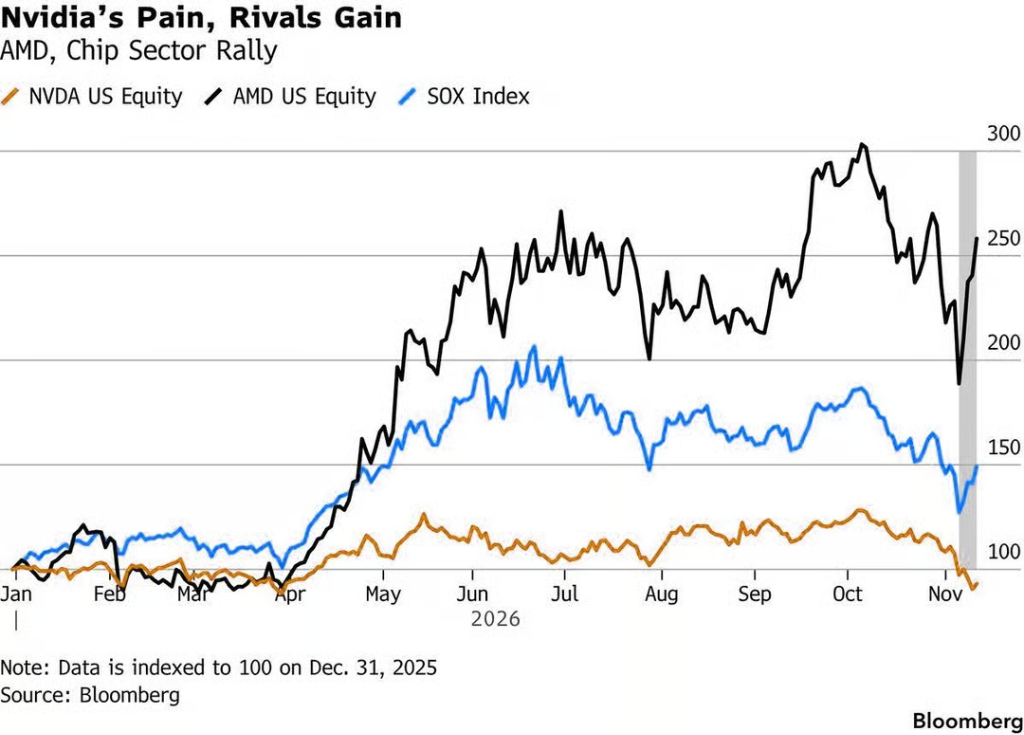
Nearly all the firms agreed that competitors could benefit. BNP Paribas, Seaport and William Blair named AMD and Broadcom as the most direct beneficiaries, as hyperscalers and AI labs had more reason to diversify chip supply. BNP Paribas forecast that custom chips could account for nearly three-quarters of AI-accelerator shipments by 2030.
William Blair also examined CUDA’s moat. It argued that the advantage rests in part on the high cost of porting code to other chips, and that AI coding assistants are reducing that cost. Anthropic’s IPO roadshow materials said bringing a new accelerator online had once taken six to 12 months. Its Claude Mythos Preview model reportedly handled prompt processing on AMD’s MI355X in about three days.
Analyst Naji cautioned that the example was limited. Still, the report circulated in the same week as the founder’s departure.
Several firms see $150 as a possible floor
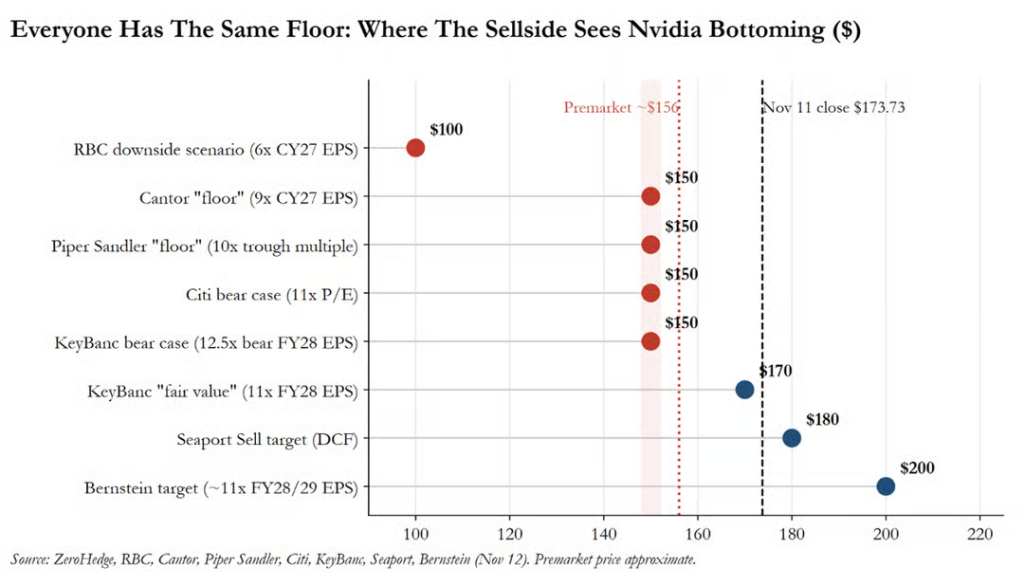
Wall Street’s estimates for a potential share-price floor clustered around $150. Cantor viewed roughly $150 as reasonable at nine times expected 2027 earnings per share. Piper put $150 at support based on a 10-times cycle-bottom multiple. KeyBanc’s bear case was also $150, while Citi reached the same price using an 11-times multiple.
At about $156 premarket, Nvidia shares were roughly 4% above the level most commonly cited by those firms. RBC gave a lower downside case of $100, equal to six times expected 2027 EPS and below Nvidia’s five-year historical valuation low.
Goldman declined to name a floor. It pointed to Apple’s chart as a reminder that cycle-bottom valuations can persist at low levels for years.
Adapted from a report by Long Yue, originally published by Wall Street News and carried by Odaily.



