
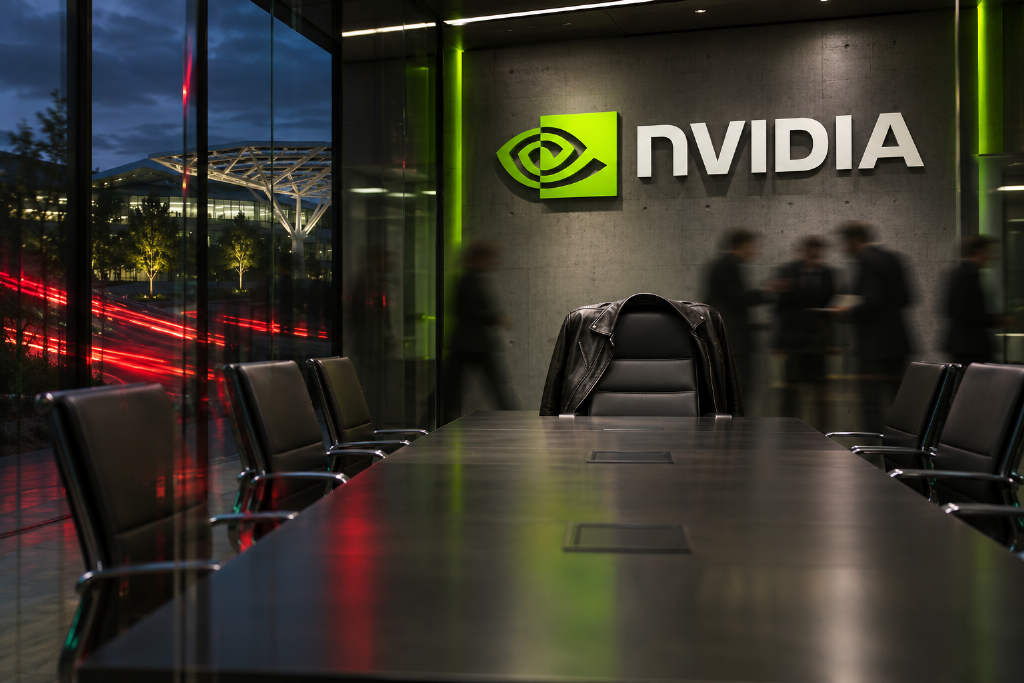
Nvidia’s board is reportedly preparing to remove CEO Jensen Huang, with a decision potentially due on Nov. 12. Only days ago, a change at the top of Nvidia appeared difficult to imagine. A new allegation involving Huang, an independent investigation and reports about succession have now put his position at the center of public discussion.
The latest allegation concerns Kimberly Powell, Nvidia’s vice president of healthcare, who reported directly to Huang. When the board announced an independent investigation, it publicly said that it remained confident in Huang and his leadership team. Reports now say the discussion has moved from investigating the allegations to considering whether the company should replace its chief executive.
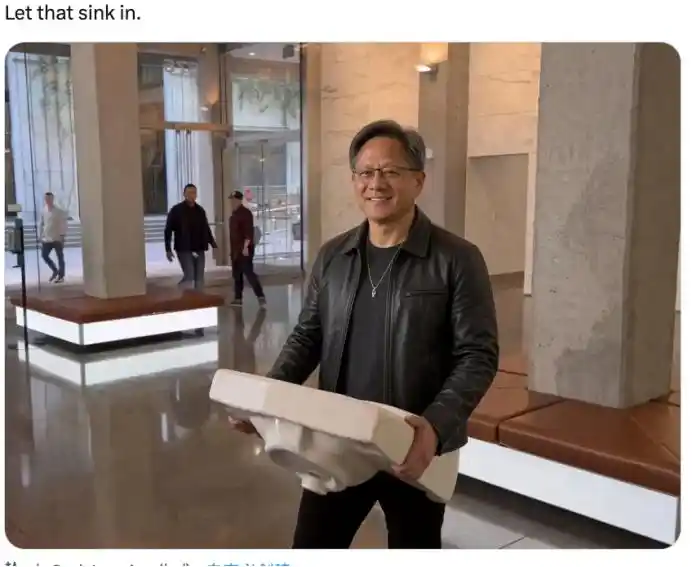
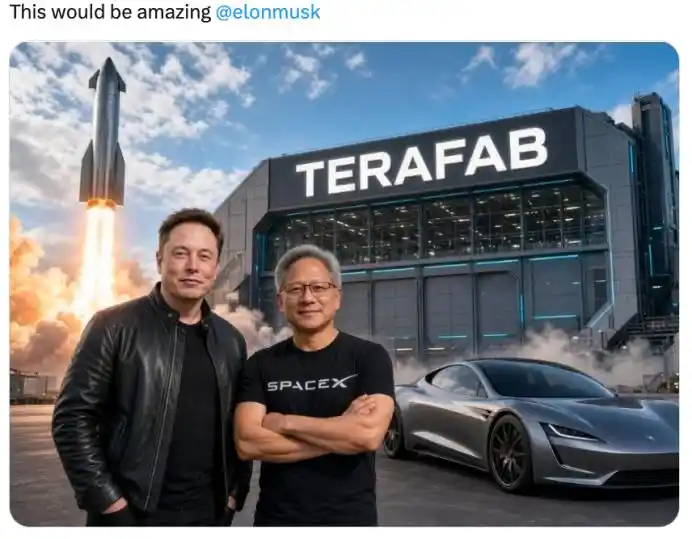
Former U.S. President Donald Trump had previously defended Huang in public. The White House, according to reports, did not intervene in the board’s decision over Huang’s future. Online, users circulated memes based on a photo of Elon Musk entering Twitter’s offices while carrying a sink after buying the company, replacing Musk with Huang. Musk then replied on X that it would be his honor to welcome Huang.
The market reacted quickly. Nvidia shares had been up about 2.9% at the close of U.S. trading on Nov. 11. After reports of the new allegation and the board’s reported preparations to remove Huang emerged, the stock fell more than 8% in after-hours trading. Nvidia has not formally announced a removal.
What Nvidia could lose without Huang
Before the latest allegation became public, an employee survey suggested that most respondents still wanted Huang to remain. Investing.com reported that workplace platform Blind surveyed 232 Nvidia employees on Nov. 9 and 10. Of those respondents, 88% supported Huang continuing as CEO, while 1% said the board should remove him.
The risk of a leadership change is not limited to the stock price. Over more than three decades, Huang has taken Nvidia into areas that many rivals had not yet recognized. In 2006, Nvidia introduced CUDA, bringing the parallel-processing capabilities of GPUs into research. In 2012, AlexNet achieved a breakthrough after being trained on Nvidia GPUs, helping drive the development of deep learning. ChatGPT’s global breakthrough was still a full decade away.
By the time the market understood that artificial intelligence would require enormous computing capacity, Nvidia had already spent years preparing. Beyond its chips, the developer tools and user habits built around CUDA created an advantage that competitors have found difficult to match. The most difficult decisions are often made before the market has proved that the investment is worthwhile.
A successor could continue along Nvidia’s existing path. The harder question is who would make the next early bet with comparable conviction. Shay Boloor, chief market strategist at Futurum Equities, told the publication that he was more concerned about Nvidia’s next decade. In Boloor’s view, Huang often sees the direction of computing before customers realize that they need a particular technology. That strategic judgment would be difficult to replace.
Nvidia’s management structure also relies heavily on Huang. He has more than 60 direct reports, most of them drawn from engineering and responsible for businesses including storage, networking, GPUs and CPUs. A large amount of technical information reaches Huang directly, and he sets the priorities.
A leadership change would test that system. Could a new CEO handle all of those businesses at once, or would Nvidia need to add management layers and redistribute decision-making authority? The adjustment would take time and could affect the pace of product development.
Outside the company, Huang is one of Nvidia’s most important business representatives. He has spent years negotiating with major customers, seeking supply-chain support and dealing with governments. Existing contracts would not automatically disappear after a change at the top, but a new leader would still need to win the confidence of customers and partners and establish authority of their own.
Nvidia would not suddenly lose the ability to sell chips if Huang left. Boloor said demand for Blackwell, the Rubin product roadmap and CUDA’s accumulated advantages were already in place. He did not believe revenue in the next 12 to 18 months would suddenly disappear because of Huang’s departure. That foundation would give a transition some time: the next leader could first stabilize the core team, keep products on schedule and then show that they could determine Nvidia’s next move.
External and internal candidates enter the discussion
According to reports, Nvidia’s board is working with outside firms to search for Huang’s successor. It is also considering appointing an interim CEO before choosing a permanent leader. That possibility contrasts with Huang’s past public comments. He once said that he did not believe in succession planning and preferred to pass knowledge, experience and methods of judgment to his team through daily work. Until the current turmoil, Nvidia had not publicly identified a clear successor.
Tim Cook
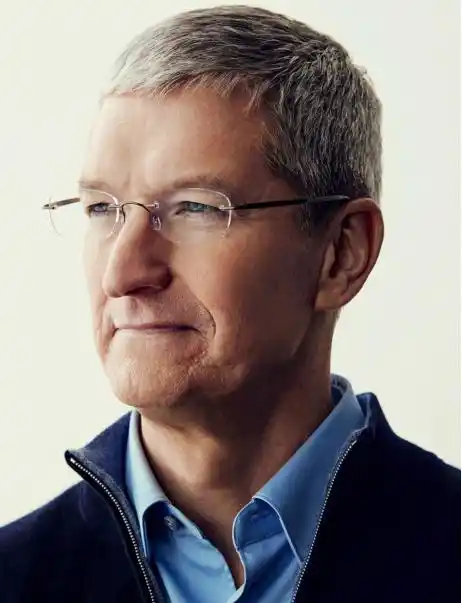
Tim Cook, Apple’s former CEO and current executive chairman, has been mentioned as one possible candidate. Yale management professor Jeffrey Sonnenfeld identified Cook as a potential option in an interview.
Cook has already succeeded a legendary founder. After taking over from Steve Jobs in 2011, he led Apple as annual revenue grew from roughly $108 billion to more than $416 billion in fiscal 2025. In September, Cook handed the CEO role to John Ternus and became executive chairman.
His experience could fit Nvidia’s immediate needs. Cook managed a global business, coordinated supply chains and dealt with governments around the world. When Apple announced his move to executive chairman, it specifically said he would remain involved in global policy engagement. Those skills would be relevant to a chip company whose sales locations and product types can attract government attention. Cook still works at Apple, though, and whether he would take the CEO job at another company remains uncertain.
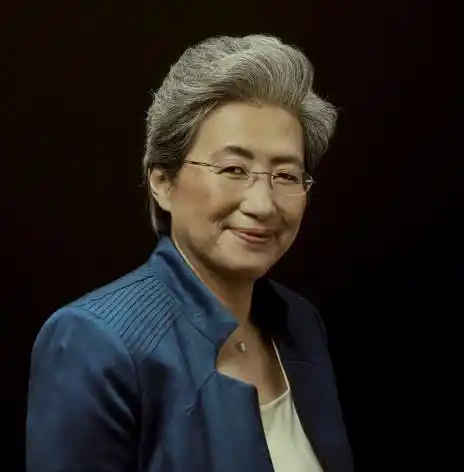
Lisa Su
Lisa Su is another name in the discussion. Some media reports have listed her alongside Arm CEO René Haas as a potential successor. Su has spent much of her career in chip research and management, holding positions at IBM and Freescale before taking over AMD in 2014. Her subsequent turnaround of AMD made her one of the most respected executives in the semiconductor industry.
Su knows Nvidia’s market and understands Huang’s products and competitive approach. Her industry experience and technical judgment would make a persuasive case. The obstacle is equally clear: she is leading AMD’s effort to compete in AI chips, with Nvidia as its most important rival. Leaving the company she has built over many years to take charge of its competitor would require a compelling reason.
René Haas
Haas has a distinct advantage: he is a former Nvidia employee. Before joining Arm, he spent seven years at Nvidia as vice president and general manager of the company’s computing products business. He became Arm’s CEO in 2022.
Haas has led a chip company and knows Nvidia from the inside, making him an external candidate worth watching. Like the other outside names, he already has his own job. If Nvidia needs a rapid change, promoting from within may be more practical.
Colette Kress
Among internal candidates, Nvidia CFO Colette Kress is mentioned most often. She has worked at Nvidia for 13 years and regularly represents the company in discussions with investors. Apart from Huang, she is one of the Nvidia executives most familiar to Wall Street. Analysts including Dan Ives have suggested that she could serve as interim CEO.
Kress knows the company’s financial and operating position and has relationships with investors, which could help stabilize Nvidia during a sudden leadership change. Her background is mainly in finance, though, and her ability to provide the technical and product leadership required over the long term is less clear.

Ian Buck
Ian Buck brings deep technical experience. He joined Nvidia in 2004 and is one of the core creators of CUDA. He now leads the company’s hyperscale and high-performance computing business.
Buck has been closely involved in the development of Nvidia’s AI hardware and software products. He has also worked with customers including Microsoft, Google, Amazon and OpenAI. He is already involved in Nvidia’s most important technology and business areas.
From a transition standpoint, one realistic arrangement could be for an internal executive such as Kress to serve as a bridge before Nvidia selects a permanent leader. Buck and Haas are both names likely to remain part of the discussion.
Musk says hiring Huang would be an honor
As outsiders debate who could succeed Huang, attention has also turned to his possible next job. On Nov. 12, someone suggested on X that Musk should hire Huang. Musk replied: “That would be my honor.”
Musk’s xAI model-training work and SpaceX’s plan to move data centers into space both depend on computing capacity. Huang’s experience in chip design, system construction and supply chains could be useful to those efforts.

The two sides have also been working together recently. On Oct. 15, Musk said publicly that SpaceX and Nvidia were jointly developing the Star Mind computer for space computing, with mass production planned for 2027. He praised Huang and Nvidia’s engineering team and described the collaboration as enjoyable.
If Huang joined one of Musk’s companies, Musk would gain an executive experienced in the AI-computing business and in managing a large technology company. Both men are accustomed to making final decisions themselves, so they would first need to settle how authority would work in the same organization.
Silicon Valley has seen comparable post-executive moves. In 2010, Mark Hurd left Hewlett-Packard over an expense-reporting issue. Oracle founder Larry Ellison publicly defended him and soon hired him. Hurd later became Oracle’s co-CEO.
Starting again, advising Nvidia or stepping back
Even if Huang loses Nvidia’s CEO position, his career would not necessarily end. Starting another company is one possibility. He has capital, experience and relationships with many important people in the industry. If he chose to build a new company, his starting point would be different from the one he had when he founded Nvidia.
Huang may not want to repeat the hardship of founding a company. In a 2023 podcast interview, the host asked what company he would start if he could return to age 30. Huang answered: “I would not do this.” He explained that founding Nvidia had been far more difficult than expected. If someone knew in advance how much pain and failure would be involved, he said, that person might never begin.

That answer does not rule out another startup. It does show that Huang understands the difficulty of rebuilding a company better than most observers.
Another possibility would be for Huang to leave the CEO role but remain connected to Nvidia as an adviser. Some analysts have proposed such an arrangement. It could preserve his experience for the company, provided the investigation and the relationship between Huang and Nvidia allow it. The new CEO would also need enough room to make genuine decisions.
Investing or gradually moving out of the spotlight are further options. Huang’s previous comments suggest that retirement was not part of his near-term plan. In March, he said on a podcast that he hoped to keep working until the end of his life.
Eight months later, whether he can continue working, and where, has suddenly become uncertain. Musk has already offered a welcome. Before considering the next job, Huang still has to deal with the current one at Nvidia.
This article originated from the WeChat account “Zimu Bang” (ID: wujicaijing), written by Xiao Jinya.



