
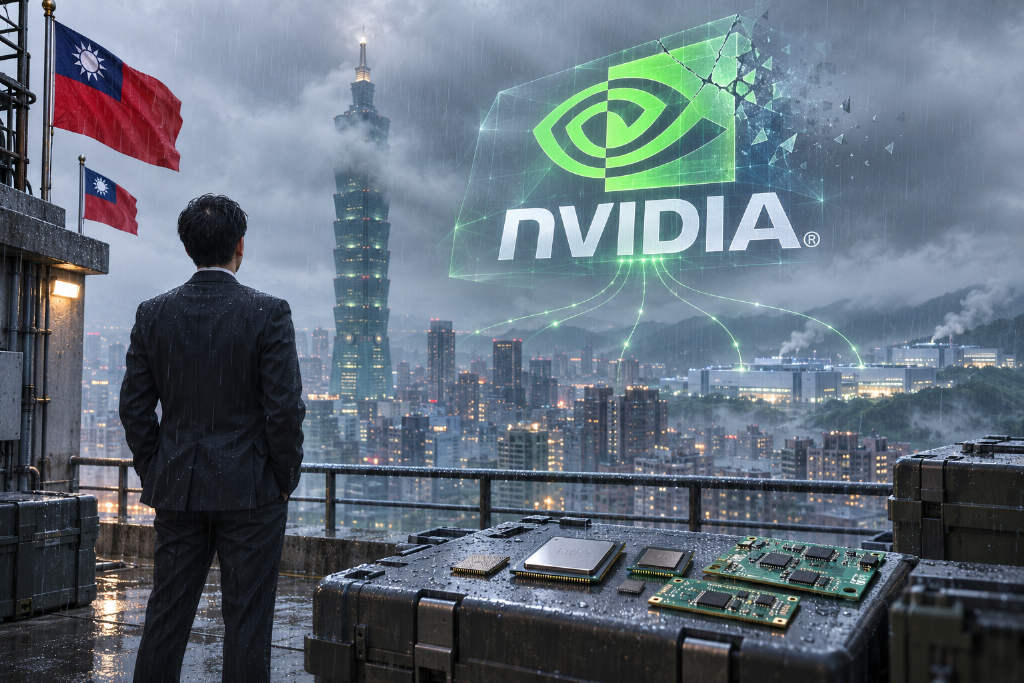
Nvidia founder Jensen Huang resigned as president, chief executive and a member of the company’s board on November 12, effective immediately. The change has put the company’s Taiwan supply chain under scrutiny: five of Nvidia’s 10 largest suppliers are based in Taiwan, and several manufacturers rely heavily on its business for revenue.
Kress Takes Interim CEO Role as Board Seeks Successor
Chief Financial Officer Colette Kress will serve as interim CEO while retaining her finance post, Nvidia said in an official announcement. The board will consider both internal and external candidates for the permanent position. Harvey C. Jones, a former Synopsys CEO, has become Nvidia’s first board chair.
The board said it expected no interruption to operations, customer commitments or product plans. Huang had recently faced controversy over an extramarital affair and questions involving espionage. He publicly admitted to being unfaithful to his wife and apologized; the affair involved a person connected to Chinese intelligence, prompting the board to launch an independent investigation. The board said it currently had no reason to believe national security had been compromised.
Four Concerns for Suppliers
ABMedia identified four main supply-chain concerns in its review of reporting by Economic Daily News and Reuters.
- Technology and product schedules: A new CEO may put more emphasis on finance and operations than on technology and engineering, raising questions about whether Nvidia can maintain its annual product upgrade cycle.
- Inventory during platform transitions: Shipments of the new Vera Rubin servers are beginning to ramp up, leaving customers facing a platform change before GB300 systems are fully deployed. If uncertainty leads customers to slow upgrades or defer purchases, system manufacturers could face inventory pressure and falling prices.
- US export controls: The United States could tighten chip export restrictions, affecting sales. Bank of America said broader US export scrutiny could also affect other American suppliers selling to China.
- Customer concentration: Bloomberg data shows Nvidia accounts for 36% of King Yuan Electronics’ revenue, 21% of Wistron’s and 19% of TSMC’s. Capital flows could put pressure on Taiwan manufacturers that depend heavily on Nvidia business.
In May this year, Huang said Nvidia’s annual spending in Taiwan, including supply-chain purchases, was about $100 billion and moving toward $150 billion. Taiwan businesses are watching the company’s subsequent plans.
Commitments to Four Taiwan Companies
Commercial Times reviewed Nvidia’s investment and capacity commitments to Taiwan manufacturers. Most are contracts or agreements that do not lapse because of Huang’s resignation. The risks lie in commitments not yet fulfilled and in coordination on future capacity expansion.
- King Yuan Electronics (2449): Nvidia provided $1.1 billion in advance payments to support the company’s US testing facilities and equipment. Given Nvidia’s large share of its revenue, a slowdown in orders would first affect utilization at the US plant.
- Siliconware Precision Industries: The companies plan to expand co-packaged optics (CPO) optical engine capacity in Taiwan to 15 times its current level by mid-2027, then double it again by the end of 2028. Changes to Nvidia’s product schedule or demand expectations could leave capacity idle.
- Unimicron (3037): A capacity reservation agreement supports expansion of KF substrate capacity in Taiwan. Supply is expected to increase in the second quarter of 2027, with full utilization targeted by mid-2028.
- MediaTek (2454): Nvidia announced in August this year that it would subscribe to $3.5 billion of MediaTek’s overseas convertible bonds, deepening cooperation in cloud artificial intelligence (AI), edge computing and automotive applications.
ABMedia noted that the list covers only companies receiving explicit support from Nvidia. It does not include Wistron and TSMC, which also depend heavily on Nvidia, at 21% and 19% of revenue, respectively.
November 17 Earnings and Customer Orders
Nvidia is scheduled to release its fiscal 2027 third-quarter results and hold an earnings call on November 17, US West Coast time. The event will be a chance to examine the new management team’s approach to capital spending, customer orders and the supply chain, with attention also on the choice of a successor.
Bank of America advised Taiwan suppliers to check whether customers can obtain products without disruption and whether orders or operational execution have changed. If Nvidia becomes distracted, AMD, Broadcom and Marvell could take orders, the bank said. It also said that if AI spending continues while chip suppliers’ market shares shift, the benefits to Taiwan and South Korea could diverge, potentially changing which sectors lead Asian stock markets.



