
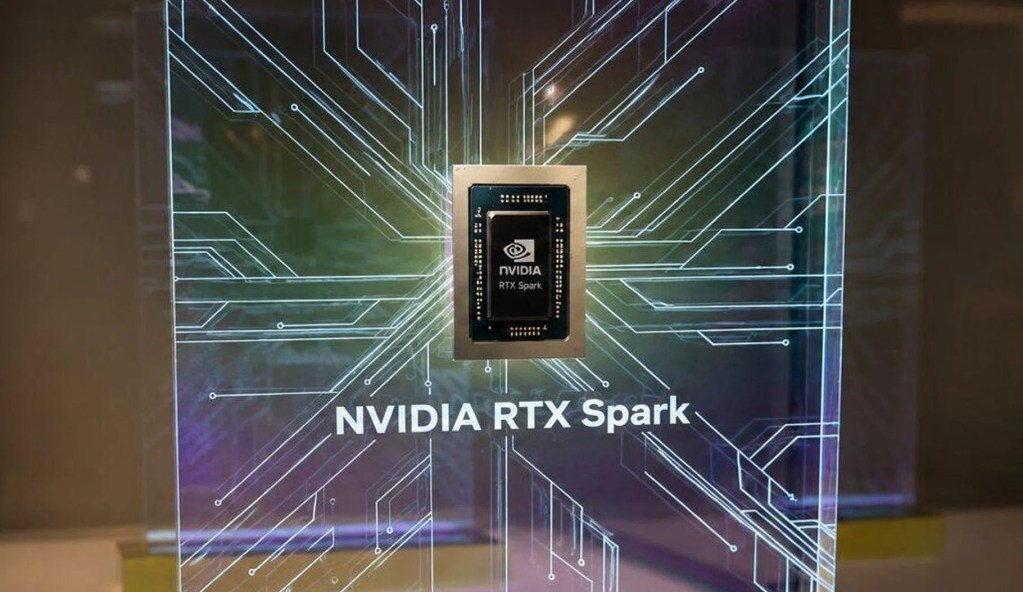
NVIDIA said at SIGGRAPH 2026 that AI PC and AI workstation products powered by the RTX Spark chip are expected to launch as early as this fall. The platform was jointly developed by NVIDIA and MediaTek, and the announcement points to a broader push to bring AI agents from the cloud onto edge devices.
The source article, citing Commercial Times, said next-generation AI systems based on RTX Spark will start rolling out this fall. NVIDIA named ASUS and MSI as the first brands expected to launch products, with Acer and GIGABYTE set to follow.
From local inference to AI agents
Discussion around AI PCs has often centered on stronger local inference. The article said AI agent systems demand more than that. They need to call applications continuously, combine sensor data, run physical simulations, and handle multiple tasks at the same time, all of which raise performance requirements.
RTX Spark is aimed at those workloads. The platform is described as supporting LLM inference, industrial design, application development, digital twin use cases, and physical AI, setting it apart from earlier consumer-oriented AI PC products.
Agent Toolkit adds Omniverse integration
NVIDIA also said its Agent Toolkit has now been integrated with the Omniverse library. That gives AI agents access to GPU-accelerated physical environments for training and is intended to cut development time.
According to the article, tasks that previously took significant time and resources, including robot training, autonomous system simulation, and smart factory deployment, can now be rehearsed more efficiently in virtual environments before being mapped back into the real world. In that framing, RTX Spark is presented not only as a hardware platform but also as an entry point into an enterprise AI automation ecosystem.
MediaTek’s role in edge AI
The article said another key point is MediaTek’s emergence as an important partner in NVIDIA’s AI agent ecosystem. MediaTek has long focused on Arm-based SoCs, high-speed I/O, and AI computing technologies. Its joint work with NVIDIA on an edge AI platform marks a shift from a supplier role toward a broader ecosystem-building position.
From an industry perspective, the article said MediaTek has been expanding beyond its core smartphone chip business into data center ASICs, AI accelerators, and automotive computing platforms. As AI workloads move from the cloud to the edge, demand for AI PCs, AI workstations, and on-premise enterprise AI deployments is also rising. The article said institutional investors generally expect this trend to become a new growth driver for MediaTek.
Taiwan supply chain names highlighted
The source article also outlined several layers of potential gains for Taiwan’s hardware supply chain as RTX Spark products move toward launch.
- Brand vendors: ASUS (2357), MSI (2377), Acer (2353), and GIGABYTE (2376) were identified as early partners for AI workstation products.
- Thermal solutions: Because AI workstations have higher power density than traditional workstations, thermal requirements are expected to rise. AVC (3017), Auras (3324), and Jentech (3653) were listed in the article.
- High-speed connectivity and power management: BizLink-KY (3665) and Delta Electronics (2308) were named as potential beneficiaries. The article said BizLink-KY is competitive in high-speed cable connectivity, while Delta has a long-standing presence in power solutions.
The article added that the rollout pace of the RTX Spark platform could become an indicator for tracking second-half order visibility across those suppliers.