
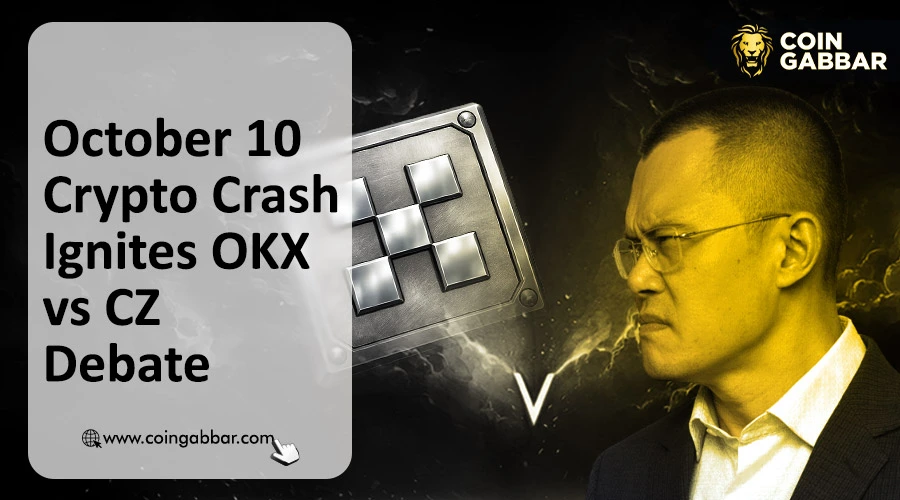
The crypto market is split over who caused the October 10 crash, the largest single-day wipeout in digital asset history with $1.9 billion in losses. OKX CEO Star Xu publicly blamed Binance and its founder Changpeng Zhao (CZ), accusing them of running "irresponsible" marketing campaigns that endangered the entire market. CZ dismissed the accusations as "far-fetched," insisting the collapse was driven by global macroeconomic turmoil.
USDe at the Center of the Dispute
The core argument revolves around a token called USDe. OKX claims Binance treated USDe as a safe stablecoin when it was actually a high-risk investment. This created a "leverage loop": users borrowed money to buy USDe, then used USDe as collateral to borrow more. When prices dipped, the house of cards collapsed, resulting in $1.9 billion in liquidation on October 10.
Star Xu: Short-Term Yield Games Broke Trust
Star Xu did not hold back, stating that by giving USDe "special treatment" as collateral for large loans, Binance artificially inflated a bubble. He argued that "short-term yield games have destroyed the trust the industry spent years building." Even a minor market shock, he said, was enough to trigger the crash because the system was already overleveraged.
Binance's Defense: Macro Shock, Not a Single Exchange
Binance released a report attributing the October 10 crash to a "macro shock." Key points include: a surprise 100% tariff announcement from the U.S. that rattled all markets; Ethereum network congestion that prevented market makers from moving funds quickly; and thin order books across all exchanges, meaning too few buyers to stop the fall. CZ also noted that most liquidations occurred before Binance experienced any technical glitches, arguing the crash was a natural—though painful—market cleansing of bad debt.
Industry analysts believe the feud could push exchanges toward greater transparency, with fewer "get-rich-quick" products and more emphasis on "proof of risk." While the Binance-OKX debate continues, the market is slowly recovering. Many view the crash as a stress test that crypto survived, albeit at a steep price.