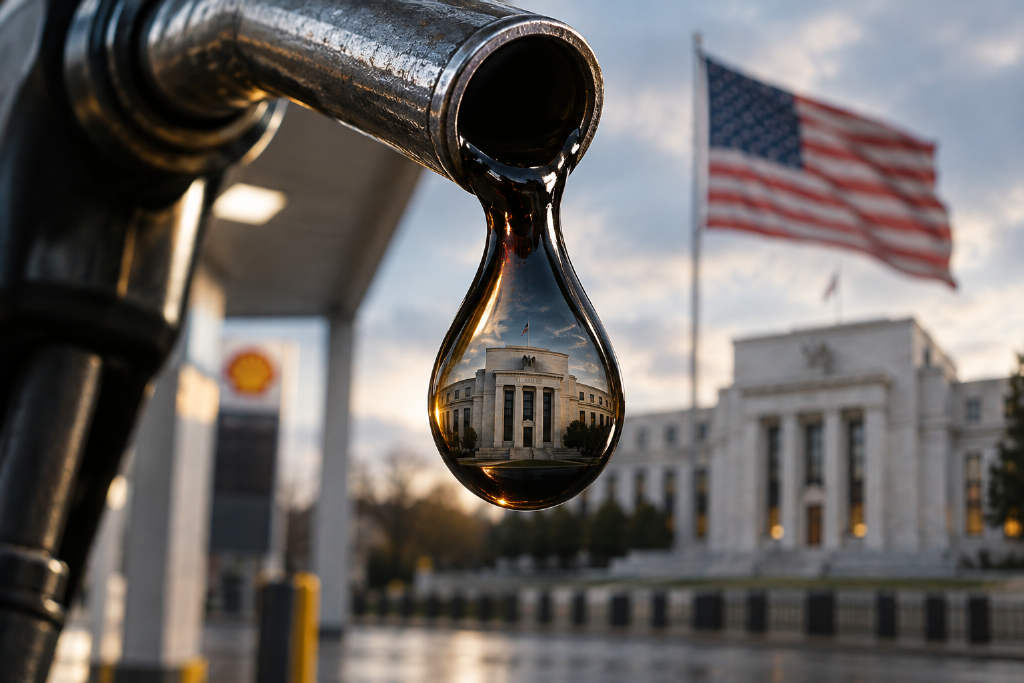
Oil prices moving back toward $100 a barrel are reviving concerns about how the Federal Reserve may read inflation pressure tied to energy. On Sept. 9, BlockBeats reported that Wellington Altus chief market strategist James Thorne warned the Fed could repeat a policy error seen before the 2008 financial crisis if it chooses to raise rates during an energy supply shock. His point was that higher energy costs do lift inflation, but they also erode household purchasing power and weigh on growth, making the policy trade-off harder than a simple demand-overheating story.
Thorne said tighter financial conditions, if imposed to demonstrate the Fed’s resolve on inflation, could deepen downside risks for the economy instead of containing them cleanly. He drew a parallel with the period before the 2008 crisis, when the Fed paid too much attention to inflation risk from energy prices and underestimated the broader drag from high energy costs.
Recent market moves add context. WTI crude has risen more than 20% over the past month, while Brent crude is up more than 18%. At the same time, a New York Fed survey showed a further deterioration in how U.S. consumers view their household finances, with the perceived probability of unemployment rising over the next year climbing to 44.4%, the highest level since April 2020. Investors are now watching U.S. August PPI and CPI data due this week, ahead of the Fed’s Sept. 15-16 policy meeting, after five straight decisions to leave rates unchanged.
Oil prices are moving back toward $100 a barrel, and one market strategist says that could put the Federal Reserve at risk of making the wrong call again.
According to BlockBeats on Sept. 9, Wellington Altus chief market strategist James Thorne warned that if the Fed raises interest rates during an energy supply shock, it could repeat the kind of policy mistake seen before the 2008 financial crisis by treating higher energy prices as a sign of overheating demand.
Thorne said rising energy prices push inflation higher, but they also cut into household purchasing power and weigh on economic growth. If the Fed tightens financial conditions again to show its anti-inflation stance, he said, that could end up increasing downside risks for the economy.
Thorne draws a parallel with the pre-2008 period
In his view, the current policy setting shares similarities with the period before the 2008 crisis. At that time, the Fed focused too heavily on inflation risks created by higher energy prices and underestimated the damage that elevated energy costs could do to the broader economy.
Recent oil moves have added to that concern. WTI crude has climbed more than 20% over the past month, while Brent crude has risen more than 18%.
Consumer outlook weakens as markets await inflation data
At the same time, a New York Fed survey showed that U.S. consumers have grown more negative about their household financial situation. The perceived probability that unemployment will be higher a year from now rose to 44.4%, the highest reading since April 2020.
The Fed is scheduled to hold its next policy meeting on Sept. 15-16 after leaving rates unchanged for five consecutive meetings. Markets are now watching U.S. August PPI and CPI data due this week to assess whether the latest energy shock could lead the Fed to reconsider a rate hike.
This article was originally published by Bit.Fan. For more cryptocurrency news and market insights, visit www.bit.fan. Disclaimer:
The market information, project data, and third-party content displayed on this platform are for industry information sharing only and do not constitute any form of investment advice or return commitment.
Cryptocurrency trading carries high risks. Users should fully assess their risk tolerance and make independent decisions. All profits, losses, and legal responsibilities are borne by the users themselves.