
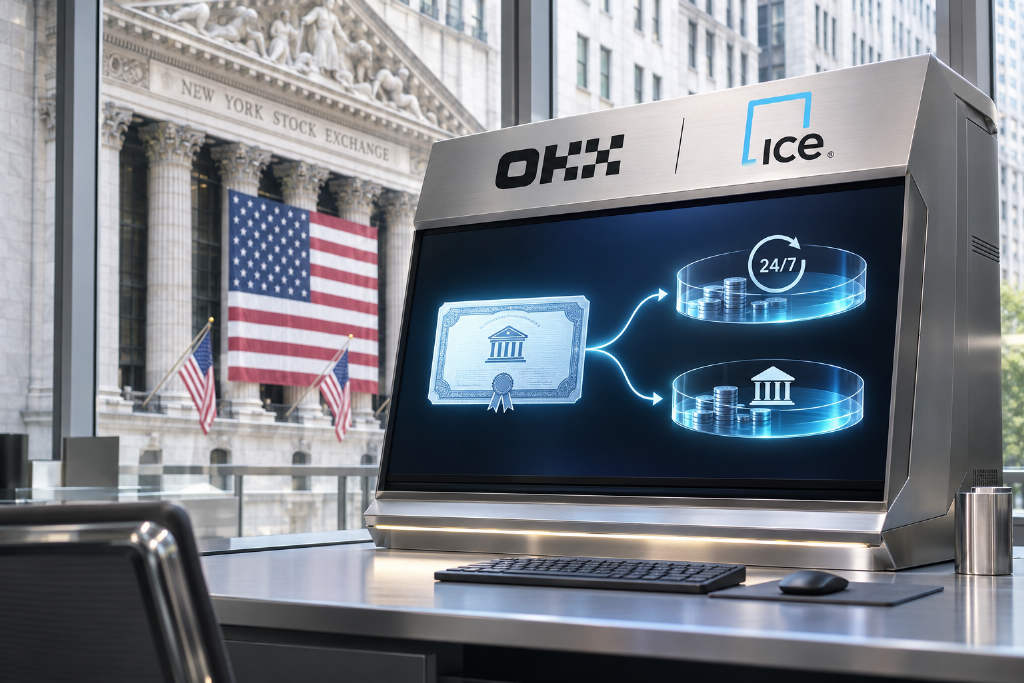
OKX and Intercontinental Exchange (ICE), the parent of the New York Stock Exchange, are set to launch tokenized stock trading through their OKXICE venture on Nov. 23. The debut will test a temporary exemption from the US Securities and Exchange Commission as 67 companies object to having their shares listed and Nasdaq warns that disconnected trading venues could split liquidity.
Trading under the SEC exemption
OKXICE will operate under the SEC’s temporary Innovation Exemption and offer round-the-clock trading to eligible US customers. The exemption requires venues to give companies an opportunity to object before listing shares tokenized by an unaffiliated third party.
JPMorgan Chase, McDonald’s, SpaceX and Coca-Cola were among the companies that objected. OKX expects the venue to list more than 70 assets, including 59 exchange-traded funds, or ETFs, and tokenized shares of Coinbase, Circle, BitGo, Robinhood and Strategy. Strategy preferred shares will also be included.
Tokenized stocks are blockchain-based tokens that represent company shares or track their prices. The rights attached to them depend on how each product is structured. The distributed value of tokenized stocks and ETFs reached $3.88 billion on Nov. 11, up 13.4% over 30 days.
Andrew Cuomo, a former New York governor and co-chair of OKXICE, told Cointelegraph that investors would have 「the same rights, protections and ownership that come with the underlying shares.」
Liquidity concerns across trading venues
The launch comes as market participants consider what may happen when the same shares trade on traditional exchanges and blockchain platforms. Splitting activity between separate venues could weaken liquidity and make prices less reliable.
A study published by the International Monetary Fund in October found that tokenized stocks were about 1.5 times as volatile as the same stocks in traditional markets. Decentralized exchanges had the weakest liquidity, and their prices deviated further from traditional-market prices than prices on centralized exchanges.
The IMF also warned that combining trading and settlement on a blockchain could remove safeguards that help markets absorb shocks. Greater use of leverage and closer links between markets, as tokenized markets expand, could amplify fire sales, liquidity runs and financial contagion.
Nasdaq said in a filing submitted in January that trading tokenized stocks on platforms outside traditional market rails could fragment liquidity and make it harder for investors to obtain the best available price.
Regular US stock trading runs from 9:30 a.m. to 4 p.m. Eastern time on weekdays, excluding market holidays. Some brokers also offer premarket, after-hours and overnight trading.
Cuomo described the existing market structure as 「built for another era」 and said crypto markets had already shown that trading could operate around the clock. 「Now we are bringing that standard to equities, without asking investors to settle for synthetic exposure or give up their shareholder rights,」 he said.



