



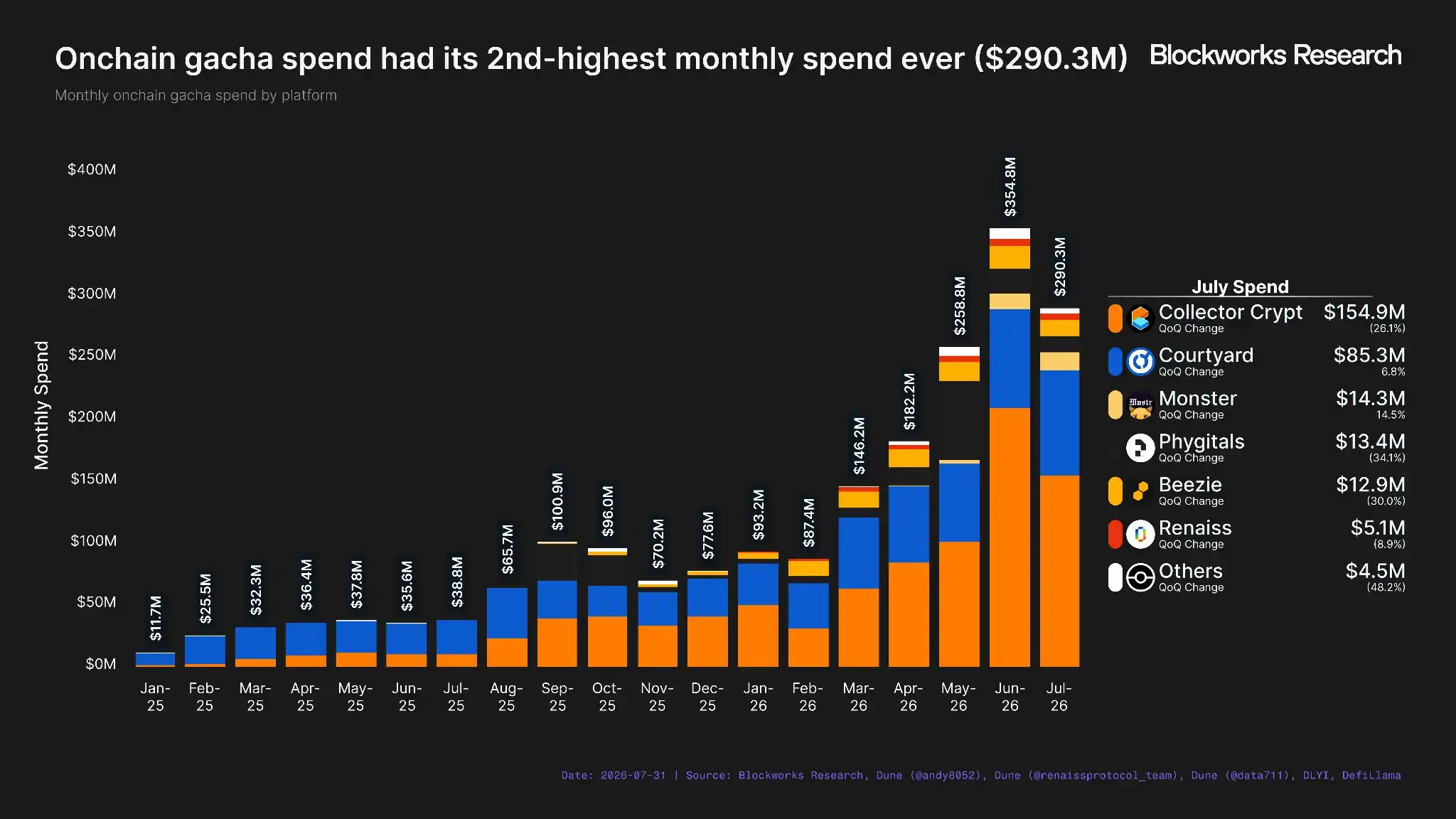
On-chain pack-opening activity, one of crypto’s hottest segments in 2026, posted its first monthly pullback since February in July. Total spending came in at $290.3 million, down from June’s record $354.8 million, though still the second-highest monthly figure on record.
The market note was written by Marc Arjoon and Jake Koch-Gallup and translated by TechFlow. It argues that the slowdown in on-chain pack openings coincided with rising trading activity on memecoin venues such as Pump.fun, pointing to a possible rotation in speculative crypto capital.
Crypto stocks outperformed, but the broader tape stayed soft
Over the past 24 hours, the 2025 crypto equities basket was the market’s best-performing group, up 2.6% and the only segment to post a notable gain. Most of that move came from Galaxy, up 3.6%, and Circle, up 3.1%, after both companies released Q2 earnings.
The note says Circle benefited from already muted expectations after Morgan Stanley cut its price target by 64% to $38. Even so, the strength was narrow. Bullish fell 1.5%, Gemini slipped 0.6%, and the broader crypto equities index lost 1.1%, suggesting the move was driven by company-specific earnings reactions rather than a sector-wide re-rating.
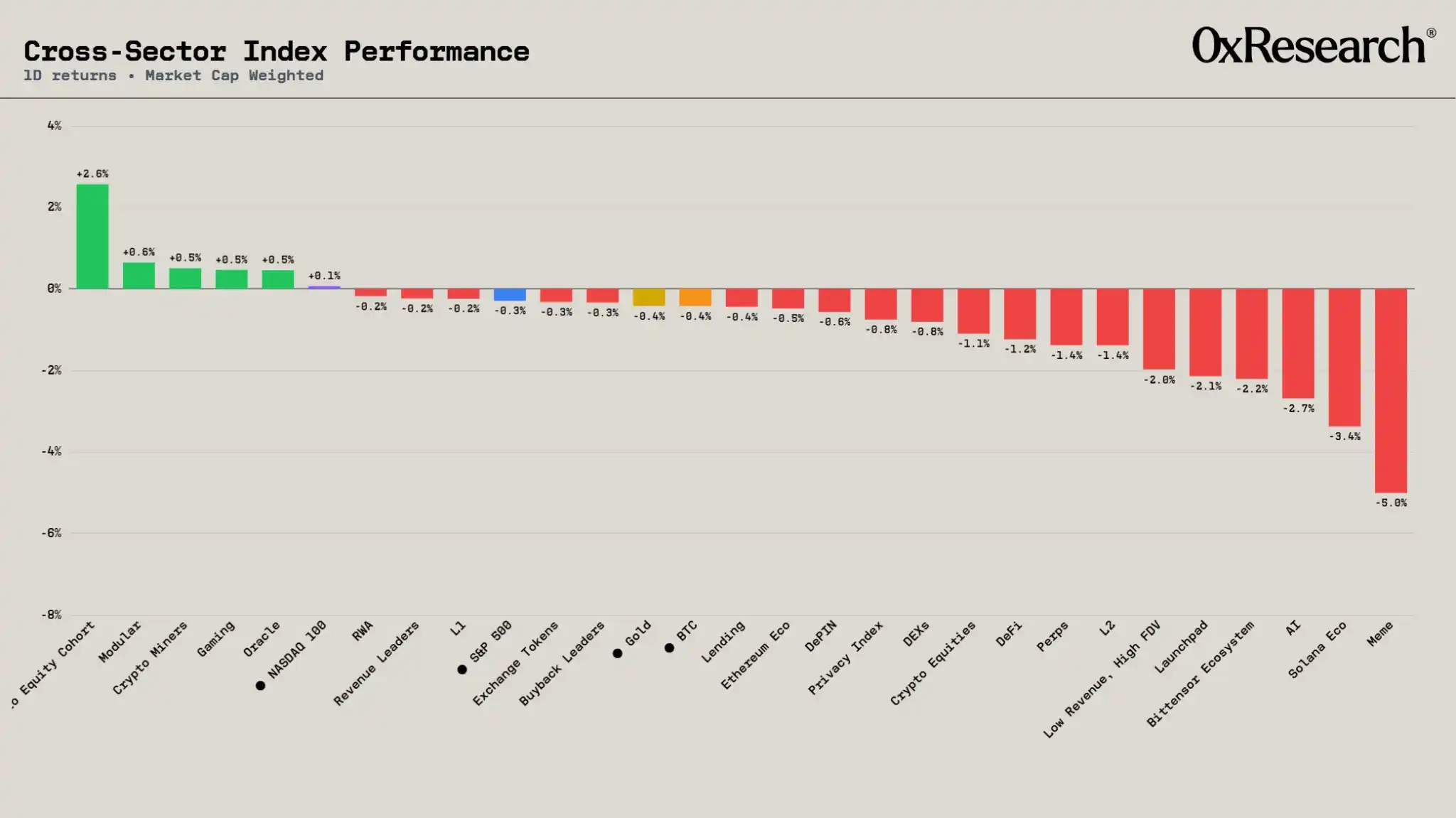
Elsewhere, price action leaned negative. With equities consolidating below record highs this week, BTC fell 0.4%, roughly in line with gold, down 0.4%, and the S&P 500, down 0.3%. The report says BTC once again showed downside resilience during an equity pullback, but that resilience did not turn into meaningful upside participation.
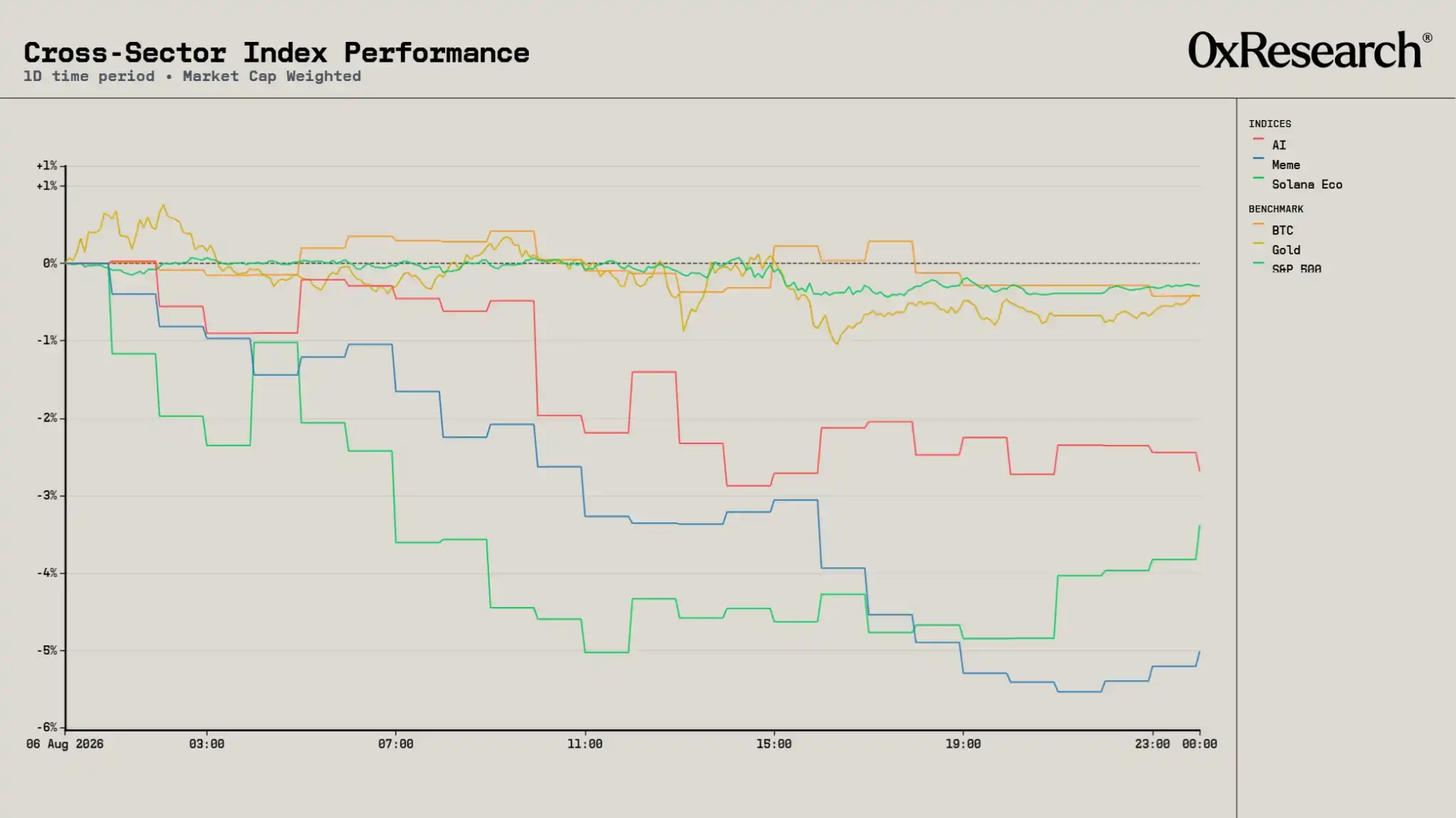
Within digital assets, relative strength came from inside crypto rather than outside it. BTC sat near the top of the board while long-tail assets sold off. Meme tokens fell 5.0%, the Solana ecosystem dropped 3.4%, and AI-related assets were down 2.7%.
ETF flow correlation rose as market-wide correlation and volatility fell
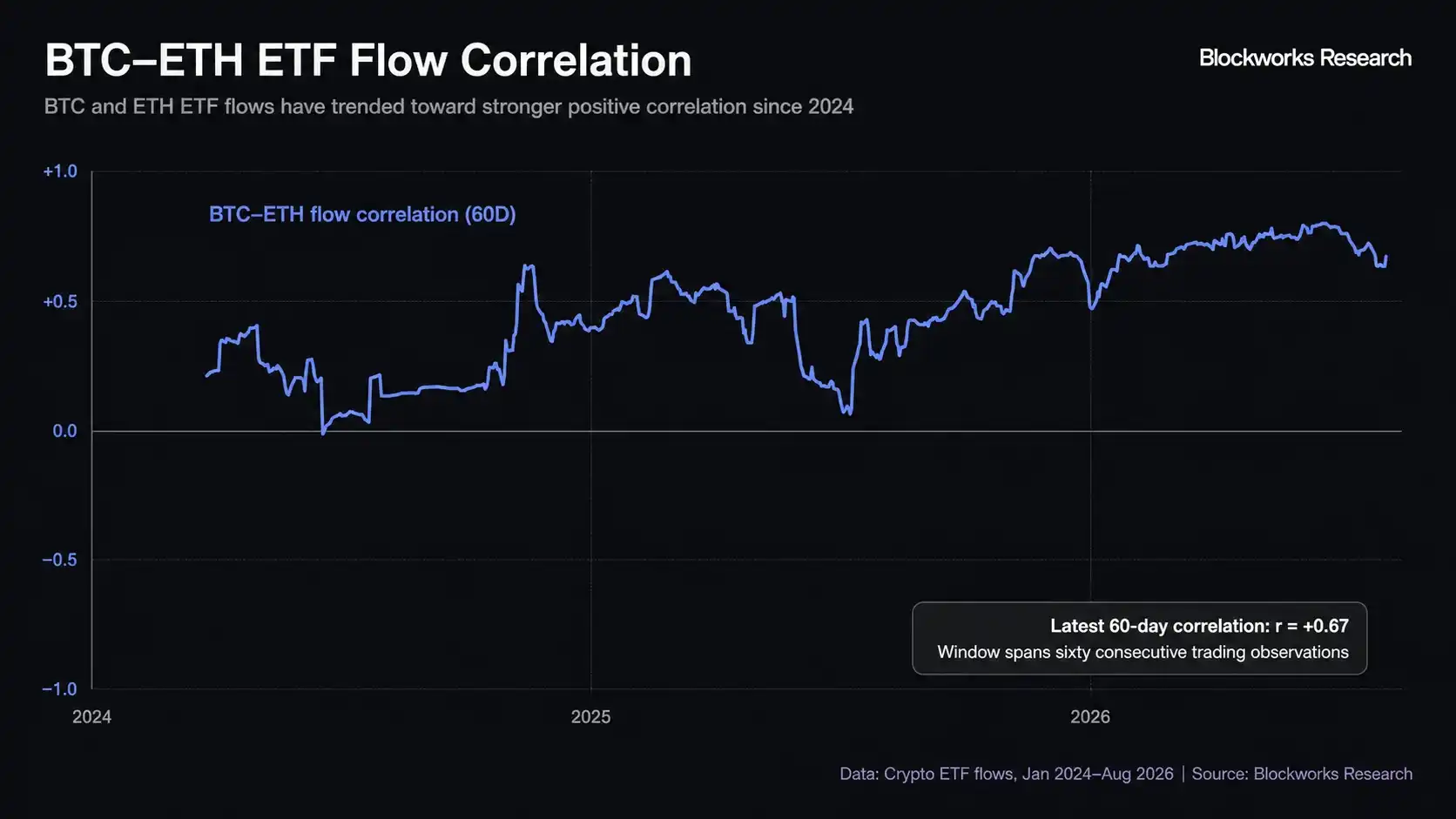
The authors say ETF flows into BTC and ETH have remained weak, and the two have been moving more closely together. Their 60-day rolling correlation has risen to +0.67, near the top of its range. In the report’s framing, ETF demand is acting more like a single crypto allocation, which it says is common in down markets.
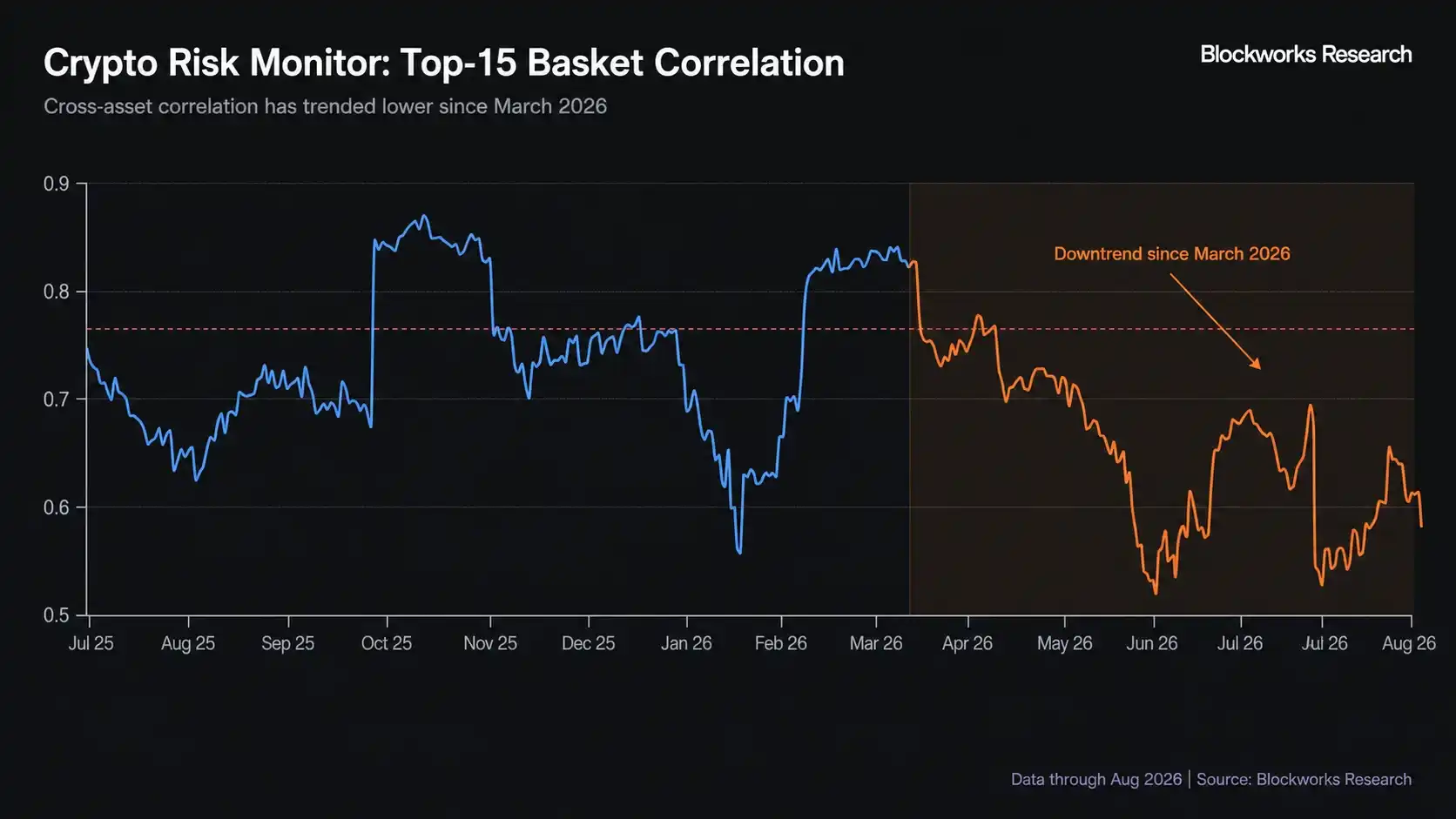
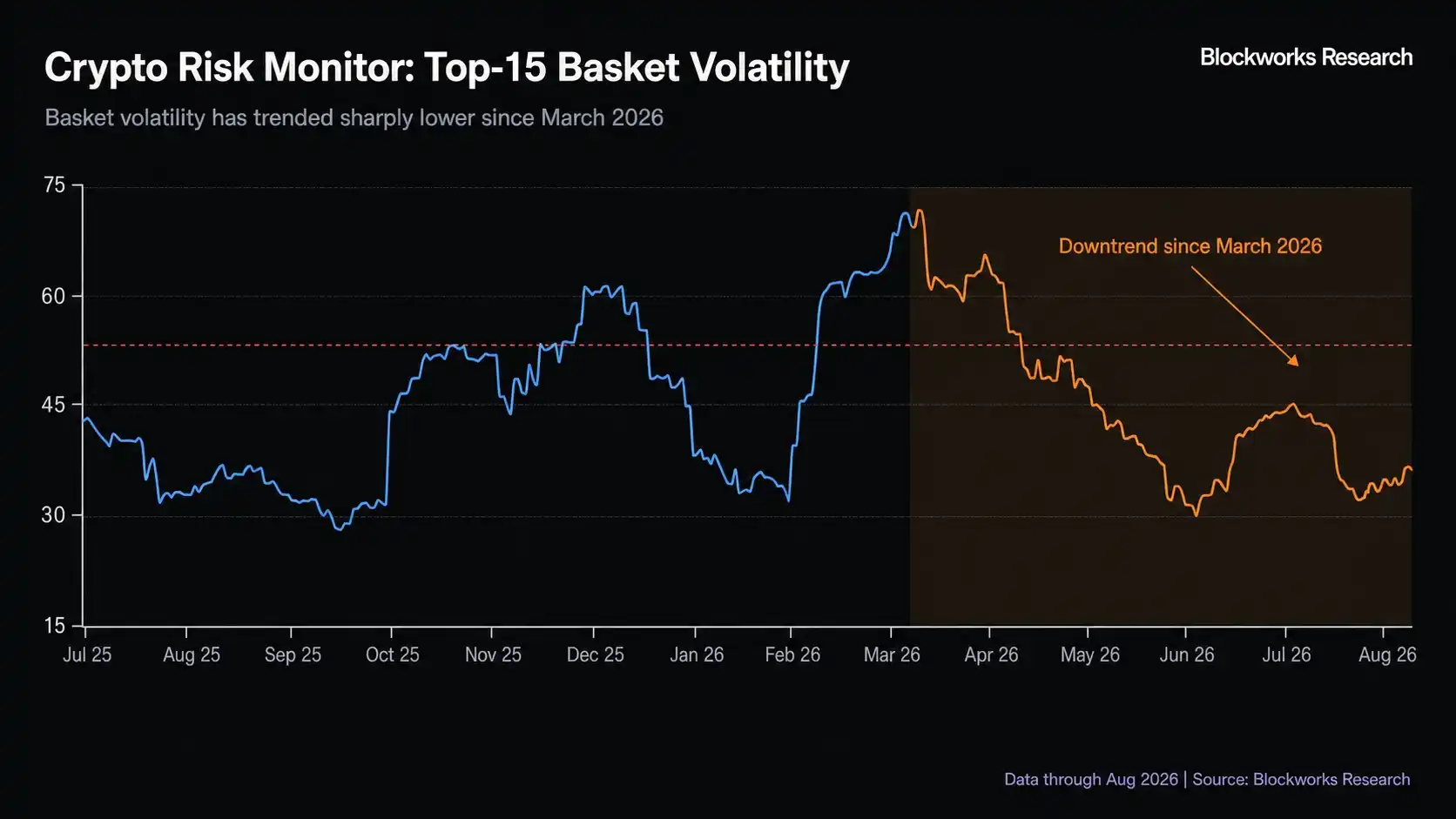
At the same time, broader market correlation has been trending lower since March 2026. That has reduced overall co-movement and produced a more segmented trading environment.
Volatility has also eased sharply. Market volatility has fallen from above 60 in March to the low 30s in August. The note says those readings now sit comfortably below the risk threshold, a sign that conditions have become calmer.
With both volatility and correlation down, the authors argue that one major ingredient is still missing for a new bull cycle: sustained upside in BTC.
Collector Crypt stayed on top, but July spending pulled back
July’s on-chain pack-opening spend totaled $290.3 million, second only to June’s $354.8 million. For the fifth straight month, Collector Crypt was the largest platform, generating $154.9 million in spending and accounting for 53% of the July total.
That said, Collector Crypt’s monthly spending fell 26% from $209.5 million in June, making it the main drag on the month’s broader decline.
Courtyard hit a record as less crypto-native demand held up
Courtyard moved in the opposite direction. The platform posted its best month on record in July at $85.3 million, up 7% month over month and equal to 29% of all on-chain pack-opening spend for the month.
The report says Courtyard may have the least crypto-native user base among the major platforms. Its continued growth is presented as evidence that on-chain pack openings can appeal beyond the existing on-chain trading crowd, and that real collector demand remains in place.
Monster rose to No. 3 after product updates
Platform rankings shifted in July. Monster passed both Phygitals and Beezie to become the third-largest pack-opening platform for the month. It generated $14.3 million in volume, up 15% from the prior month.
Monster also rolled out a pair of user-experience updates:
- Lucky Boost: opening a regular card increases the expected value of the next pack by 0.1%
- Dupe Shield: drawing the same card in consecutive packs gives the user a free pack
Those features launched on July 17 and July 23, respectively. From the Lucky Boost launch through month-end, Monster produced $9.7 million in trading volume, or 68% of its July total.
Phygitals and Beezie both posted weaker months despite their own product releases. Phygitals generated $13.4 million in July, down 34% month over month, and launched a mobile app near the end of the month. Beezie recorded $12.9 million, down 30%, and expanded to Solana on July 23.
Taken together, the top five platforms — Collector Crypt, Courtyard, Monster, Phygitals, and Beezie — accounted for 97% of July on-chain pack-opening spend.
Secondary trading card volume stayed near record highs
Looking beyond pack openings, the broader trading-card market did not show the same drop. Secondary market trading volume for trading cards came in at $694.7 million in July, almost unchanged from $695.6 million in June and still near all-time highs.
That matters because it suggests softer July pack-opening activity was not driven by weakening demand for trading cards themselves.
Rising Pump.fun activity points to a possible capital rotation
The note offers another explanation: on-chain pack openings may now be competing more directly for the attention and capital of crypto-native traders.
Across July, spending on Collector Crypt fell while Pump.fun trading volume rose. Collector Crypt’s daily average spend dropped from $5.6 million in the first seven days of July to $3.4 million in the last seven days, a decline of 39%. Over the same period, Pump.fun’s daily average trading volume increased from $320.6 million to $388.5 million, up 21%.
The authors do not treat that relationship as proof of causation. Still, they say the pattern is intuitive. A meaningful share of Collector Crypt’s users consists of active on-chain traders who tend to rotate toward whichever category is hottest. As memecoins regain momentum, some of the capital and attention that had been flowing into on-chain pack openings may be shifting elsewhere, even as baseline trading-card demand stays firm.
Courtyard’s performance supports that reading in the report’s view. While most crypto-native pack-opening platforms pulled back, Courtyard set a new high in July. Because its user base appears less crypto-native, those users may be less likely to rotate back into memecoins when speculative activity picks up.
For now, the report concludes that July’s decline looks more like a natural pullback, one that may have been amplified by the revival in memecoin trading rather than evidence of a broader slowdown in the trading-card market.