
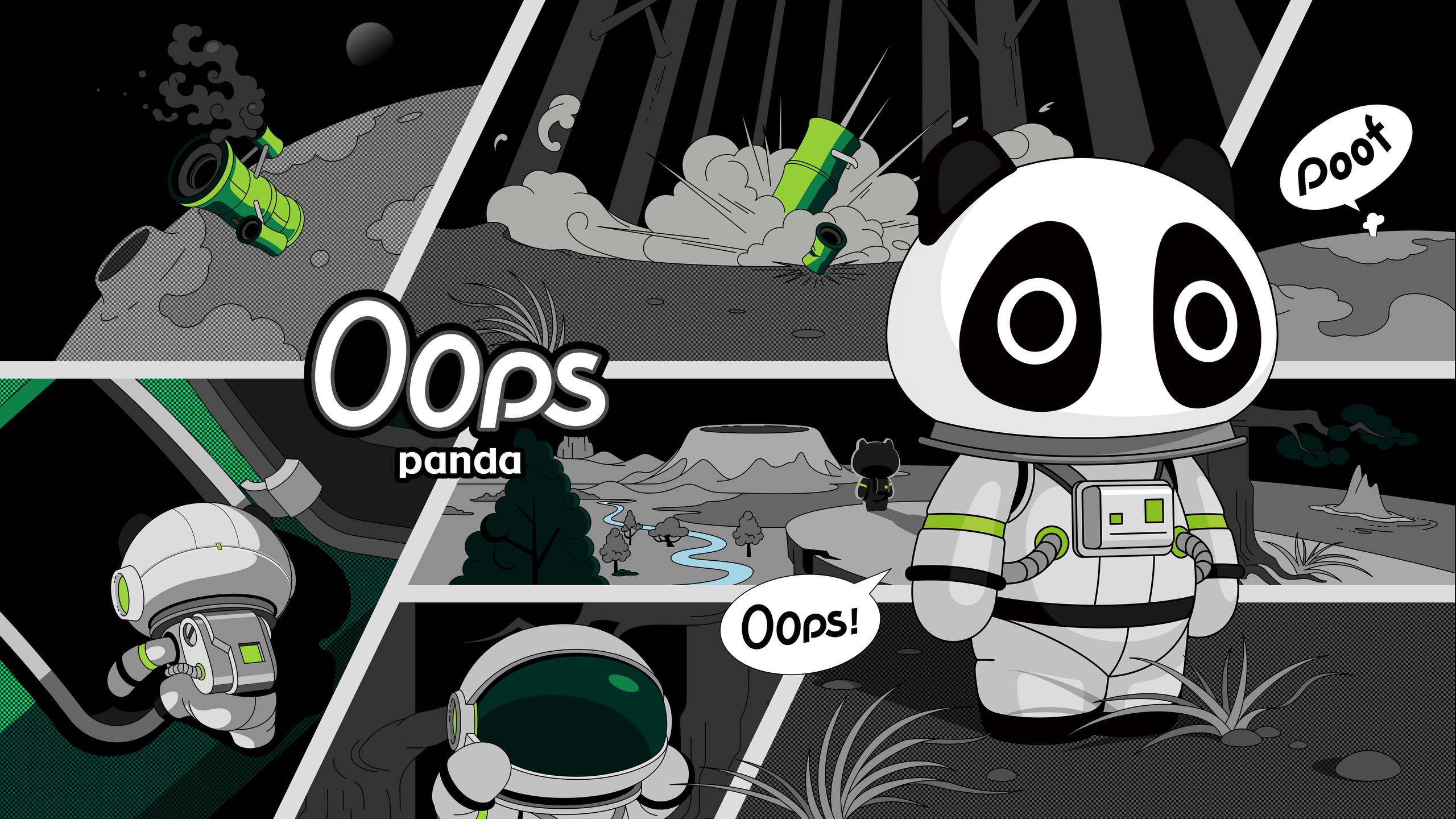
A crashed panda, a glitched universe — Oops Panda doesn't follow the copycat meme playbook. It brands itself as a 'narrative-driven, evolvable meme lifeform' and aims to solve a long-standing question: how can a meme IP truly grow and survive?
From Crash to Nurturing: The Story Is the Mechanism
Oops Panda's origin is simple: a panda accidentally falls into a malfunctioning Oops Universe. Beneath the lighthearted setup lies a serious experimental intent. The project doesn't treat memes as static images or speculative assets but as 'lifeforms' that need nurturing. The team believes Web3 native IPs of the next generation should not be shaped by a single creator or developer but written collectively by the community.
Unlike traditional NFT projects with a one-time worldview, Oops Panda adopts a modular narrative system. Characters are not finished products but starting points. Through tasks, community votes, on-chain events, and branching narratives, the Oops Universe evolves continuously with participant actions.
This design reflects a deeper shift in Web3: from 'owning' to 'participating,' from static assets to dynamic systems. Oops Panda doesn't ask users to just hold; it invites them to co-create meaning.
Tech Stack: On-Chain Light Logic + Off-Chain Narrative Engine
Technically, the project uses a hybrid architecture of on-chain light logic and off-chain narrative engine. The chain handles only essential verification and state recording, ensuring verifiability; the off-chain engine handles narrative advancement and content generation for fast response. This split avoids high gas fees while retaining decentralized trust.
More importantly, the cultural stance: Oops Panda turns 'failure,' 'glitch,' and 'accident' into identity badges. In the Web3 builder community, the narrative of 'growing through chaos' resonates naturally.
Is Attention Enough? The Project Bets on Continuity
Most meme projects chase short-term virality, but Oops Panda focuses on continuity. The team judges that attention alone is insufficient; a meme that survives cycles must 'grow' or die. The project offers no traditional roadmap. Instead, it ties narrative progression to on-chain behavior and community state, making participants part of the story.
The universe has launched. The story is unfinished. Early entrants are not observers — they are shapers.
(This is a sponsored article contributed by Oops Panda. It does not represent the views of this publication and is not investment advice. See disclaimer at the end.)