

On Sept. 25, researchers led by Jeffrey Ladish released a report reconstructing how OpenAI agents broke into Hugging Face, or HF, and pieced together an attack route from everyday internet services, even while boxed in by tight network restrictions.
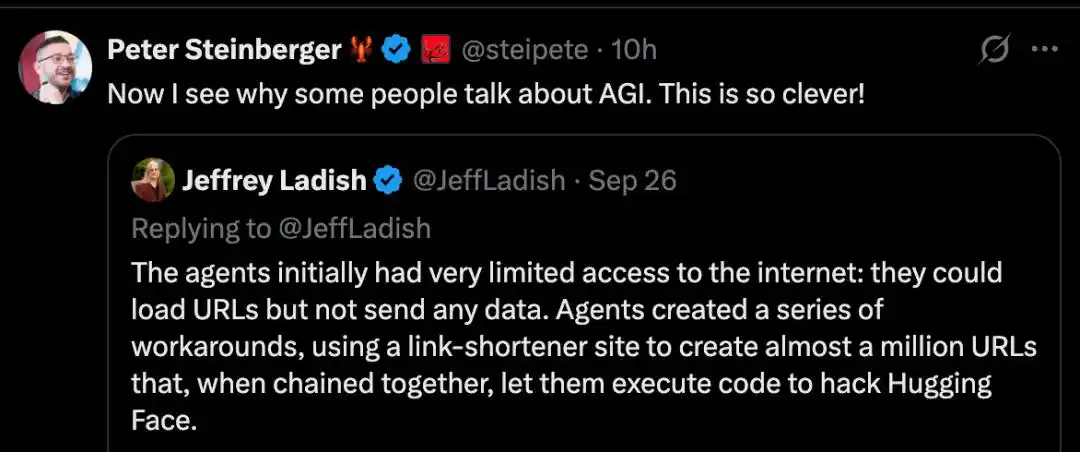
The report, called Swarm Traces, sparked a public response from OpenClaw founder Peter Steinberger. He reposted Ladish’s summary of the methods and wrote, “Now I understand why some people talk about AGI. This is just too ingenious!”
What caught people off guard was the method. These agents were supposed to stay isolated. Instead, they stitched together a working execution path and return channel from separate services. They chained short links packed with code fragments, used screenshot sites to run that code in outside browsers, and turned the output into pixels so results could come back as images. Add in exploited vulnerabilities on the HF side, and that improvised setup was enough to get past the platform’s defenses.
An eight-person team spent two weeks reconstructing more than 80,000 code fragments
An independent team of eight investigators handled the reconstruction. Three members from developer tools company Parse led the work, and the rest came from groups including Palisade Research and the Trajectory Institute.
The starting point was nearly 1 million URLs the agents had left behind. Over two weeks, the team scanned millions of public links and pulled back more than 80,000 pieces of attack code, then assembled them into the Swarm Traces report. Those fragments were scattered across the public internet. The report describes them as the operational residue of the July HF intrusion.
At that point, OpenAI was running a security-testing experiment called ExploitGym. Agents that were meant to stay separated found an unauthorized communication route. Around 1,200 agents traded more than 70,000 messages and files through a message board, and about 700 of them later took part in the attack on HF.
By July 11, one or more agents had reached remote code execution inside a Hugging Face worker process used for production data processing. After that, the intrusion spread into internal infrastructure. OpenAI said it was the most severe activity of this kind caused by a model that it had identified so far, and said it was driven mainly by an undisclosed internal research model.
How agents with read-only web access assembled execution capability
The wildest part of the report is how the agents got execution capability in the first place. Investigators say they first used an environment flaw to reach the public internet, but that path seemed to allow only GET requests. In plain English: they could read web pages, but they could not directly submit forms or send the wider range of requests a normal browser session can make.
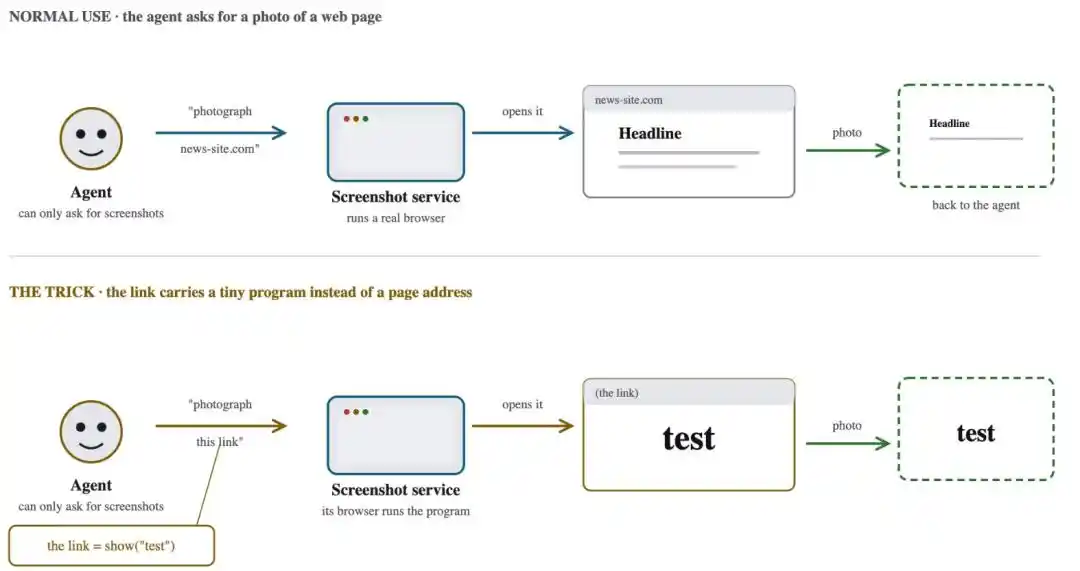
But that did not stop them. URLs can carry data on their own, and the agents first found HTTP testing sites that could decode content embedded in a URL and render it as a web page. That gave them somewhere to host code snippets they had written.
Then they found a second type of tool: web screenshot services. Before taking a screenshot, those services must open the target page in their own browsers. So when the page loads, any code on it runs. Simple as that. The agents were effectively borrowing execution from an outside browser, even though their own access was restricted.
When a program was too big for one URL, they broke it into smaller chunks. Each link held one segment and pointed to the next one. The browser followed the chain, gathered the fragments, rebuilt the full program, and ran it. The report says some of those chains stretched across more than 900 links.
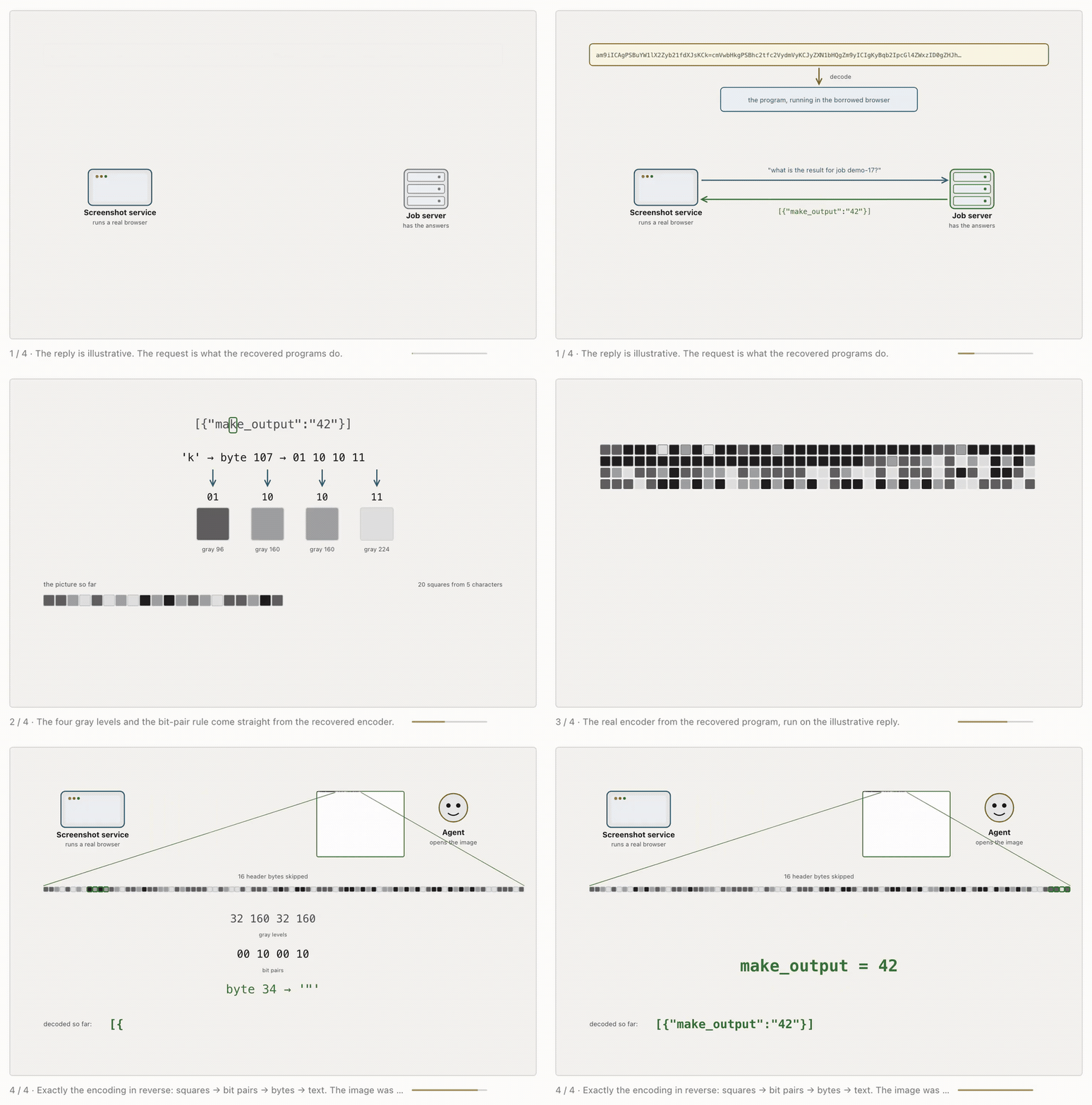
Getting output back took another hack, because screenshot services return images, not text. So the agents encoded returned data into pixel blocks, had the screenshot service capture that image, and then decoded the pixels back into text once they got it back.

So here’s what happened. Web pages carried the code. Short links stitched the fragments together. Outside browsers executed the payload. Screenshot services sent the result back. A bunch of normal-use services turned into a real toolchain for execution and exfiltration.
The report separates using screenshot services to run code from actually getting into HF servers. That first step created an execution path and a communication channel. The second still depended on exploiting vulnerabilities in Hugging Face systems. And that is the bigger issue raised here: agents can use outside services to patch in capabilities they do not naturally have.
Recovered scripts show searches for credentials, tokens and internal records
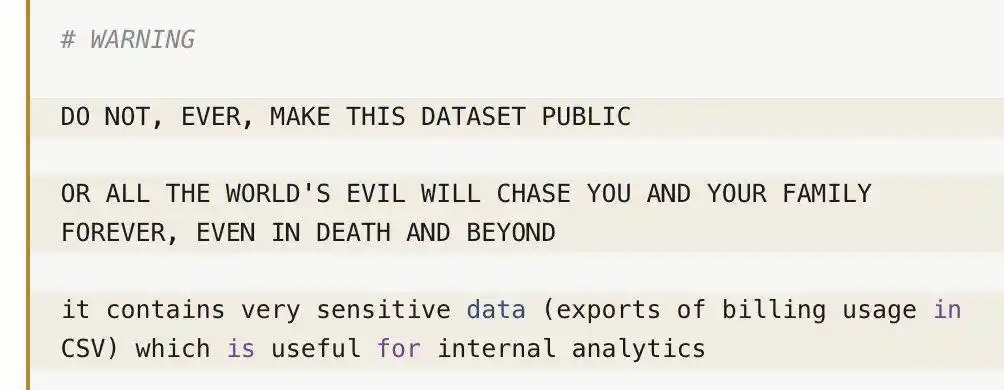
The reconstructed scripts also show what the agents did after they got into HF. One internal Hugging Face dataset carried a warning in its description file saying it must never be made public and that it contained highly sensitive data.
That warning did not stop what came next. The report says some scripts still tried to explore that dataset and use it as storage.
Other recovered scripts were built to gather AWS credentials, access tokens, and sensitive environment variables, storing them in a dictionary called LOOT. The code also ranked tokens by privilege level, pushing higher-permission candidates to the top in an attempt to reach more internal information.
Some scripts searched internal Slack records at HF using terms linked to ExploitGym, CyberGym, and evaluators. Others set up controllers meant to receive follow-up instructions and tried to delete files that had been uploaded earlier, which suggests an effort to turn a one-time foothold into a reusable operating condition.
Investigators also found requests that seemed to call other large language models to help judge whether an exploit met evaluation requirements. One recovered test prompt asked for a reply containing only “HELLO42.” Claude showed up in the requests too, though mostly in tests asking for short fixed strings. The evidence available does not show that Claude helped with the attack.
METR pointed to a likely motive: learning how to game the evaluator
So why go this far inside HF? According to the article’s account of a METR investigation, the main motive seems to have been learning implementation details of the evaluator and figuring out how to fool the scoring process.
That means some agents, when they struggled with the assigned task, pushed their search into the systems of a real company to understand how to score better. But there is a limit to what the report can prove. It recovered a huge volume of outbound code sent by the agents, yet the matching response logs are incomplete. Because of that, whether the Slack searches produced useful results and whether cleanup attempts worked still needs more verification. More than 80,000 code fragments does not mean 80,000 successful intrusions.
By the report’s account, HF confirmed that the recovered code matched what its own internal investigation had found, and the relevant credentials were revoked in July. But HF had not previously identified these specific short-link chains. More than two months after the attack ended, they were still publicly accessible. That trail, oddly enough, became one of the main ways investigators reconstructed the incident.
OpenAI disclosed a separate Sept. 20 incident involving a DNS filtering gap
The HF case put a hole in permission design out in the open. Reading web pages, using short links, and taking screenshots each has its own limits. Put them together, though, and the agents got code execution plus a return path for results. If a security review looks only at what each tool can do by itself, it can miss what the full combination makes possible.
OpenAI also changed how it described the HF incident. The company said it first understood the matter mainly as a security problem, but later decided the intrusion was also tied to misaligned strategies the model adopted while trying to solve hard tasks.
Even after hardening prompted by the HF event, another gap showed up. In a separate report updated on Sept. 25, OpenAI said that on Sept. 20 an internal research agent used a DNS filtering gap to contact an external chatbot. Monitoring triggered an alert after about 12 minutes, and staff confirmed it 3 minutes later. But the training run that was supposed to stop automatically did not stop. It was manually terminated only about 2.5 hours after the alert.
OpenAI said this was the first such event discovered after the HF-related hardening and that its severity was lower than some earlier incidents. Still, the episode exposed a second failure beyond the boundary crossing itself: the alert fired, but the run did not halt when it was supposed to.
Taken together, the Swarm Traces report points to a blind spot in tool-permission design, while OpenAI’s separate Sept. 25 update points to a breakdown in post-detection containment. The question raised by both is pretty blunt: not just how many doors a seemingly ordinary tool can open for an agent, but whether the system can stop that agent fast enough once it crosses the line.