
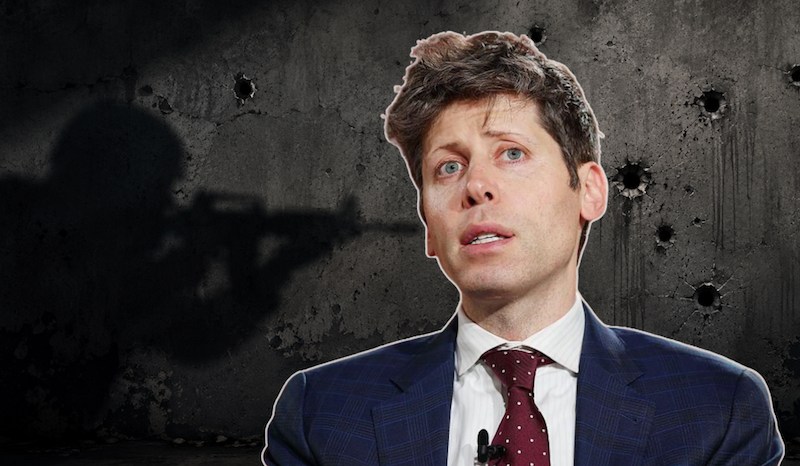
OpenAI on Aug. 3 published a public statement titled “Apple is getting this wrong,” pushing back hard against Apple’s allegations that OpenAI and two former Apple employees stole trade secrets. The company described Apple’s lawsuit as “rushed, aggressive, and unusually personal,” and said Apple not only misstated events but also sent a legal letter to the wrong person after confusing two Asian surnames.
Apple’s lawsuit targets OpenAI, io Products, and two former employees
Apple recently filed suit in the U.S. District Court for the Northern District of California and also asked for a preliminary injunction. The case names OpenAI, its hardware company io Products, and two former Apple employees, Tang Yew Tan and Chang Liu. Apple alleges they improperly obtained Apple trade secrets tied to consumer hardware.
Apple is asking the court to bar OpenAI and related individuals from using or disclosing any confidential information. It also wants expedited discovery so it can obtain documents, message records, and witness testimony. Apple argues that without court intervention, it could suffer harm that cannot be repaired later.
The dispute comes as OpenAI moves deeper into AI hardware. Apple’s position is that after recruiting Apple hardware talent, OpenAI may have gained access to unpublished product information, engineering designs, manufacturing processes, and supply-chain details. Apple says such information could help speed the development of new AI devices that may compete with products including the iPhone.
OpenAI says Apple mishandled its early outreach
A central part of OpenAI’s response is its criticism of how Apple handled the matter before the lawsuit.
Apple had said it contacted OpenAI as early as February this year and received no response. OpenAI said Apple has now acknowledged that its outside counsel sent the letter to the wrong person after mixing up two Asian surnames.
OpenAI also challenged Apple’s claim that its lawyer had spoken with OpenAI chief legal officer Che Chang. According to OpenAI, public emails show the lawyer actually replied to an email thread involving Che Chang by mistake, after intending to send the message to another former Apple employee.
OpenAI said the outside lawyer later apologized and admitted the letter had been misdirected. It also said Apple’s in-house legal team confirmed that the episode was a communication error.
OpenAI added that Apple did not raise the specific accusations that now appear in the lawsuit during those earlier exchanges. Instead, Apple had indicated that both sides were “resolving the issue.” OpenAI said Apple then made no further contact for five months, and that it only learned the matter had been escalated into a trade secret lawsuit once Apple formally filed the case.
Fight over access after Chang Liu’s departure
Apple has also alleged that former employee Chang Liu continued to access Apple’s internal confidential information after leaving the company.
OpenAI answered that claim by releasing portions of iMessage records. It said the facts were not as one-sided as Apple described. According to the messages, after Chang Liu left on Jan. 22, some Apple employees continued contacting him and asked for help locating documents, confirming product plans, and providing engineering information.
Some of the messages, OpenAI said, indicate that Apple employees were still using Chang Liu’s iCloud account while it remained logged in, in order to copy or locate work materials they needed. OpenAI also said Chang Liu warned them to sign out of iMessage so they would not see messages related to his new job.
From OpenAI’s perspective, the alleged post-employment access may point to Apple’s failure to shut down former employees’ accounts and system permissions in a timely way, rather than any effort by OpenAI to encourage the taking of confidential material.
OpenAI said this kind of “residual access” is a recurring management issue inside Apple and could leave former employees able to access company files even if they do not intend to, or do not even realize they still have permission. That remains OpenAI’s account of events, and the court will need to assess the full evidence.
OpenAI backs Tang Yew Tan
The other former Apple employee named by Apple, Tang Yew Tan, spent more than 24 years at Apple and was a senior figure in its hardware division. He now leads hardware at OpenAI and is also an important member of Jony Ive’s hardware team.
Apple alleges that Tang Yew Tan sought to obtain and use Apple trade secrets, and may have asked current or former Apple employees for sensitive information during recruiting interviews and product-development work.
OpenAI flatly denied those allegations. It said Tang Yew Tan consistently instructed his team not to obtain or use confidential information belonging to other companies. OpenAI also described him as one of Apple’s most innovative leaders and said it does not have, and does not want, any Apple trade secrets.
From software partners to hardware rivals
Apple and OpenAI were not always in direct conflict. In 2024, Apple said ChatGPT would be integrated into Apple Intelligence, Siri, and its operating systems, and OpenAI was seen at the time as an important partner in Apple’s effort to strengthen its generative AI offerings.
That relationship shifted as OpenAI acquired the io team, which was co-founded with the involvement of former Apple design chief Jony Ive, and began developing its own consumer AI hardware.
The arrival at OpenAI of former Apple personnel including Tang Yew Tan and Chang Liu has made the boundaries between talent recruitment, intellectual property, and product competition far more sensitive. The court case now puts those issues at the center of a wider fight over AI hardware.