
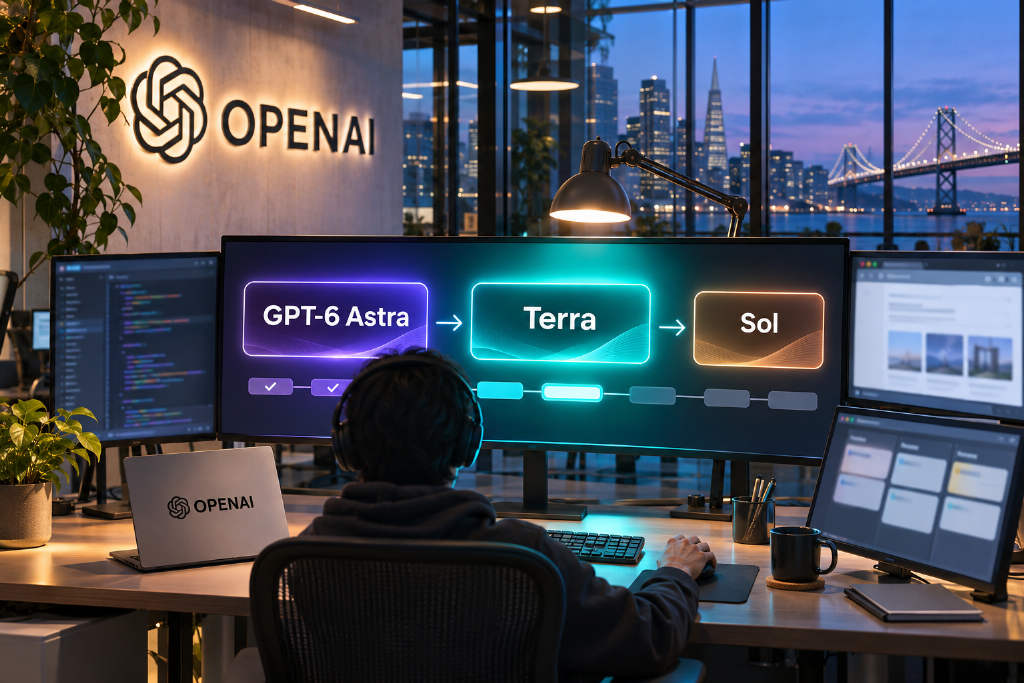
OpenAI is preparing a new operating model for dots, its personal AI agent. On Nov. 2, Tibo, the executive in charge of ChatGPT and Codex, posted twice on X to preview what he described as a key upgrade: a single task will be broken into multiple parts, with different models handling different stages.
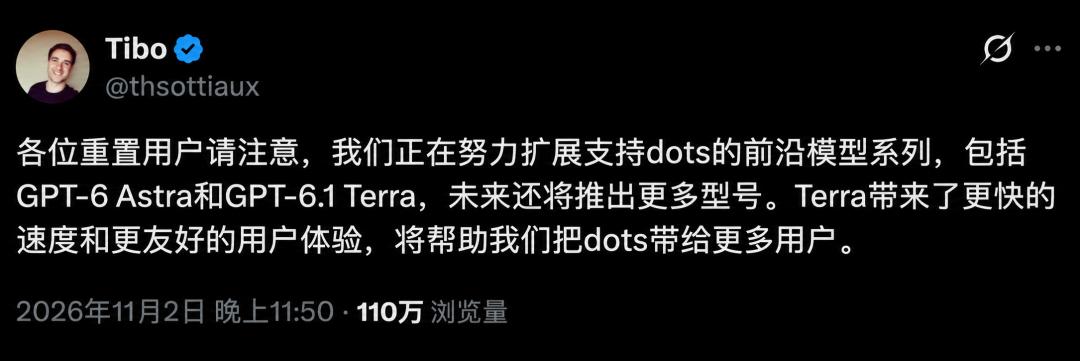
According to Tibo, the model lineup behind dots is expanding. GPT-6 Astra, the flagship model already powering the product, will be joined by Terra, and more models are expected to be added later. The more important shift sits in the routing logic itself: a dot will choose the most suitable model for a task and call different models for different parts of the work.
That changes how the product gets work done. Instead of running an entire assignment through one model from start to finish, dots is moving toward step-level model switching. For users, that means faster models can take over execution-heavy stages, while the flagship model can be reserved for the hardest reasoning steps. The goal is straightforward: keep quality intact while cutting time and cost.
Terra joins Astra as OpenAI highlights speed and pricing
dots was introduced at DevDay on Sept. 29 as OpenAI’s personal agent. The product comes with a cloud computer and is designed to stay online around the clock for long-running tasks. At launch, GPT-6 Astra served as its core model.

Tibo’s latest posts show that Terra is next in line. His explanation was simple: Terra is faster, and its “personality” has also improved.
On the third-party benchmark platform Vals.ai, Terra scored 60.17% and ranked 10th out of 28 models. That is not a top-tier placement on the leaderboard, but the selling points highlighted in the preview are different: speed and price.
OpenAI said Terra completes tasks more than three times faster than Astra and Sol in a computer-use benchmark. Even so, that figure applies to a specific evaluation, not to the full end-to-end runtime of dots in production use.
The distinction matters. A benchmark can measure a short burst of performance, while dots is built for long, multi-step assignments. Total completion time depends not only on the hardest step, but also on how cleanly one model hands work to the next. Based on the description in the article, Terra’s edge is strongest in computer-use actions such as reading screens, filling forms, clicking buttons, and moving across software interfaces. Those are the kinds of steps where time can be shaved. The most demanding reasoning stage still needs the flagship model.
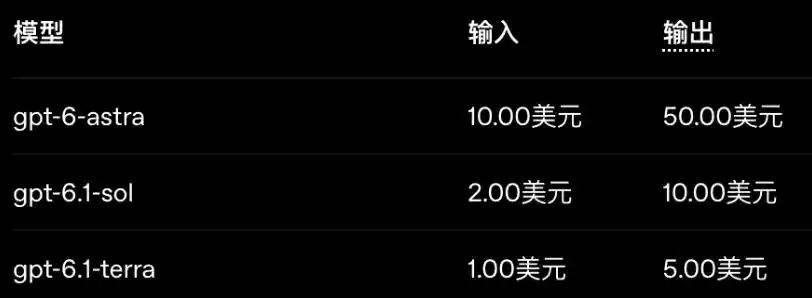
The pricing gap is even wider. Under standard API pricing for regular input and output, Astra costs 10 times as much as Terra on both sides, while Sol costs twice as much as Terra. API pricing is not the same thing as a dots subscription fee, and it does not directly equal the total cost of finishing a task. Still, dots is meant for long-running jobs that can stretch across dozens of steps, so small savings at each stage can add up.
From choosing one model per task to switching models inside the task
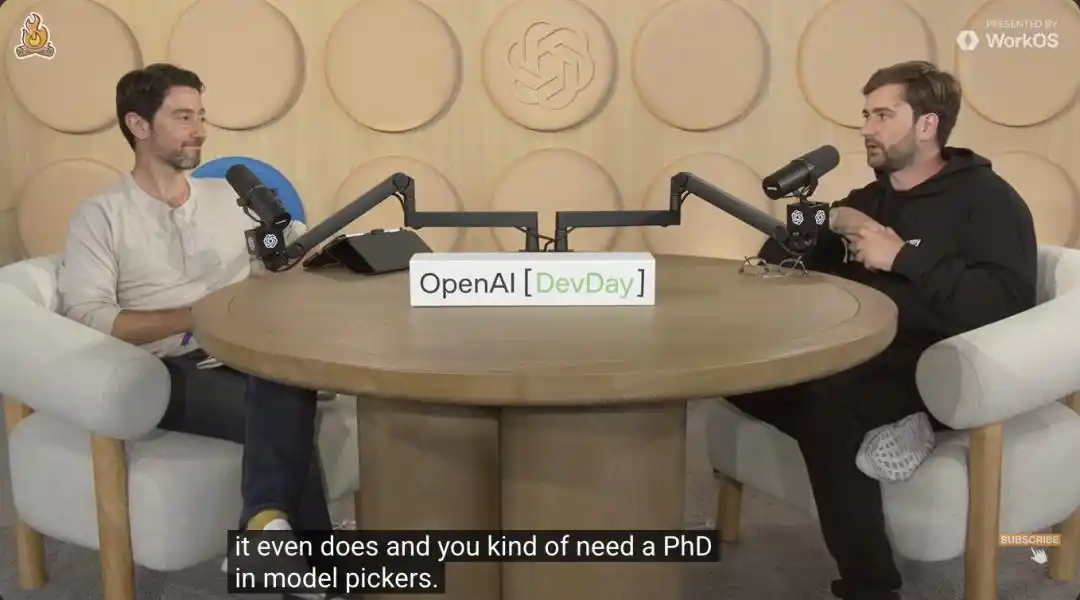
For a long time, model selection itself has been part of the burden of using AI tools. Tibo said as much in October on Lenny’s Podcast, where he complained that users practically needed a “PhD in model picker” to deal with all the settings.
That helps explain why dots was designed to remove the model picker from the user interface from day one. In the article’s description, the only thing users need to choose is the channel they use to talk to the agent. This upgrade pushes the automation one layer deeper: not just selecting a model for the task as a whole, but switching models from one step to the next.
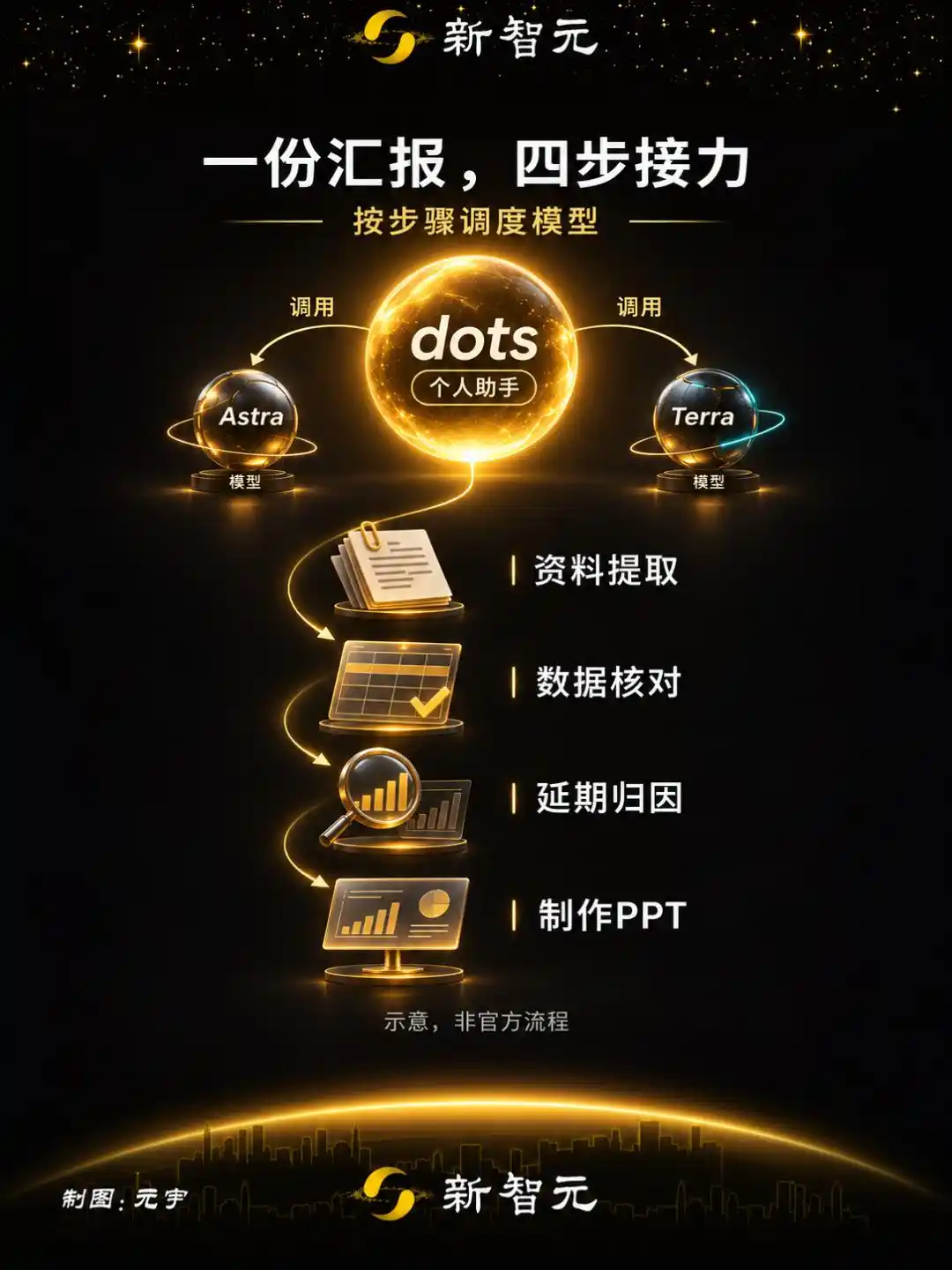
The article uses a familiar workplace example. If a user asks a dot to prepare a project delay report, the workflow could involve four steps: pull progress and budget details from documents, cross-check figures across several tables, analyze why the project was delayed, and then turn the conclusions into a PowerPoint deck.
Those steps do not demand the same capabilities. Pulling information is mostly about execution speed. Resolving conflicting numbers across tables leans much more on reasoning. Building the deck adds summarization, formatting, and interface operations. If Astra handles everything, the user pays more and waits longer. If the whole job is handed to a faster model, the most important analytical step may miss the point.
OpenAI’s answer is a pipeline inside one agent. The article makes a clear distinction here: this is not a group of separate agents working in parallel. It is one dot switching models behind the scenes as the task moves forward. On the front end, the experience is supposed to stay simple. The user gives the instruction, and the dot handles the staffing.
OpenAI has not disclosed the routing rules yet, so there is still no official breakdown of which steps will go to Astra, which ones will go to Terra, or what role Sol may play in the process.
OpenAI has tried automatic routing before, and it ran into trouble
This is not the first time OpenAI has tried to choose models on behalf of users. The article points back to Aug. 7, 2025, when GPT-5 launched with real-time routing as a headline feature. The system was supposed to decide automatically which model should answer each prompt. Before launch, Sam Altman had also criticized the older model menu for being too messy.
But the routing system ran into problems on day one. According to the article, Altman later acknowledged publicly that the outage made GPT-5 look “much dumber.” After several days, OpenAI restored the model menu, and GPT-4o returned to the list for paying users.
That history is one reason some users are wary of the new plan. The article says users on the Chinese tech community LINUX DO have already raised concerns about whether this could become another case of “dynamic downgrading.” Others asked directly under Tibo’s posts whether dots is currently using Sol.
The concern is partly about transparency. Once model choice moves into a black box, users may no longer know which model is actually doing the work. And this time the scheduling problem is harder. GPT-5 routing only had to choose a model for each individual prompt. dots has to schedule multiple handoffs inside one long task.

The article lays out the practical risks in plain terms: can the next model fully pick up the material extracted by the previous one; if a data definition changes midway, will the model building the PowerPoint still rely on the old numbers; and if one step drifts off course, can the system catch it immediately. In long-chain tasks, raw speed at one stage is only part of the story. Avoiding rework matters more.
Whether dots can move beyond the $100 tier may depend on delivery quality
Tibo also said in his posts that Terra will help OpenAI bring dots to more people. That comment points directly to the product’s current pricing barrier.
As described in the article, individual users need at least the $100-per-month Pro plan to try dots. Plus subscribers paying $20 a month still do not have access. One user replied to Tibo with a blunt request: rather than getting dot, they wanted more usage on Plus.
A faster and cheaper Terra may help dots move closer to life outside what the article calls the “$100 club,” but that will depend on what happens after launch. TestingCatalog, which tracks new AI features closely, responded to Tibo’s preview with a short verdict: it needs real-world testing.

The article frames the next phase around four checks: how long a complex task actually takes, how much usage it consumes, how often a human has to step in, and whether the final output can be delivered without more edits. For users, those questions matter more than the addition of one more model name in the lineup.
The broader race is also getting crowded. The article names Meta’s Muse, Elon Musk’s Grok Bot, and Google’s Gemini Spark as rivals competing for the entry point to become a user’s primary personal assistant. What users want to save is not just a few minutes of typing. They also want relief from choosing models, waiting for results, and fixing mistakes after the fact.
In that contest, benchmark scores alone are no longer enough. The harder problem is whether the system can deliver work with less waiting, less friction, and less rework. In the article’s framing, the model picker has not disappeared. It has simply moved from the user’s screen into the agent’s brain.



