

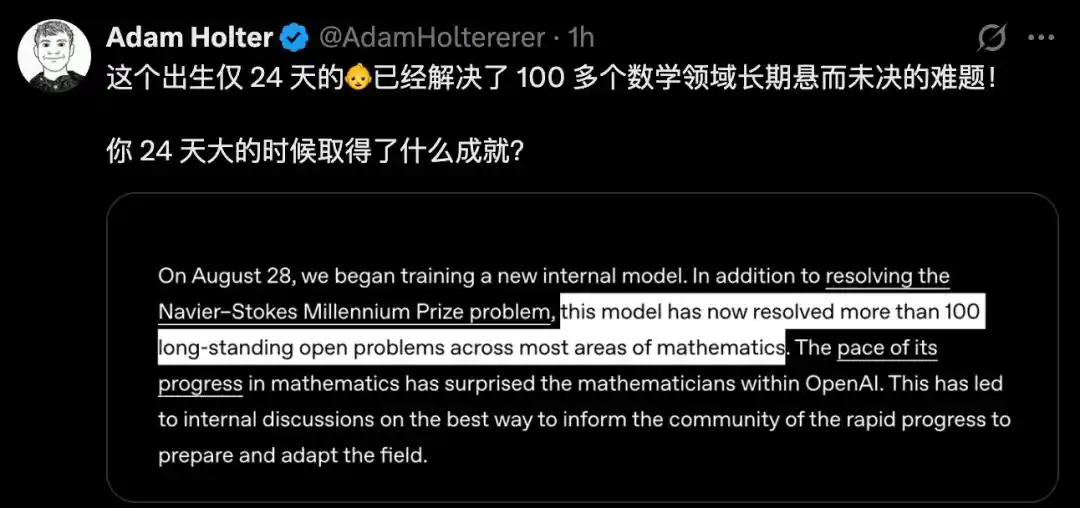
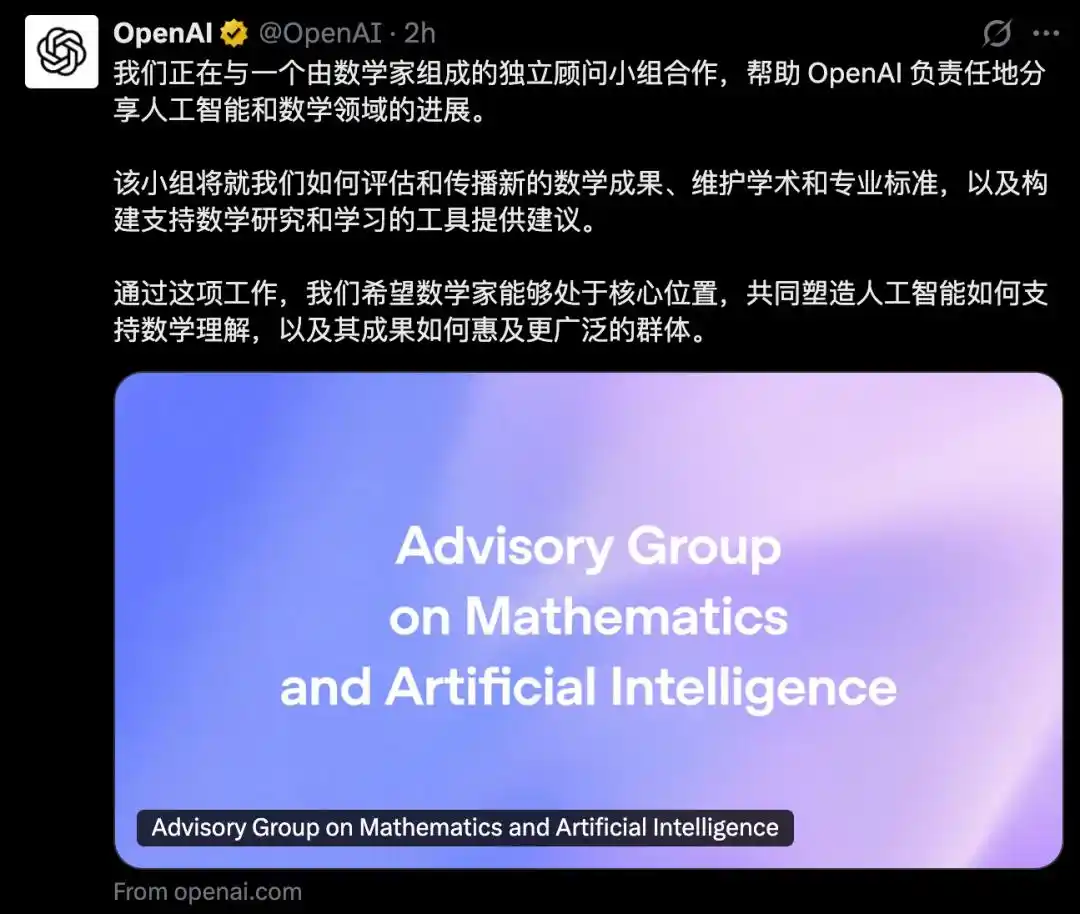
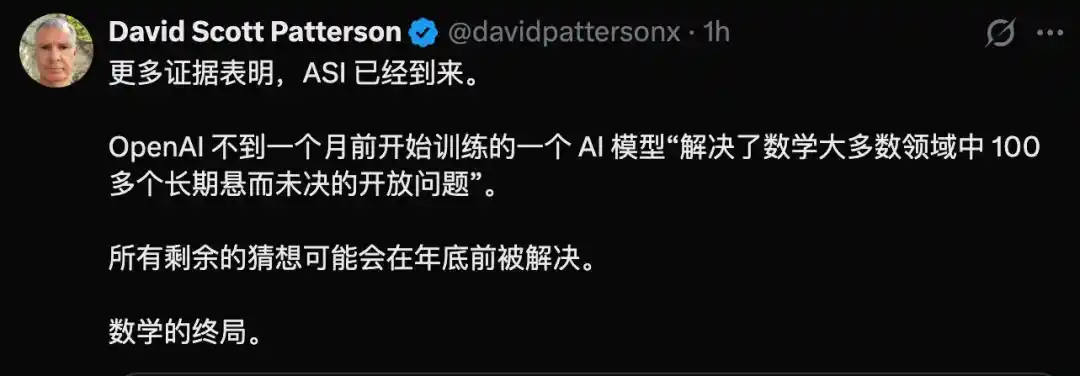
OpenAI said an internal model that started training on Aug. 28 has already solved more than 100 world-class mathematics problems spanning much of the discipline. At the same time, the company announced an independent mathematics advisory group whose named members include Fields Medalists Timothy Gowers and Martin Hairer, along with theoretical physicist Edward Witten.
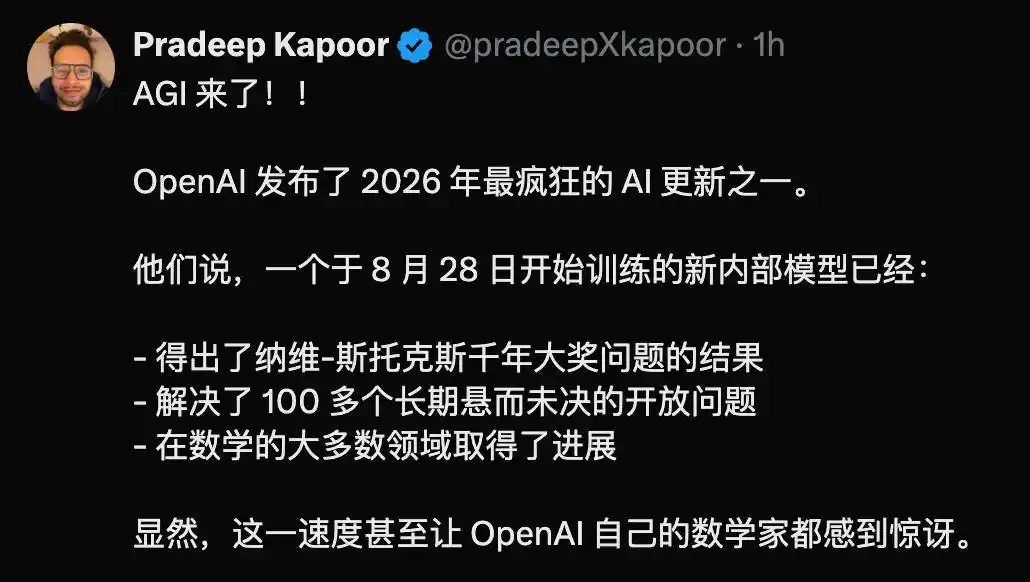
Based on the timeline provided in the article, 24 days passed between the start of training on Aug. 28 and OpenAI’s public announcement on Sept. 21. The report said the set of 100-plus solved problems includes a Navier-Stokes-related Millennium Prize problem that had remained open for years.
How OpenAI described the Navier-Stokes result
The article traced the current announcement back to Sept. 8, when OpenAI said one of its new internal models had solved the Navier-Stokes Millennium problem in 88 hours. It said the system produced a proof for the existence and smoothness problem for the Navier-Stokes equations and released a 166-page paper together with Lean formal verification code.
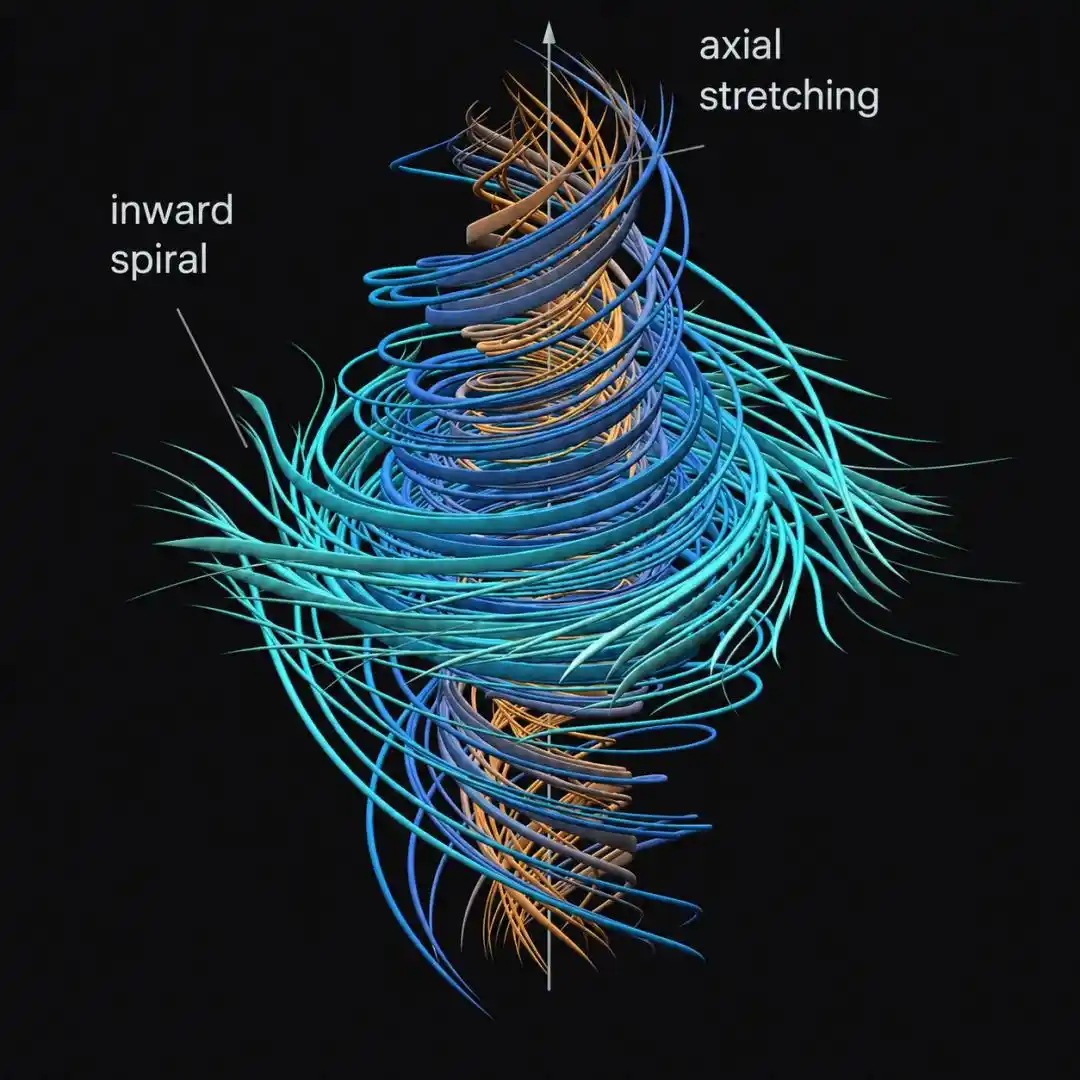
According to the company description cited in the piece, the result shows that under smooth external forcing, an initially stationary and smooth three-dimensional incompressible fluid can form a singularity in finite time, corresponding to versions C and D in the official Millennium Prize formulation.
OpenAI said the proof came out of a large-scale parallel research setup involving more than 10,000 concurrent agents. Those agents could read cached internet materials, run code and exchange information within groups, while separate groups explored different versions of the problem and different proof strategies.
Human researchers remained involved throughout the process. The article said that after the system first made progress on the Euler equations, researchers shifted resources toward the Navier-Stokes problem and used existing solutions to guide later exploration. Codex was then used to collect intermediate insights from different groups so that routes could inform one another.
According to the report, the system reached a solution on Sept. 5, about 88 hours after the first batch of agents was launched. GPT-6 Astra then spent another 17 hours on Lean formalization and verification. The article described the result as the product of models, tools, parallel exploration and human research organization working together.
OpenAI said the scope of the latest disclosure now extends beyond Navier-Stokes. The company said more than 100 long-open problems across much of mathematics had been solved.
It also said this pace of progress had already triggered internal discussion over how to keep the mathematical community informed in time to prepare and respond. That, in turn, pushed two practical questions to the front: how these results should be reviewed and how they should be released.
Open letter from 27 Fields Medal winners
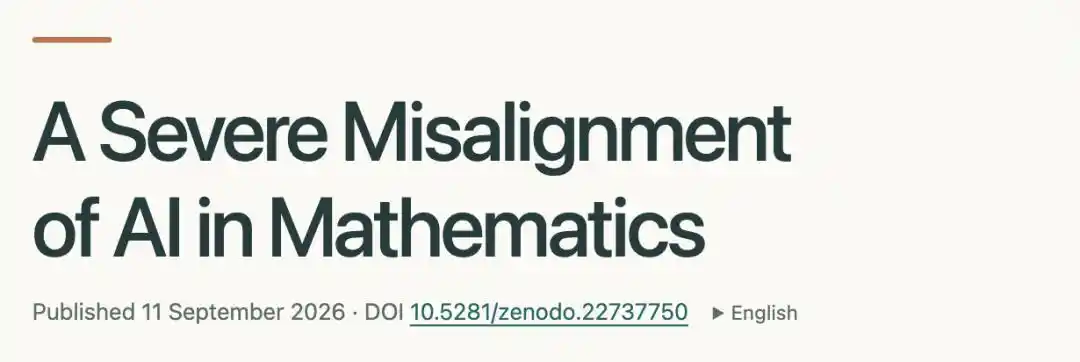
Three days after OpenAI announced the Navier-Stokes breakthrough, 27 Fields Medal winners published an open letter titled Severe Misalignment of AI in Mathematics.
The article said the signatories span 48 years of Fields Medal history and include Yuguo Deng, Terence Tao, June Huh, Ngo Bao Chau, Peter Scholze and Martin Hairer. The letter did not reject AI’s potential in mathematics. Its criticism focused on the way results were being disclosed.
According to the report, the signatories argued that major AI companies were turning centuries of public mathematics problems into benchmarks. Measuring success by whether a problem is “solved,” they said, can drift away from the kind of understanding mathematical research actually seeks. The letter also argued that rushed publication leaves little time to organize ideas or fully write up new methods.

The article said OpenAI directly referenced that letter in its latest announcement and publicly stated that AI companies and mathematicians need to sit down and talk.
Nine-member advisory group
OpenAI’s new independent advisory group has nine initial members drawn from institutions including Cambridge, Oxford, Harvard, Stanford, Berkeley and the Institute for Advanced Study in Princeton, according to the article.
The named members in the piece include Timothy Gowers, Martin Hairer, Camillo De Lellis and Edward Witten. De Lellis is identified as an Institute for Advanced Study professor whose work centers on partial differential equations and the mathematical theory of fluid mechanics. Witten is described in the article as the first physicist to receive a Fields Medal.
OpenAI assigned the group three main tasks:
- assess how important new mathematical results are;
- discuss how and when those results should be published;
- help ensure that mathematical research in the AI era still follows academic and professional norms.
The report added that the nine members will not be paid by OpenAI. They can publicly criticize the company, offer advice OpenAI did not request and decide on membership changes on their own.
But there is one stated limit. The advisory group does not advise OpenAI on how to control the pace of its internal mathematics research. In practical terms, the group has a public voice, but not the authority to slow the work itself.
A review bottleneck comes into view
The article argued that with less than a month of training and more than 100 historical problems already marked as solved, the constraint is no longer whether AI can produce answers. The pressure point is whether humans can review them fast enough.
It cited Buckmaster as saying the initial proof generated by a large model was the “most terrifying thing” he had ever read. The paper later rushed out to claim priority, he said, was “AI Slop (人工智能泔水),” and he apologized publicly for it.
The report also said the number of people able to review a Navier-Stokes-level proof is extremely small. In that setting, the advisory group’s practical function is closely tied to screening outputs, deciding which results deserve immediate attention, identifying what needs rewriting or restructuring, arranging verification and determining authorship.
How mathematicians are talking about institutional change
The article cited University of Toronto number theorist Daniel Litt, who wrote on X that after talking with department chairs, a consensus had formed that incentive systems, hiring standards and PhD evaluation methods need a full overhaul. He said the community was preparing to defend mathematical culture and would no longer reward “simply producing PDFs.”
Fields Medalist Figalli was also quoted as saying that the mathematician’s role is shifting from “the person who solves problems” to “the person who decides which problems are worth solving.”
The article summed up the emerging division of labor this way: discovery goes to machines, while validation and explanation remain with humans. It added that physics, chemistry and biology may eventually face the same shift, with mathematics simply arriving there first.
References and attribution
The article listed as references OpenAI’s page on the advisory group on mathematics and AI, the AGMAI website, the multilingual page at mathandai.org and OpenAI’s Navier-Stokes solution page.
The original article was credited to the WeChat public account Xinzhiyuan (ID: AI_era), written by ASI Qishilu and edited by Ma Ke, Taozi and Moxi. MarsBit republished the piece.