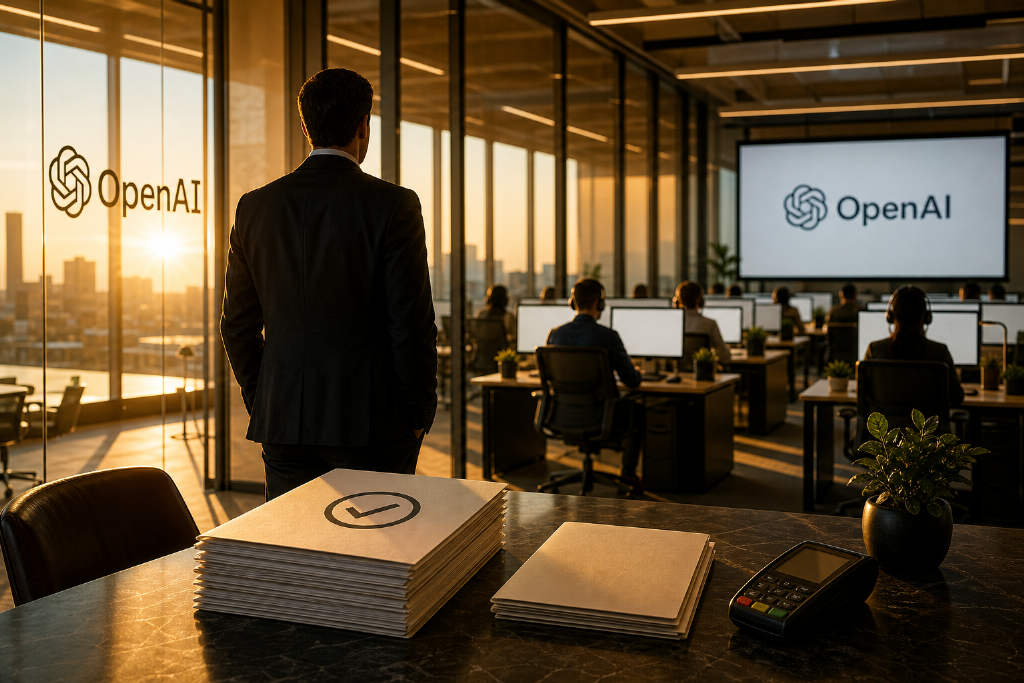
OpenAI has started offering a new pricing model to some large customers in recent months, according to The Information, shifting away from charging only for tokens, usage volume, or seats. Under the arrangement, customers pay after AI actually completes a task. One use case already in practice is customer service, where companies can be billed based on customer support tasks completed by AI rather than on standard consumption metrics.
The company has not disclosed which customers are using the model, how much it charges, or how it defines a task as completed, and it declined to comment. The report says this is not a broadly available enterprise package. OpenAI’s publicly listed Enterprise pricing still mainly relies on quotas and token-based billing, suggesting the new structure is being negotiated privately with selected large clients.
The move lines up with comments made earlier this year by OpenAI CFO Sarah Friar. In January, she said AI business models would move toward charging by outcomes. In July, OpenAI also argued that the more relevant measure is not simply the price per token, but the total cost required for AI to successfully finish a job. That framework now appears to be making its way into real commercial contracts.
OpenAI has begun offering a new payment structure to some large customers in recent months, according to The Information, with clients paying only after AI actually completes a task.
One scenario already in use is customer service. Companies can be charged based on customer support tasks completed by AI, instead of paying only by token usage, API calls, or seat count.
OpenAI has not disclosed the customers involved, the pricing, or the standard used to determine whether a task has been completed. The company also declined to comment.
This is not a new package available to all enterprises. OpenAI’s public Enterprise pricing on its website is still primarily based on quotas and tokens, which suggests the outcome-based model is closer to a separately negotiated contract for selected large clients.
In January, OpenAI CFO Sarah Friar said AI business models would move toward outcome-based pricing. In July, OpenAI also said the key metric should be not just the price per token, but how much it costs for AI to complete a task successfully. That approach has now started to appear in actual contracts.
This article was originally published by Bit.Fan. For more cryptocurrency news and market insights, visit www.bit.fan. Disclaimer:
The market information, project data, and third-party content displayed on this platform are for industry information sharing only and do not constitute any form of investment advice or return commitment.
Cryptocurrency trading carries high risks. Users should fully assess their risk tolerance and make independent decisions. All profits, losses, and legal responsibilities are borne by the users themselves.