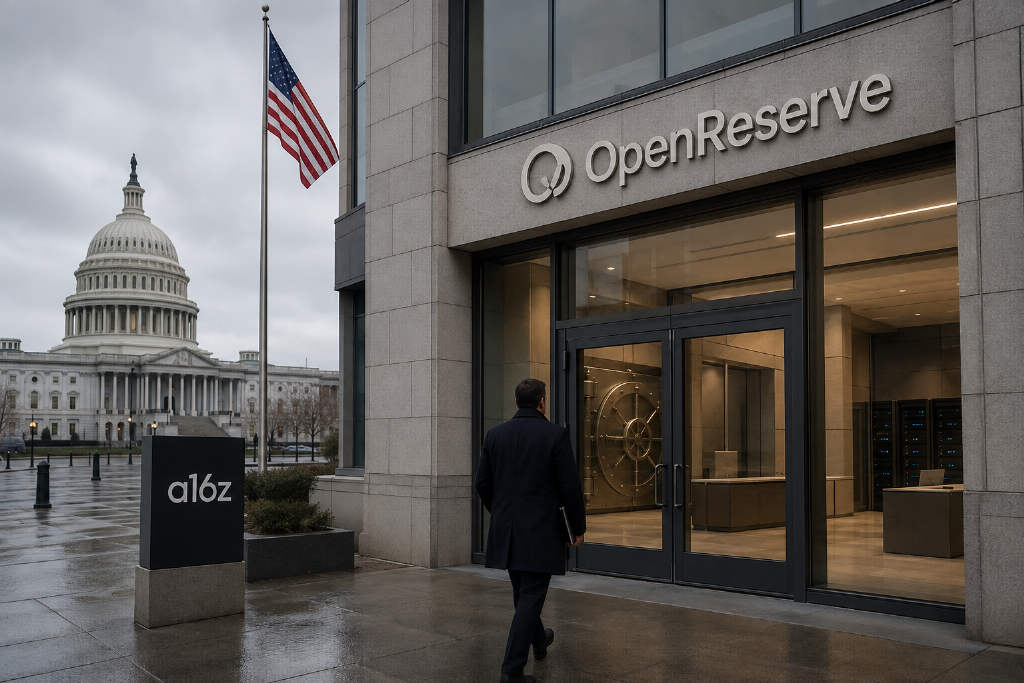
Blockchain banking startup OpenReserve has received investment from Andreessen Horowitz, or a16z, and has also won preliminary approval for a U.S. national bank charter, according to a Techub report citing Cointelegraph. The company was founded by a team of former MoneyLion executives and is building what it describes as a blockchain-based bank designed to operate around the clock. The preliminary charter approval means OpenReserve can move toward offering compliant banking services on a nationwide basis in the United States. a16z, named as an investor in the project, is expected to support both regulatory progress and technology development. The update centers on two points: new funding from a major crypto-focused venture investor and an early regulatory green light tied to a national banking license. Together, those developments place OpenReserve in a position to keep advancing its blockchain banking model within a regulated U.S. framework.
OpenReserve, a blockchain banking project founded by former MoneyLion executives, has secured investment from Andreessen Horowitz (a16z) and received preliminary approval for a U.S. national bank charter, according to Techub, citing Cointelegraph.
The company is positioned as a blockchain-based bank built to operate 24/7.
Preliminary charter approval
According to the report, the preliminary approval for a U.S. national bank charter means OpenReserve can provide compliant banking services nationwide.
a16z joins as investor
a16z is backing the project and will support its regulatory work and technology development.
This article was originally published by Bit.Fan. For more cryptocurrency news and market insights, visit www.bit.fan. Disclaimer:
The market information, project data, and third-party content displayed on this platform are for industry information sharing only and do not constitute any form of investment advice or return commitment.
Cryptocurrency trading carries high risks. Users should fully assess their risk tolerance and make independent decisions. All profits, losses, and legal responsibilities are borne by the users themselves.