
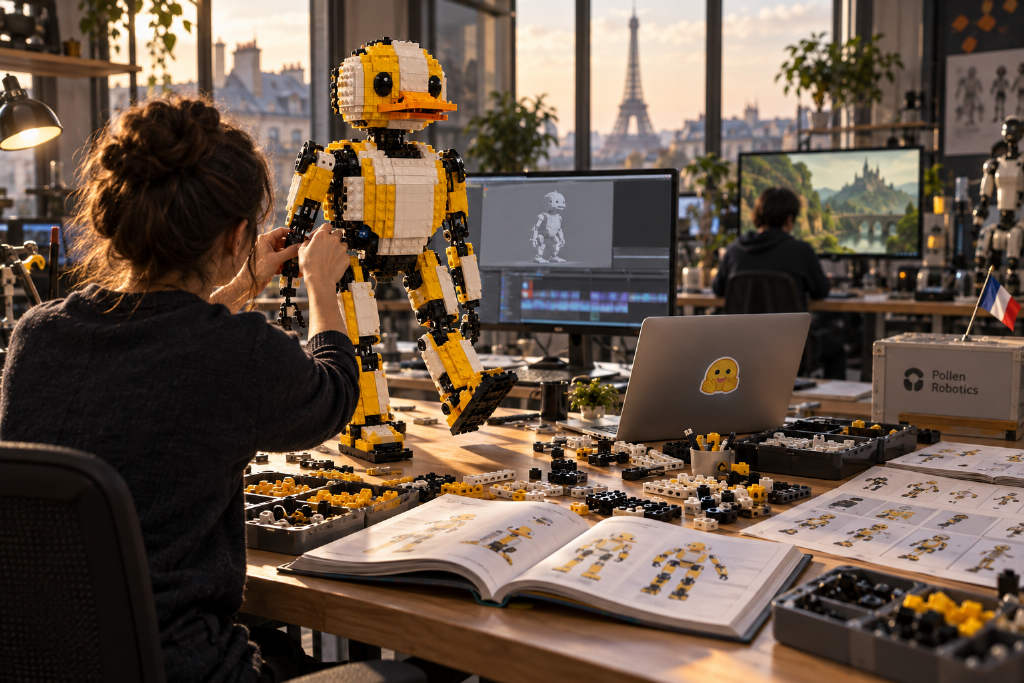
Several days after launch, Opus 5.5 is still picking up attention as users continue to push it into new kinds of tasks rather than letting it settle into the usual cycle of benchmark screenshots and short code demos.
A LEGO Microduck built from real parts
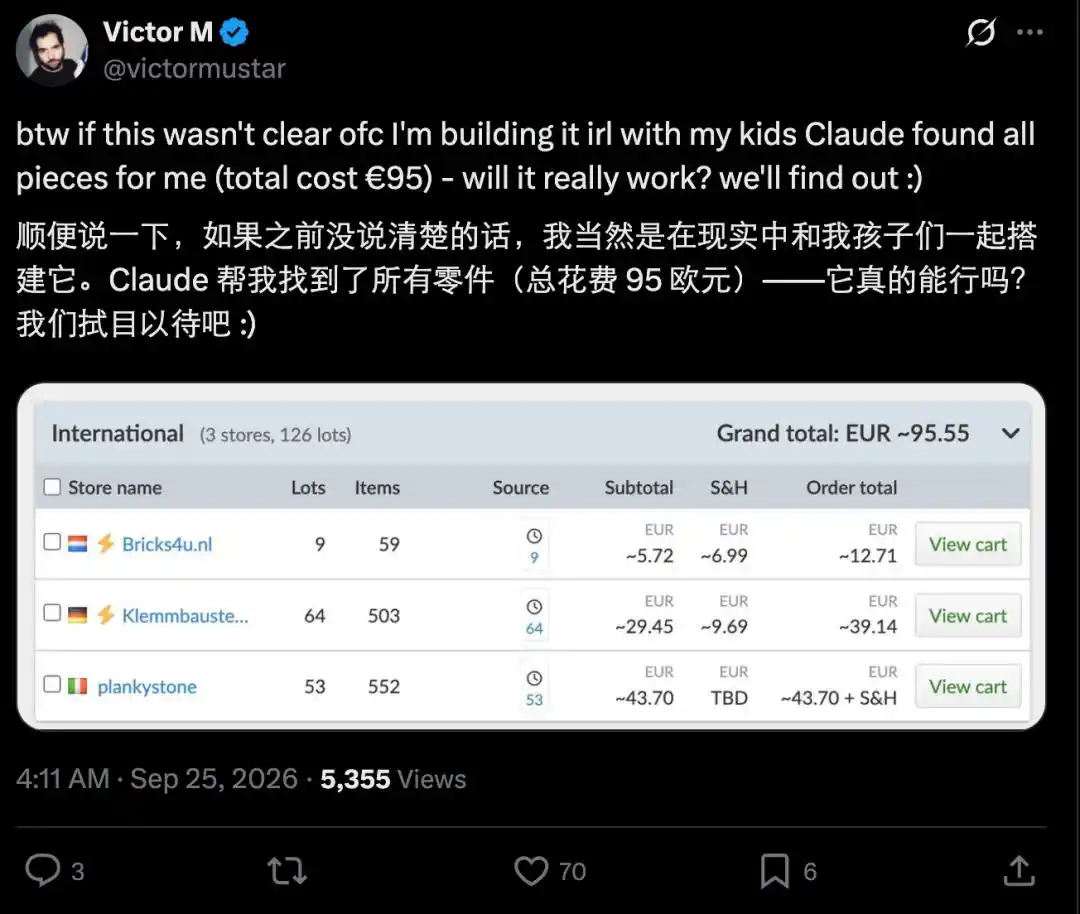
One of the more talked-about examples came from Victor Mustar, head of product at Hugging Face. He asked Opus 5.5 to design a life-size Microduck using LEGO parts that can actually be purchased.
Microduck is a small biped robot released by Hugging Face and Pollen Robotics. The source article says the product sold so quickly after launch that one unit could be sold every four seconds. Mustar wanted a LEGO version of it.
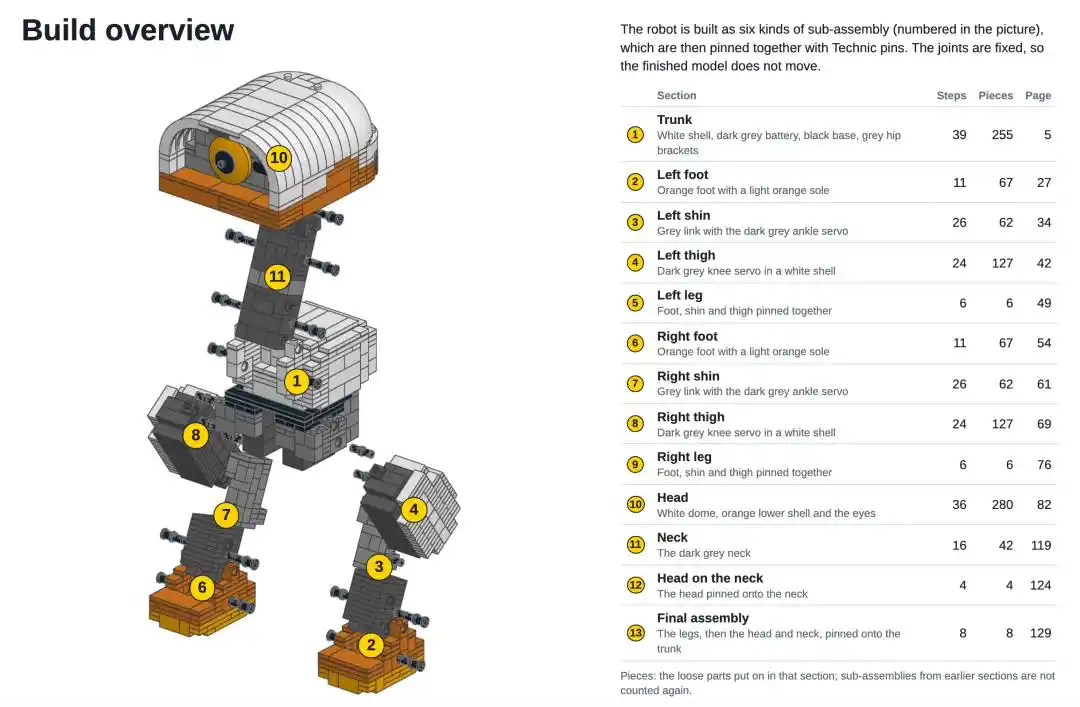
Opus 5.5 did more than sketch an idea. According to the article, the model produced a design built from 1,113 real LEGO parts, checked 3,204 connections, and ran validation on part collisions and center of gravity.
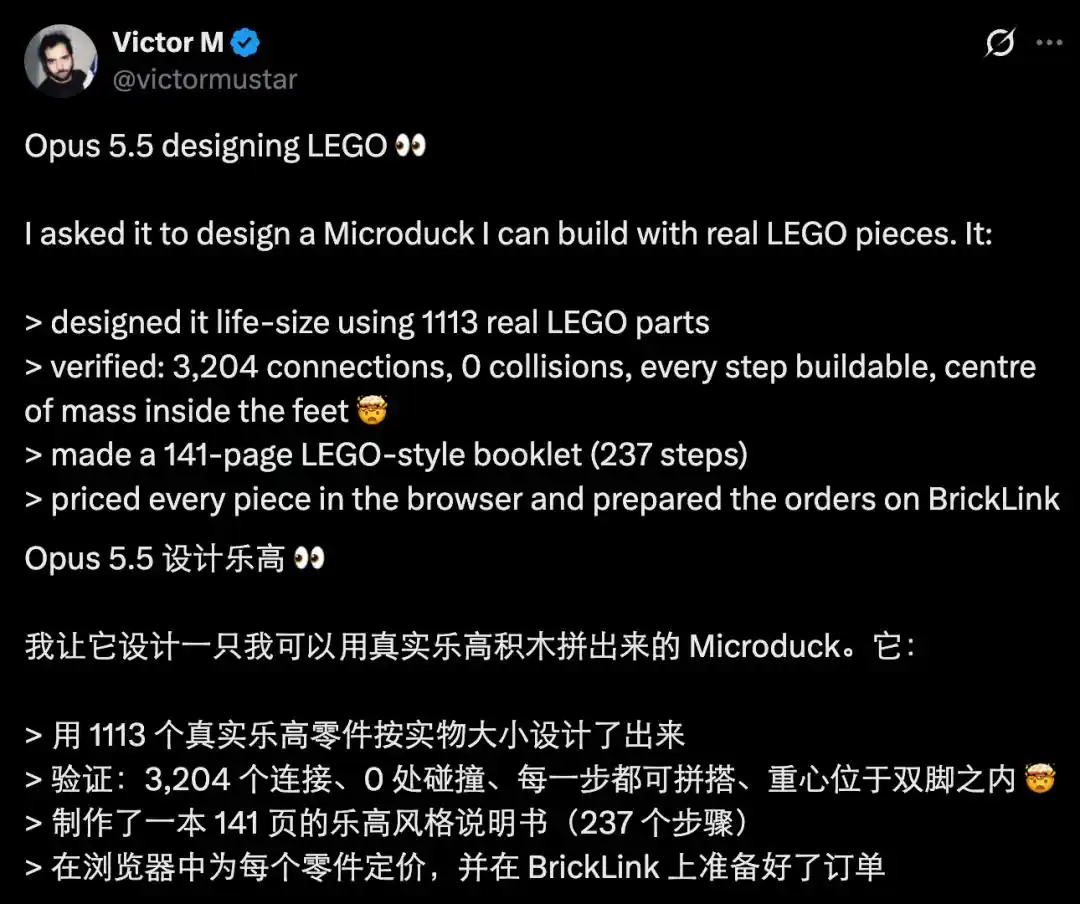
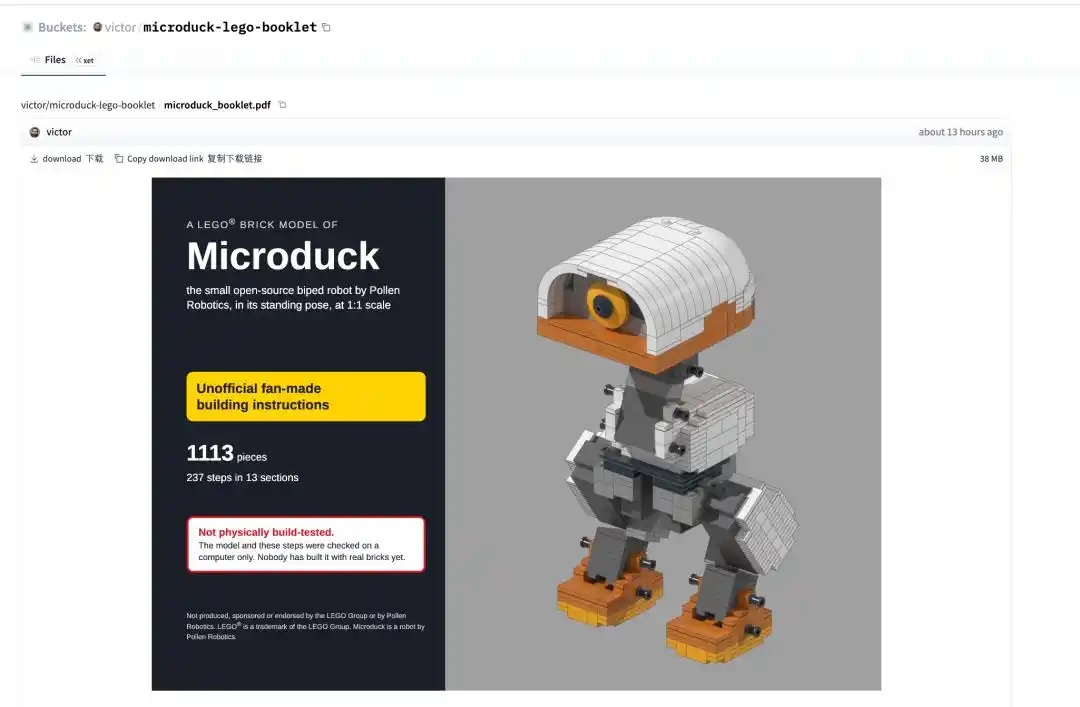
It also generated a 141-page instruction booklet with 237 assembly steps, along with a parts list that could be used for purchasing. Even the presentation video was made by Opus.
Mustar uploaded the full booklet to Hugging Face at: https://huggingface.co/buckets/victor/microduck-lego-booklet/tree/microduck_booklet.pdf
The obvious question now is whether the model can be assembled in the real world by following that list and those instructions. Mustar is already trying, and the result is still pending.
Boris Cherny, head of Claude Code, showed up in the comments as well. His first reaction was: "Very cool. I really want to hook this straight up to a 3D printer."
Model testing is moving past web pages and SVGs
The significance here is not limited to a LEGO build.
In earlier rounds of testing, a common way to see whether a model could code was to ask it to make a web page or draw an SVG. Now users are giving it jobs that point toward objects that can exist in the physical world, while also asking for engineering checks, documentation, and procurement lists in the same workflow.
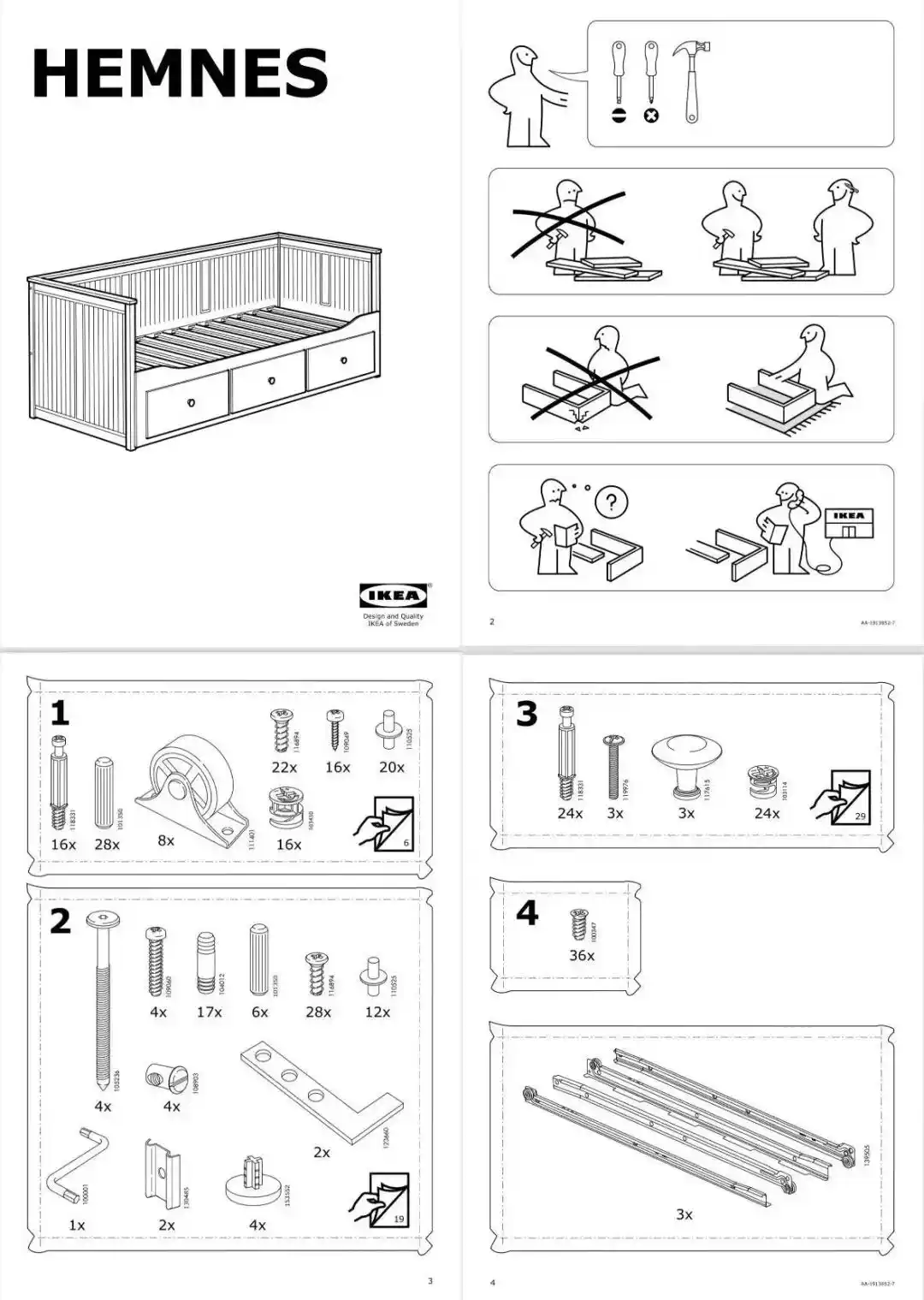
LEGO is only one example. Another case focused on IKEA assembly guides, the kind of manuals that use very little text and rely mostly on simple figures and part diagrams to show how pieces fit together. Some people like the minimal format. Others find it frustrating.
That led one creator to turn an IKEA-style assembly guide into a narrated 3D instructional video. What began as static 2D steps was rebuilt into a 3D scene. The video shows where each part sits, how it moves, and where it needs to go next, all through animation and voiceover.
Deedy Das, the investor behind the video, wrote: "Through code, Opus became an actually very useful video model overnight."
The article makes a careful distinction here. Opus 5.5 did not suddenly become a traditional video generation model that directly outputs a finished clip. The interesting part is the route it took: it interpreted the manual, wrote code, built the scene, controlled object motion, and then rendered the final video.
That makes code look more like a universal intermediate layer. The model is writing a great deal of it, but the user does not need to interact with the code directly.

From tutorials to a Zelda reconstruction
Users also pushed the experiment into games.
One team brought together Opus 5.5, GPT-6 Astra, and Fable 5.1 with a specific task: recreate The Legend of Zelda: Ocarina of Time. They rebuilt the opening demo sequence from scratch.
They said they did not simply drop the work into an existing full game engine. Instead, the models were used to construct a large share of the game logic and visual content themselves.
The result shown in video form is still far from a complete version of Zelda. Even so, the comparison point has changed. Not long ago, people were still using prompts like asking an AI to draw a pelican riding a bicycle as a way to test whether a model understood the world. Now, with a model that has only been out for a few days, people are trying LEGO, 3D tutorials, video production, and even games.
Ranking and pricing data
The article adds a benchmark and pricing comparison. After launch, Opus 5.5 took first place on the Code Arena: WebDev leaderboard, while its price was 60% lower than GPT-6 Astra (Max), the best model ranked second.
That ranking points to stronger coding and agent capabilities. The projects shared by users over the past few days give a more concrete picture of what that may mean in practice: once a coding model gets strong enough, what does "can write code" actually turn into?
In the article's wording, even the label "Vibe Coding" may already be too narrow for what is happening.

Looks complete, but may still be short of working
There are also visible shortcomings. Some users pointed out that Mustar's 141-page LEGO booklet still contains floating parts and connections that are not truly locked in place.
So while Opus 5.5 can already package an idea into something that looks strikingly complete, there is still a gap between something that appears buildable and something that can actually be built.
The article was originally published by the WeChat account Machine Heart (ID: almosthuman2014) and credited to Machine Heart.