
PANews has published a long essay by columnist danny arguing that the real infrastructure of large-scale money laundering has long operated inside licensed finance rather than outside it. The piece shifts attention away from underground remittance brokers, scam-related payment runners, and stablecoins, and toward private banks, correspondent banking, dollar clearing, regulators, and courts.
It opens with a 2006 drug seizure in Ciudad del Carmen, Campeche, Mexico. The Mexican military stopped a DC-9 aircraft in April that year and found no passengers on board, only 128 suitcases loaded with 5.7 tons of cocaine. According to the article, tracing the money used to buy the plane did not lead investigators back to an underground network. It led to Wachovia, then the fourth-largest bank in the US, and its headquarters in Charlotte, North Carolina.
That case frames the essay’s larger argument: the biggest laundering operations do not depend on hidden back channels alone. They rely on institutions with glass towers, legal documentation, branded balance sheets, and front-door access to the global payments system. The author describes the people opening those doors as relationship managers in places such as Zurich’s Bahnhofstrasse, Singapore’s Raffles Quay, and Washington’s Pennsylvania Avenue.
To show the gap in scale, the article cites the United Nations Office on Drugs and Crime estimate that 2% to 5% of global GDP, or $800 billion to $2 trillion a year, is laundered. It then compares that with Huione Guarantee, which the piece says handled more than $20 billion over more than four years and was called “the Amazon for criminals.” Even that, the author argues, looks small next to Danske Bank’s Estonian branch, where roughly €200 billion in non-resident funds moved between 2007 and 2015. One branch, the article says, processed volumes beyond the entire crypto underworld.
Marcos and the private-banking playbook
The essay asks readers to imagine holding $5 billion in illicit proceeds, then uses Philippine leader Ferdinand Marcos as an example. Marcos is described as having siphoned off an estimated $5 billion to $10 billion during his time in office. The article’s point is that underground channels can move money, but they cannot give it an acceptable origin story. For that, the author says, clients need formal structures.
According to the piece, Credit Suisse staff flew to Manila in March 1968 to provide in-person service. Marcos signed under the alias William Saunders, while Imelda Marcos signed as Jane Ryan. Those signature cards were later found in files left behind at Malacañang Palace after the 1986 revolution and are now held by the Philippine Commission on Good Government, the article says.
Aliases were only the opening step. The more valuable service, in the author’s telling, was a layered structure in which funds moved across alias accounts and then into foundations registered in Liechtenstein. Those foundations held the accounts, local lawyers served as directors, and the beneficiary field could be stated by reference to separately held articles. Each piece looked clean on its own. The article argues that the real problem sat between the layers, while no single document presented the whole chain at once.
The piece calls that the core product of private banking: not a vault, but a structure. In terms of recovery, it says Switzerland took the unusual step of freezing assets in 1986, eventually freezing $356 million. In 1997, the Swiss Federal Supreme Court ordered the return of funds totaling $658 million including interest. Compared with an estimated $5 billion to $10 billion, the recovery rate was still below 15%, with the rest unaccounted for.
The essay says the same script reappeared in the Philippines 32 years later. In 2000, President Joseph Estrada allegedly signed under the alias Jose Velarde at a Manila bank while a bank vice president stood one foot away, a detail that later featured in testimony linked to his impeachment. The article uses that episode to argue that alias-account services outlasted one administration and extended into the next.
Riggs and the bank of presidents
The next section turns to Riggs National Bank in Washington, DC. The article notes its own slogan describing it as “the most important bank in the most important city in the world,” and points to historical prestige: Abraham Lincoln banked there, and the $7.2 million payment for the US purchase of Alaska in 1868 also passed through Riggs, according to the essay.
Its late-era clients are where the article concentrates. One was Augusto Pinochet, whose account was held under the alias Daniel Lopez. During the period when Pinochet was arrested in London and his assets were under worldwide scrutiny, the essay says Riggs helped move the assets, rename them, and continue the relationship. Another was Equatorial Guinea President Teodoro Obiang, whose oil revenues were kept at the bank and at one point totaled around $700 million.
Citing a 2004 US Senate report, the article says Equatorial Guinean officials carried plastic-wrapped $100 bills into the Washington branch in suitcases, each weighing as much as 60 pounds, and the bank accepted them. The author dwells on the wrapping, arguing that the notes entered the bank in the same packaging in which they had left the printing plant, with no one behind the counter showing any interest in what had happened in between.
Riggs was ultimately fined about $41 million, and its 140-year name disappeared. The article highlights the bank’s physical location too: two blocks from the White House and one block from the Treasury Department.
Wachovia, HSBC, and the logistics of cash
Returning to the opening DC-9 case, the essay then moves into the logistical challenge of narcotics cash. Cocaine moves by the ton, it says, and cash can come back by the ton as well. Dollar notes are bulky and heavy. At that point, money itself becomes a shipping problem.
The first route described is through Mexican currency-exchange chains. Drug traffickers handed over cash, the exchanges held correspondent accounts at Wachovia, and funds entered the bank in the form of wire transfers, bulk cash shipments, and traveler’s checks before being fed into the wider dollar cycle. Between 2004 and 2007, Wachovia processed $378.4 billion in wire transfers for Mexican exchange houses, the article says, nearly one-third of Mexico’s GDP at the time.
The author adds an important qualification: not every dollar in that total was drug money. But the 2010 deferred prosecution agreement with the US Department of Justice said the bank willfully failed to maintain an effective anti-money-laundering program. The article says the money used to buy the DC-9 sat inside that broader flow.
It also singles out London-based compliance officer Martin Woods, who repeatedly raised alarms and was eventually pushed out of the bank. After the case broke, the essay says, Woods emerged as the only clean name in the file and the only person permanently shut out of the banking system in connection with the matter. The final penalty was $160 million, about 2% of Wells Fargo’s annual profit after acquiring Wachovia.
The second route runs through HSBC. The article points to a detail in a 340-page 2012 US Senate report: the Sinaloa cartel had custom cash boxes built to fit the teller windows at HSBC Mexico branches. The author treats that as evidence of a level of accommodation that could not happen by accident.
From 2007 to 2008, HSBC Mexico shipped $7 billion in physical US currency to affiliated institutions in the US, while its internal compliance system still ranked Mexico as the lowest-risk country, according to the article. It also cites the Cayman “branch” of HSBC, which allegedly had no office and no staff but still carried around 50,000 accounts and $2.1 billion in deposits.
On Dec. 11, 2012, the US Justice Department entered into a deferred prosecution agreement with HSBC, imposing a $1.92 billion penalty and stating that at least $881 million in drug proceeds had been directly laundered, the essay says. HSBC shares in London and Hong Kong both rose the same day. The author interprets that move as a market judgment: the uncertainty was gone, the license was safe, and no one was being prosecuted.
The article then recalls a remark by then-US Attorney General Eric Holder to Congress the following year, when he said prosecuting banks of that size could have negative effects on the global economy. “Too big to jail,” the essay argues, was not a conspiracy slogan but an official position.
Wire stripping, sanctions, and the BNP Paribas record
The essay’s fourth section shifts from old-style cash to message manipulation in the electronic era. The weak point in dollar finance, it says, is clearing. Dollar payments worldwide eventually pass through New York, and New York can see every field in a SWIFT message. If sanctioned money wants to pass through, one method is to remove identifying fields, a technique known as wire stripping.
According to the article, Standard Chartered used that method over nearly a decade to process about $250 billion for Iranian entities. In 2012, the New York State Department of Financial Services described the bank as a “rogue institution” and reproduced a 2006 internal comment from one of its executives: “You f---ing Americans. Who are you to tell us, the rest of the world, that we’re not going to deal with Iranians?” The essay’s answer is blunt: because dollar clearing runs through New York.
Standard Chartered first paid $340 million to settle. In 2019, after failing to fully clean up its conduct during the monitoring period, it paid another $1.1 billion, the article says. The author notes that the 19-word remark ended up carrying an extraordinary price tag.
The essay presents BNP Paribas as the most extreme case. On June 30, 2014, BNP Paribas entered a guilty plea in New York — not a deferred prosecution agreement — for processing dollar transactions for Sudan, Iran, and Cuba. The penalty totaled $8.97 billion, which the article says remains the global record.
The article says BNP went beyond deleting fields. Its Geneva unit designed “satellite banks” for Sudanese oil dollars, inserting intermediary institutions without sensitive names into the message chain so that payments moving through New York would appear ordinary. Sudan was in the middle of the Darfur war at the time, which the US had described as genocide in progress. Internal BNP memos acknowledged awareness, the essay says, but the business continued.
The author draws a pricing contrast here: BNP was not laundering drug money, yet the penalty was more than four times HSBC’s. That suggests, in the article’s view, that the price attached to a case reflects not only harm but also the degree of offense against US sovereignty and sanctions power. Even so, the bank did not lose its New York clearing access after pleading guilty. The building could be fined, the door could not be shut.
Deutsche Bank and mirror trades
The fifth section covers mirror trades executed between Moscow and London from 2011 to 2015. Client A bought a basket of Russian blue chips in rubles in Moscow. At the same time, related Client B sold the same basket in the same quantity in London and received dollars. The market risk was zero, the economic purpose was zero, and the practical result was to turn rubles into offshore dollars, the article says.
This structure, known as mirror trading, moved about $10 billion out of Russia over four years. It was carried out by Deutsche Bank’s own trading desks in the two cities, according to the essay. New York later imposed a $425 million penalty, and the UK Financial Conduct Authority levied another £163 million. The article quotes the official finding that the trades had no economic purpose and that their only aim and effect was the concealed transfer of funds.
For the author, the lesson is that the highest form of laundering does not need cash, shell companies, aliases, or even explicit lies. It can look exactly like ordinary financial business because it is ordinary financial business, only repurposed.
1MDB as a full-system case study
The essay then turns to 1MDB, which it calls the clearest example of laundering inside the formal system. Goldman Sachs underwrote three bond deals for the Malaysian sovereign fund, raising $6.5 billion and collecting about $600 million in fees, around ten times standard underwriting rates, according to the article.
In the author’s reading, that premium bought the Goldman Sachs name on the offering documents. A sovereign fund paired with a top-tier investment bank worked as a substitute for due diligence downstream: private banks seeing “proceeds from a sovereign bond underwritten by Goldman” would be inclined to wave it through.
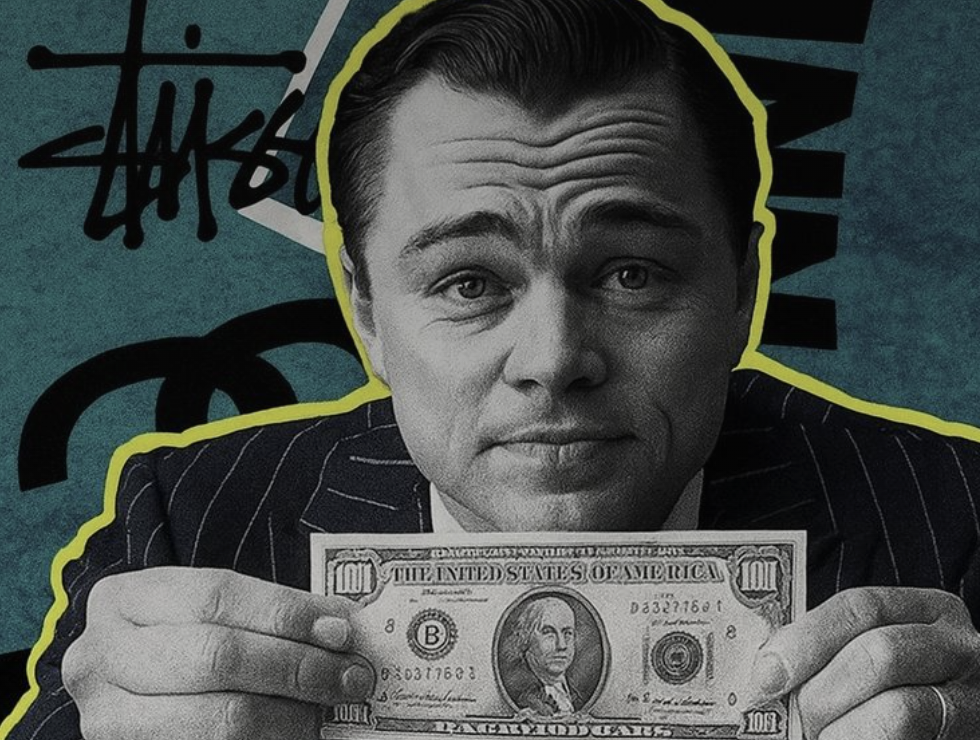
The US Department of Justice determined that around $4.5 billion was misappropriated, the essay says. It then lists the purchases cited in court filings: a $250 million superyacht, a $27.3 million pink diamond necklace for Najib Razak’s wife, Monet and Van Gogh works stored in the Geneva Freeport, and roughly $100 million for the production of The Wolf of Wall Street. The article also notes that Leonardo DiCaprio later returned a Marlon Brando Oscar statuette gifted by the production company to the Justice Department.
The cleanup list was just as dramatic. Swiss private bank BSI was ordered to shut down. Singapore, for the first time in more than 30 years, closed a merchant bank directly. Goldman Sachs paid Malaysia $3.9 billion and separately settled with the US Department of Justice for $2.9 billion. Former partner Tim Leissner pleaded guilty, according to the article. The money moved between 2009 and 2013, but the broad reckoning only arrived after 2018, leaving a gap of five to nine years.
The author treats that delay as a central rule of the trade: time itself acts as bleach, and only the formal financial system can sell clients that much time. Huione cannot. Crypto cannot.
Fines as a fee schedule
The seventh section lays out penalties side by side. HSBC paid $1.92 billion against annual pre-tax profit above $20 billion, with no one imprisoned. Wachovia paid $160 million, about 2% of annual profit, with no one imprisoned. Standard Chartered paid $340 million and then $1.1 billion, while keeping its license. BNP Paribas paid $8.97 billion, pleaded guilty, kept its license, and saw no one jailed. Deutsche Bank paid $425 million plus £163 million, with no one imprisoned. Danske paid $2.06 billion, and because its US business was already limited, the parent was not fundamentally damaged. In the 1MDB matter, Goldman’s global total came to about $6.8 billion, one partner was handcuffed, and the institution itself survived.
The article’s conclusion is that penalties and profits have settled into ratios both sides can live with. In that sense, the author argues, fines work less as punishment than as a fee rate. Compliance risk has been priced in as an operating cost. If the expected value stays positive, a rational shareholder would not necessarily want that risk to fall to zero.
Deferred prosecution agreements fit neatly into that structure, the essay says. Institutions pay, avoid a criminal conviction, accept a monitor for several years, and then see the charges fall away. HSBC’s monitoring period ended in 2017, after which the Justice Department closed out the case, the article notes. The money from those fines goes to the US Treasury and New York State. In that framing, the real name of the payment is a franchise tax levied by the dollar clearing system on the global banking industry.
The article flags one exception from 2022: Credit Suisse was criminally convicted for laundering money for a Bulgarian cocaine trafficking group, the first time a major Swiss bank had been convicted in the country. It then contrasts that with Binance’s $4.3 billion anti-money-laundering settlement in the US and says Credit Suisse’s fine in that Swiss case was only 2 million Swiss francs.
What banks actually sell, and what USDT changed
In its final argument, the essay says private banks and correspondent networks are not really selling secrecy anymore. FATCA and CRS weakened the old secrecy model. What they now sell is legal appearance, at scale.
The author breaks that into three layers. First, KYC is described as a ritual and an entry ticket rather than a true investigation. Foundation charters, legal opinions, and source-of-funds statements do not prove money is clean, the article says. They create a legally acceptable basis for the bank to say it had reason to believe the funds were clean. Responsibility is shifted once the paperwork is complete. The Cayman branch with no staff and 50,000 accounts is used again as the example.
Second comes the economics of fines. Third comes the power built into the dollar system itself. In networks such as CHIPS and Fedwire, the authority to decide whose money is clean enough to pass is part of monetary power, the article argues. OFAC lists act as blacklists, and deferred prosecution agreements resemble renewal negotiations. The essay compresses that view into a sharper line: the court and the laundry sit inside the same company and ride the same elevator.
The piece closes by bringing USDT back into the picture. Stablecoins, the author says, have indeed pushed underground finance to a much higher level of efficiency. But in a three-part laundering chain — placement, layering, and integration — USDT changes mainly the middle stage, the movement and dispersion of funds. Citing FinCEN’s use of Section 311 against Huione, the essay says the platform handled at least $4 billion in illicit funds over four years. That is massive inside crypto. Next to the banking cases discussed earlier, it is less than 2% of the flow through Danske’s Estonian branch alone.
The article then gives two reasons why stablecoins do not replace the formal system. First, blockchains are transparent. Every USDT transfer carries a full history, and labeling databases keep expanding. Mixing is possible, but the use of a mixer becomes a label in itself. Technical anonymity and legal cleanliness are different things, the author argues, and on-chain the former may be harder to sustain than many assume.
Second, and more important, is integration. If suspicious USDT is eventually meant to become a building in Manhattan, a Monet in a freeport, or a trust for one’s children, it still has to exit through traditional finance. And each exit asks the same question: what is the money’s origin story?
That story, the essay says, is not sold on-chain. It is still sold in the same old private rooms. Jho Low’s $4.5 billion did not require a mixer because Goldman Sachs and BSI stood behind it. Joaquín “El Chapo” Guzmán did not need Tornado Cash because there was a teller window at HSBC. Sudanese oil dollars did not need a cross-chain bridge because BNP had satellite-bank structures. In the article’s framing, crude tools are what clients use when they cannot afford the real service. Underground remittance shops and payment-running crews are substitutes for people without access to the VIP room. Crypto has made the substitute much faster. It has not, in the author’s view, turned the substitute into the main hall.
The essay ends with an open question: can stablecoins one day grow from a tool into the thing that grants legitimacy itself?