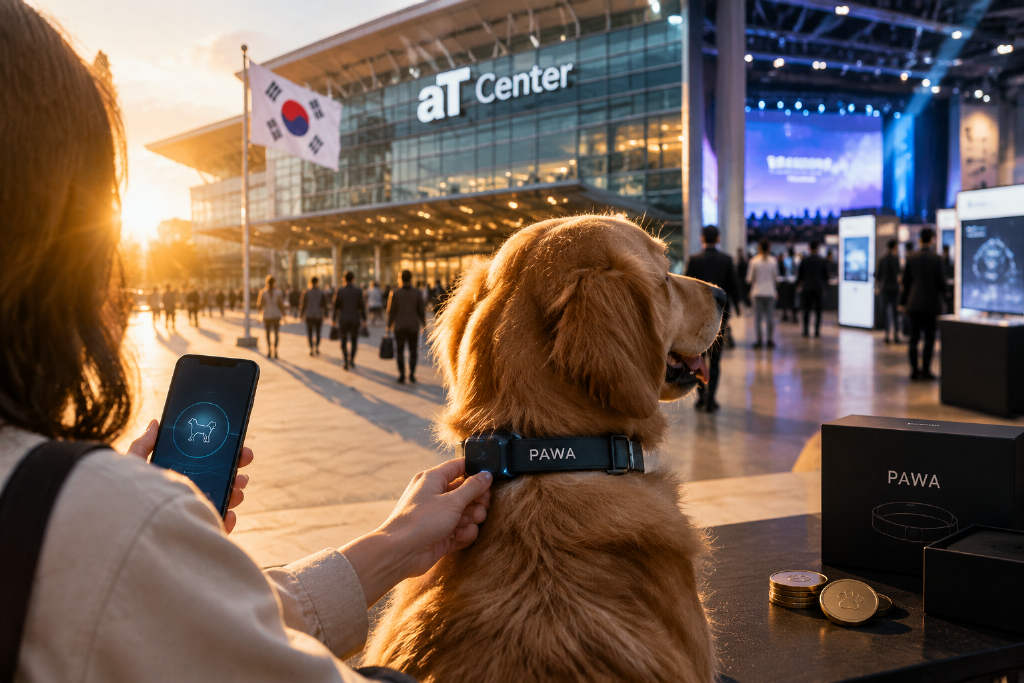
PAWA Co-Founder and Chief Marketing Officer Nicole Leung said at GWDC 2026 Korea that AI should assist people rather than replace them, and that humans still need to remain accountable for information produced by AI systems. Speaking during a panel discussion in Seoul, Leung introduced PAWA as a real-world product built around a smart pet collar that collects pet vital-sign data. The device provides owners with AI-generated reports, while daily use can also earn tokens.
Leung also said AI is likely to become more autonomous in economic activity. She contrasted traditional payment flows, where people need to know details such as the recipient’s bank, intermediary bank, and currency, with AI agents that can complete interactions through shorter machine-native instructions. On the question of responsibility when AI agents make mistakes, she said people have not yet truly mastered AI and should not hand over decision-making to it. Her message to developers was direct: let AI help people, not replace them.
GWDC 2026 Korea is being held on Sept. 29-30, 2026, at the aT Center in Seoul, South Korea, according to Techub News. The event is hosted by Web3Labs and co-organized by Techub News, HypaiLabs, and TokenPost.
Leung outlines PAWA’s product
During a panel discussion, PAWA Co-Founder and Chief Marketing Officer Nicole Leung introduced the company as a project focused on the real world. Its product is a smart collar that can collect pet vital-sign data. Pet owners can receive reports analyzed by AI, and routine use of the product can also earn tokens.
AI agents may handle economic activity with shorter instructions
Leung said AI will become more autonomous in economic activity. She explained that when people make payments, they need to know the other party’s bank, intermediary bank, and currency. AI agents, by contrast, can complete the same kind of interaction through shorter machine-native instructions.
Humans still need to take responsibility
On the question of liability when intelligent agents make mistakes, Leung said people have not yet truly mastered AI, and humans still need to take responsibility for information produced by AI. She said AI can help with work and communication, but it should not make decisions in place of people. Her message to developers was clear: let AI help us, not replace us.
This article was originally published by Bit.Fan. For more cryptocurrency news and market insights, visit www.bit.fan. Disclaimer:
The market information, project data, and third-party content displayed on this platform are for industry information sharing only and do not constitute any form of investment advice or return commitment.
Cryptocurrency trading carries high risks. Users should fully assess their risk tolerance and make independent decisions. All profits, losses, and legal responsibilities are borne by the users themselves.