
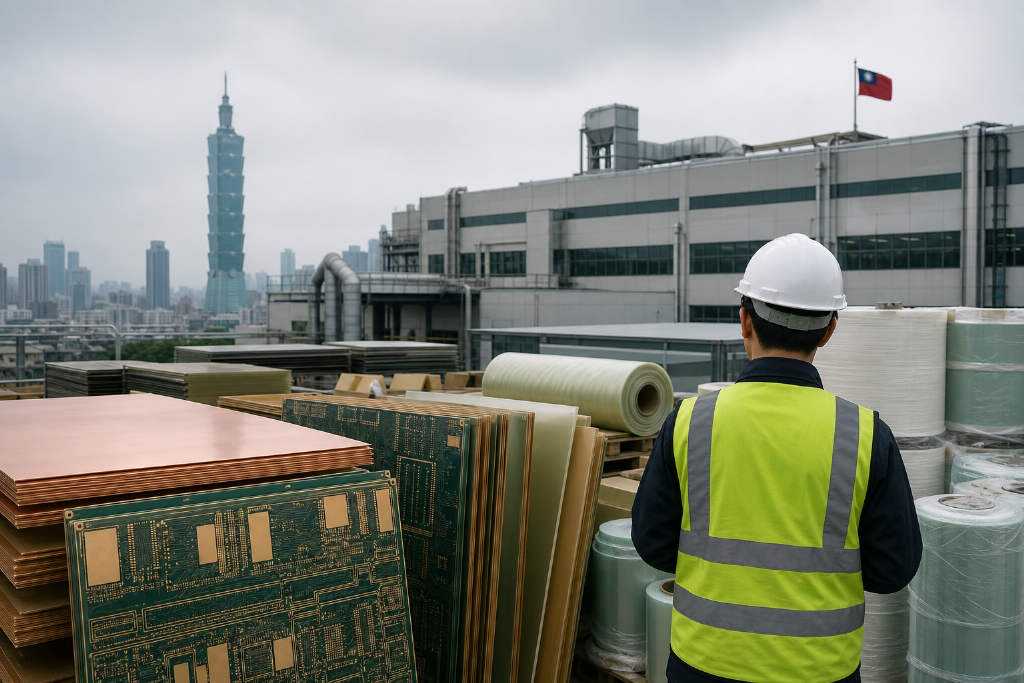
Demand from AI servers and high-performance computing is continuing to tighten supplies of high-end PCB materials, with copper clad laminate (CCL), prepreg (PP), low dielectric glass fiber cloth (Low DK) and T-Glass all described as being in short supply in the near term. Taiwan’s PCB industry already saw one round of price increases in the first half of the year, and the ABMedia report said a new rolling round of hikes is expected in the second half, with quarter-on-quarter gains in the third and fourth quarters seen reaching double digits.
The report said companies including Tripod Technology (3044), Chin-Poon Industrial (2355), Dynamic Holding (3715) and Unitech (2367) had already raised quotations by 5% to 30% in the first half. Part of that benefit has started to show in financial statements from the third quarter. On the IC substrate side, Unimicron (3037), Kinsus (3189) and Nan Ya Printed Circuit, referred to in the source as South Asia Circuit Board, are also expected to benefit from the latest upcycle in pricing.
CCL and high-end glass cloth remain under supply pressure
High-end PCBs used in AI servers and high-speed networking equipment require higher specifications and larger material usage than traditional consumer electronics products. That has increased the pricing power of CCL manufacturers. Citing industry information carried by Commercial Times, the report said major CCL suppliers had already raised product prices by roughly 20% to 30% in the first half of this year, and the quarterly pricing pressure may continue into the second half of 2026 and even into 2027.
Supply and demand imbalances in high-end glass cloth are also drawing attention. Supply chain estimates cited in the report put the gap in second-generation low-DK glass cloth supply at more than 60%, while shortages of T-Glass continue to widen. The upward pricing trend for both materials could last through the first half of 2027.
From CCL to glass cloth, the report described the whole high-end materials chain as being under strain. PCB makers are still facing raw-material cost pressure in pricing negotiations, with no clear sign of relief in the short term. The article said market expectations point to the first quarter of 2027, when new CCL capacity is scheduled to come online, as the point when supply conditions may begin to ease.
Pass-through speed differs across PCB makers
Among PCB manufacturers, Tripod was described as leading in cost pass-through. The report said a higher share of server and networking products, economies of scale and a better product mix all helped. Its product pricing had already reflected upstream CCL costs to a significant degree, pushing second-quarter gross margin to 30.09%. In the third quarter, as the share of higher-margin products keeps rising, pricing may continue to reflect CCL costs.
For Chin-Poon, the first round of price increases passed about 70% to 80% of cost pressure on to customers. Still, automotive board customers tend to have longer pricing cycles. Based on past practice cited in the report, it usually takes about four to five months after raw materials rise for product prices to be adjusted. Even with faster negotiations, a two- to three-month lag remains difficult to avoid. If upstream suppliers continue to post large increases in the second half, Chin-Poon is expected to launch a second round of price hikes to close the gap.
Dynamic Holding and Unitech look to the third quarter for fuller impact
Dynamic Holding’s second-quarter gross margin fell to 14.02%, down 2.1 percentage points from the previous quarter, with higher raw-material costs cited as the main source of pressure. The company adjusted selling prices again in June and July, and the impact is expected to start showing gradually from the third quarter. If material costs continue to climb, it may adjust quotations again depending on conditions.
Unitech has already completed price negotiations with customers, and the report said the full effect should be visible in the third quarter. CCL supply remains tight, and the industry assessment cited in the article also places the likely improvement point after new capacity enters operation in the first quarter of 2027.
IC substrate makers also seen benefiting
Beyond the PCB segment, the IC substrate market is also staying on an upward pricing path in the second half. Packaging demand for AI GPUs and ASICs is continuing to push up consumption of high-end IC substrates. With key materials such as T-Glass also in short supply, substrate makers have been able to keep rolling through price adjustments, and market estimates cited in the report suggest there is still room for double-digit increases in the third and fourth quarters.
Among Taiwan’s major IC substrate makers, Unimicron, Kinsus and Nan Ya Printed Circuit are expected to benefit together from this latest round of pricing gains and have become the main names watched by the market.