
Any macro signal that comes in below what the market wants to see could test crowded long positioning.
In a TechFlowPost analysis, risk assets are priced off two variables: earnings expectations in the numerator and the discount rate in the denominator. Those two inputs are set to be repriced in sequence within eight hours, at 20:30 Beijing time and again around 04:20 the next morning.
20:30 Beijing time: PCE and the second GDP estimate come first
The U.S. Bureau of Economic Analysis is scheduled to release July Personal Consumption Expenditures data and the second estimate of second-quarter GDP at the same time.
According to the article, market consensus calls for headline PCE to rise 0.07% month over month in July, after a -0.11% reading in June, which was the first negative print since 2020. Year-over-year headline PCE is seen at 3.6%. Core PCE is expected at 0.18% month over month and 3.20% year over year.
On the surface, those numbers look moderate. But the piece argues that July Producer Price Index data contains a potential warning sign. Core PPI excluding food, energy and trade services rose 0.4% month over month, four times the June pace. Within that, portfolio management fees jumped 6.5%. The article says those PPI components feed directly into PCE calculations, leaving room for an upside surprise in core PCE.
The second GDP estimate will revise the initial 1.5% annualized growth figure for the quarter, which came in below the expected 2.1%. TechFlowPost says the initial drag came mainly from a wider trade deficit, linked to a surge in AI infrastructure imports, and lower government spending, while consumer spending and business investment were actually accelerating. The direction of the revision will depend on fuller trade and inventory data, and a move in either direction beyond expectations could change how markets judge the resilience of the U.S. economy.
How the inflation print could feed into crypto
The article lays out a direct transmission path into crypto.
If core PCE comes in above expectations, the 30-year U.S. Treasury yield could rebound. TechFlowPost notes that it had already pulled back from a 5.34% high to around 5.19%. A move higher in long-end yields, combined with a stronger dollar, could hit the chain of logic that helped lift risk appetite last week: lower yields, stronger appetite for risk, and BTC back to $80,000.
If PCE matches expectations or comes in lower, that would reinforce the view that cooling inflation supports easier policy expectations and, in turn, risk assets. In that case, the article says, BTC would have support in holding above $80,000.
Positioning and sentiment make the setup more sensitive. The fear and greed index has climbed from 26 at the start of the month to 74, while RSI stands at 84. In TechFlowPost’s telling, the market is heading into the data in a greedy state, which leaves crowded longs more exposed if macro signals fail to cooperate.
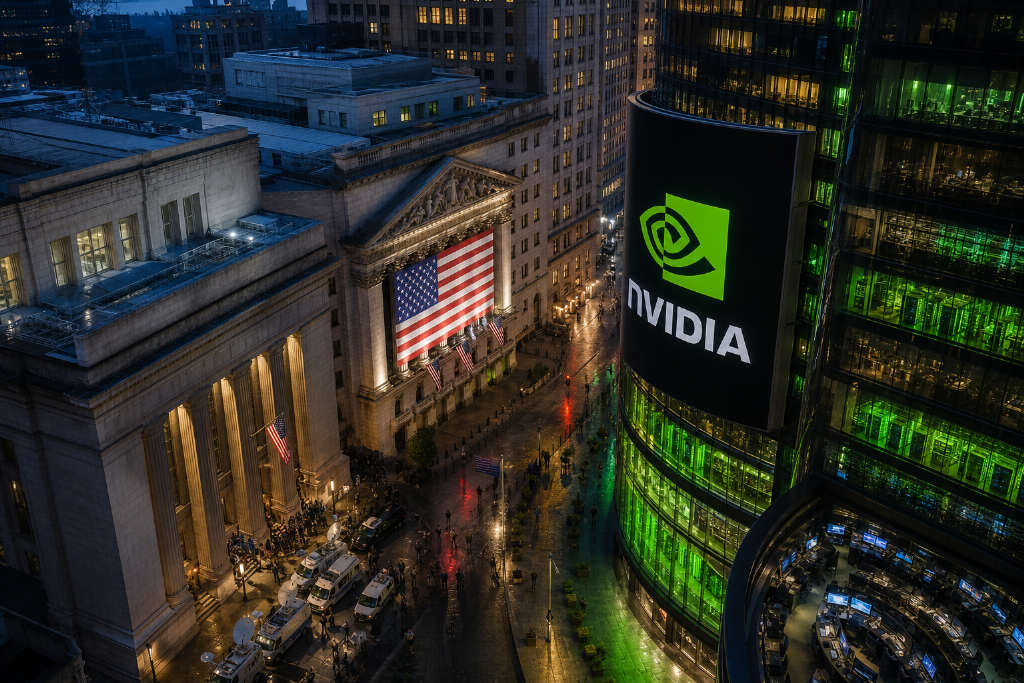
Around 04:20 Beijing time: Nvidia puts earnings expectations to the test
The second repricing event is Nvidia’s quarterly report. The company is set to publish results after the U.S. market close on Aug. 26 Eastern time for the quarter ended July 27.
Nvidia’s own revenue guide is $91 billion, plus or minus 2%. Consensus from 40 analysts sits at $91.85 billion, or 0.9% above management guidance. Even if the company only meets that consensus number, year-over-year growth would still be close to 97%.
Still, the article argues that the market has already priced in an upside surprise. Last quarter, Nvidia beat on Q1 revenue, yet the stock still fell about 5% over the following week. The reasoning is straightforward: once investors build a premium on top of consensus, a beat alone is not enough. What matters for pricing is the size of the beat and the guidance for the next quarter.
Consensus for Q3 FY27 has already been pushed to $103.1 billion. In the article’s view, that means analysts are collectively betting Nvidia’s growth is still accelerating rather than slowing.
Why Nvidia matters for crypto
TechFlowPost describes two layers of relevance for the crypto market.
The first is sentiment transmission. Nvidia is treated as a bellwether for large-cap technology stocks and for risk assets more broadly, so its results can directly shape the Nasdaq and overall appetite for risk.
The second is whether the AI narrative still holds. The article points to the ramp in Blackwell production and to capital spending by hyperscale customers including Amazon, Google, Microsoft and Meta as the key markers for whether the AI infrastructure investment cycle remains intact.
It says hyperscaler capital expenditure rose about 27% quarter over quarter in Q2. If Nvidia’s guidance suggests that pace is slowing, AI-related tokens and the computing-power segment could feel the pressure first.
Four scenarios for an eight-hour repricing window
The article maps out four possible combinations from the two events.
- Moderate PCE and strong Nvidia guidance: this would be a clean confirmation of BTC at $80,000 and of current risk appetite. With both the discount rate and earnings expectations supportive, crypto would be the most likely to extend gains.
- Hotter-than-expected PCE and strong Nvidia guidance: this would send mixed signals. Higher rate expectations would weigh on valuations, while stronger earnings growth could offset part of that pressure. BTC could swing sharply in a $78,000 to $82,000 range.
- Moderate PCE and soft Nvidia guidance: the macro backdrop would be supportive, but the micro picture would weaken. A sell-off in tech could drag broader risk appetite lower, though the rate environment could still cushion BTC, limiting downside.
- Hotter-than-expected PCE and weak Nvidia guidance: the article calls this the most dangerous reversal scenario for last week’s short squeeze. Rising discount rates combined with lower earnings expectations could deliver a double hit, sending BTC back to test support in the $75,000 to $76,000 range, near Strategy’s cost basis, according to the piece.
Warsh at Jackson Hole is the next catalyst
Beyond the PCE release and Nvidia’s results, the article flags Warsh’s speech at Jackson Hole on Friday as the next catalyst.
How those two earlier events land will shape the positions and sentiment the market carries into that speech. With the fear and greed index already at 74, TechFlowPost argues that traders may be more sensitive to negative surprises than excited by positive ones.