
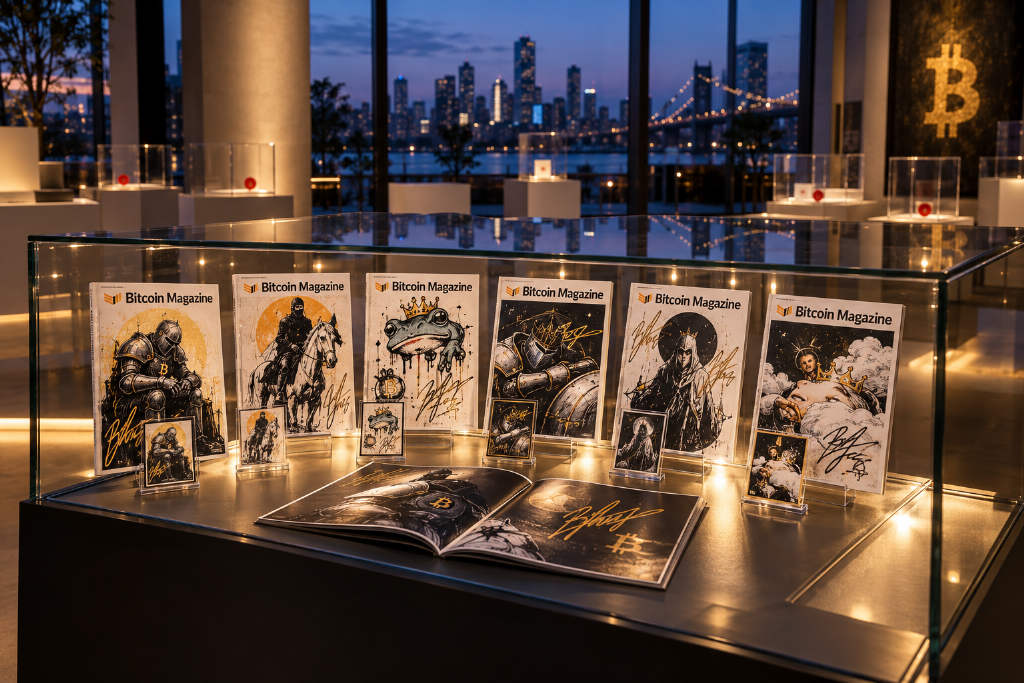
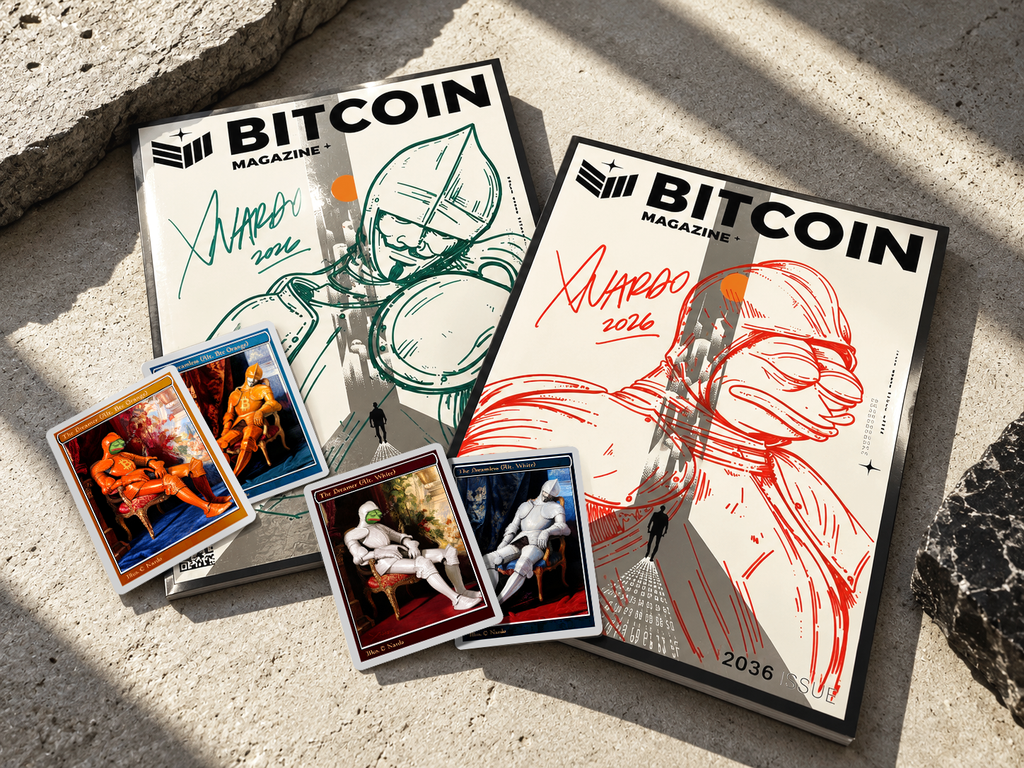
Pepenardo has turned six copies of Bitcoin Magazine’s 2036 issue into original artworks by drawing directly on the covers with a Sharpie. The altered editions feature characters from his visual world, including the Sleeping Knights, which were previously shown at the BMAG Museum in Nashville and at Bitcoin 2026 in Las Vegas. Other imagery on the covers includes the masked rider from FAKEGENESIS, Dorian Nakamoto, and Pepe the Frog.
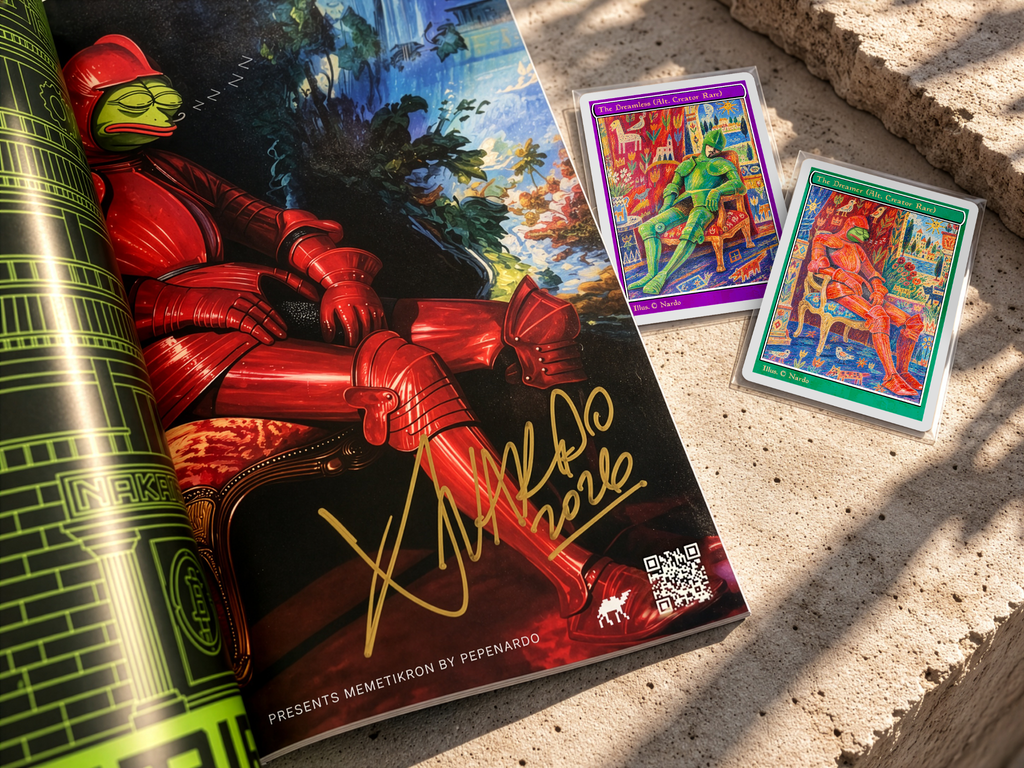
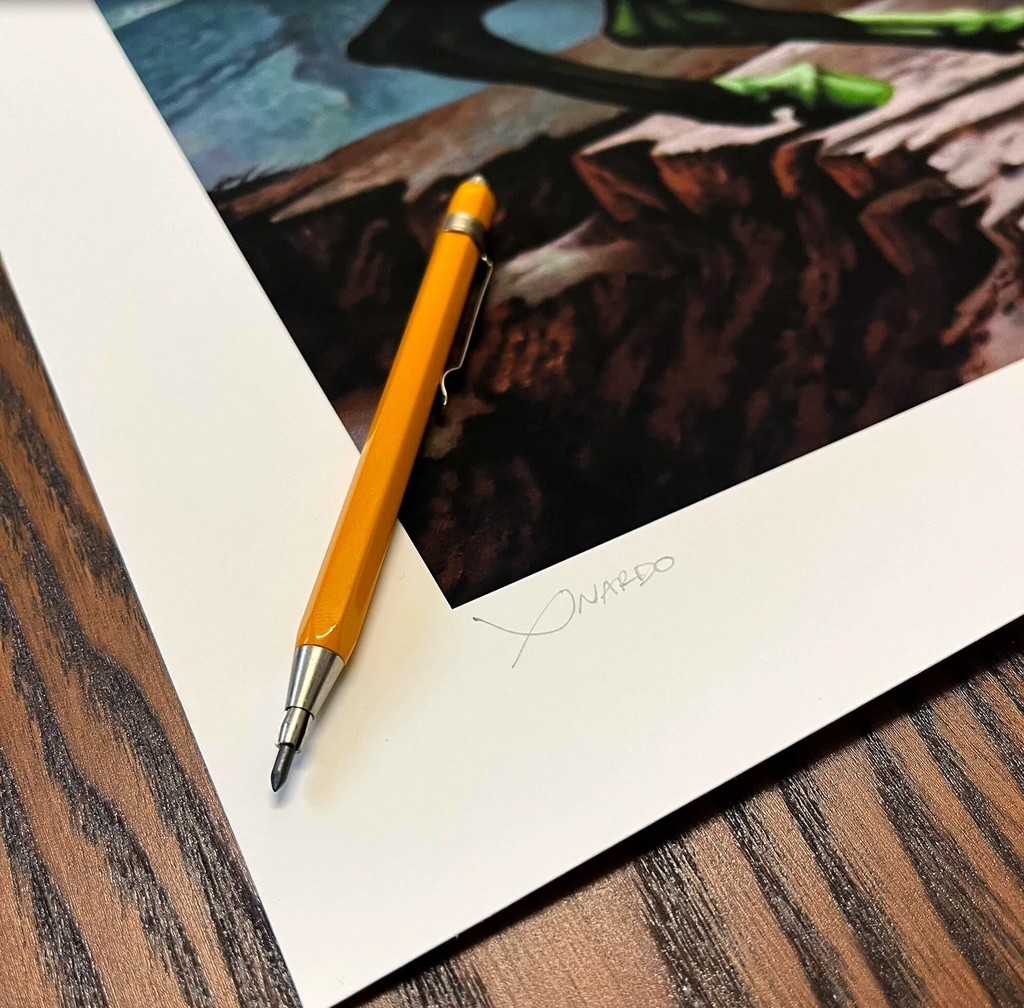
Each magazine carries the artist’s signature on the illustrated cover and a second signature in gold ink on an interior spread reproducing his painting THE DREAMER. Every copy is paired with two original one-of-one trading cards created for the collaboration.
The release also points to BTC Inc.’s growing interest in art, publishing, and collectibles. That interest had already been visible at Bitcoin 2026, where Pepenardo’s MEMETIKRON exhibition put THE DREAMER (RED KNIGHT) and THE DREAMLESS (GREEN KNIGHT) at the center of the BMAG auction.
From oil paintings to trading cards
The two oil paintings each measure 30 × 39.5 inches and show reclining knights in red and green armor, drawing on references to financial markets and historical portraiture. Both works sold for 0.32698802 BTC each, approximately $26,500 apiece, and together drew 197 bids.
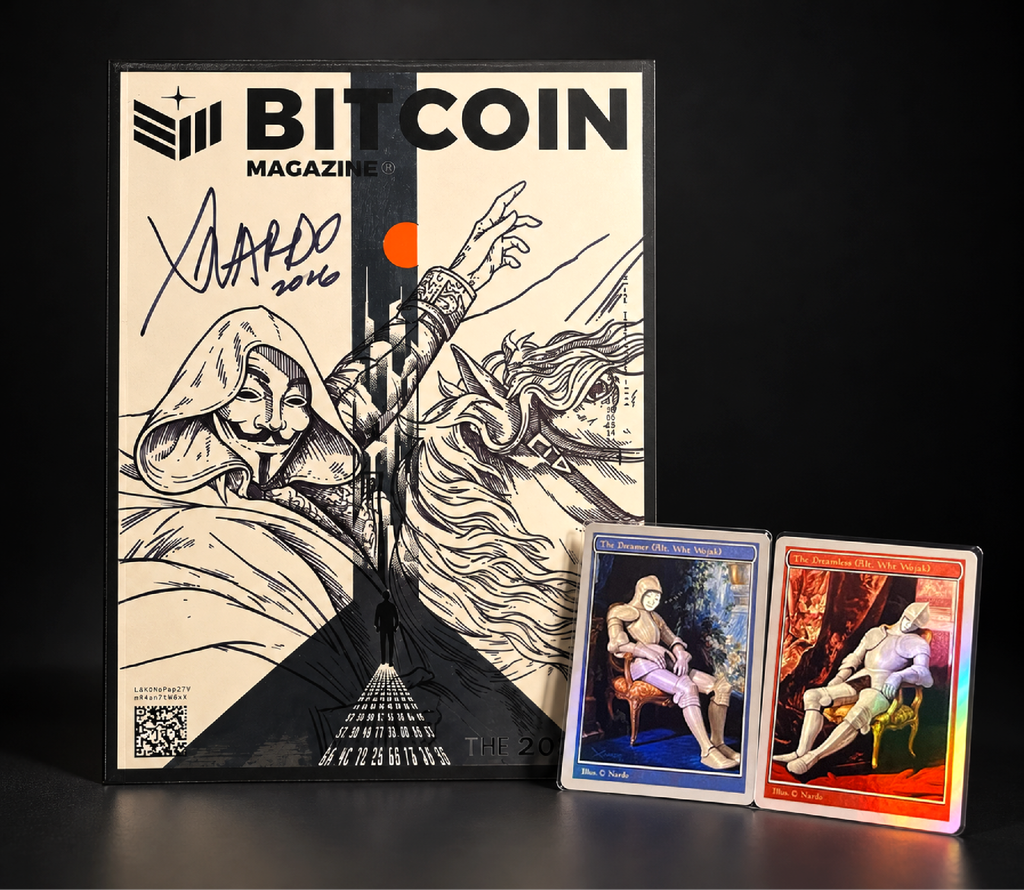
Those images have now returned in artist-made trading cards with alternate colorways, remixed compositions, and hand-painted Creator Rare editions inspired by traditional textiles. Bitcoin Magazine describes the work as a bridge between painting and handheld collectibles, where scarcity, provenance, and variation shape value.
Pepenardo’s connection to that market predates the Sleeping Knights. In 2023, his painting FAKEGENESIS sold for 1.625 BTC at the Bitcoin Conference in Miami. The work reinterprets Jacques-Louis David’s Napoleon Crossing the Alps through the image of a masked rider on a green horse.
FAKEGENESIS first appeared in 2022 as a Fake Rares card. It later became an early marker for physical Bitcoin art and, in the article’s telling, showed growing collector interest in work emerging from Bitcoin meme culture. The image later appeared on the back cover of Bitcoin Magazine, with prints sold through the publication’s store. Its return now as a hand-drawn magazine cover completes an unusual path from trading card to painting, printed reproduction, and original collectible.
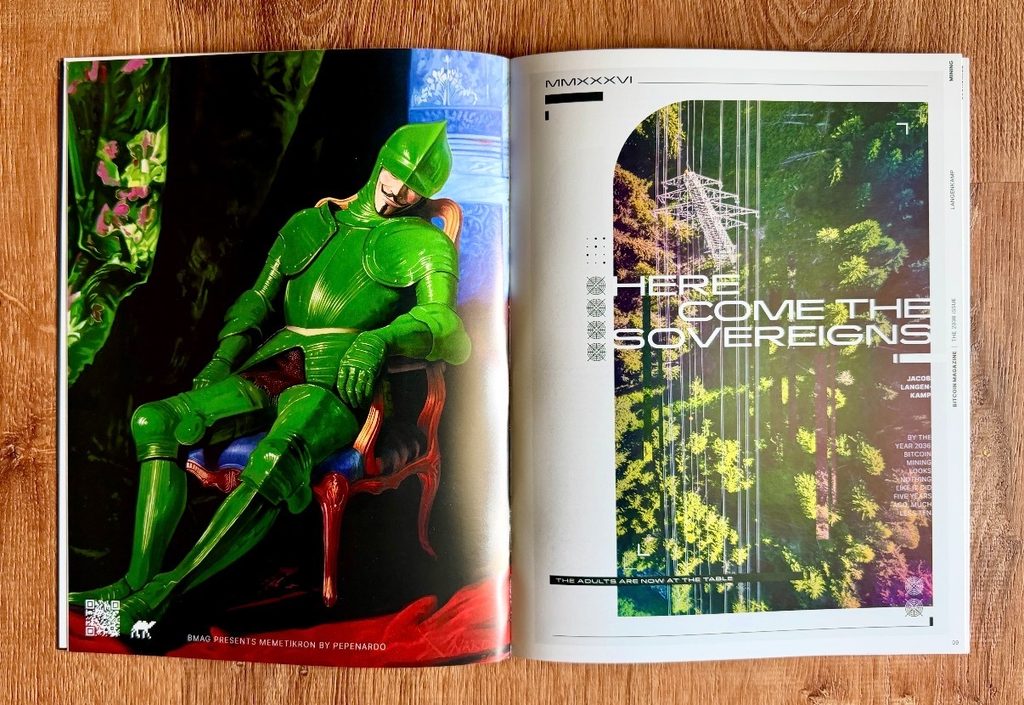
Bitcoin Magazine as a collectible object
The article also places the collaboration inside Bitcoin Magazine’s own collecting history. The publication released its first issue in May 2012 and was co-founded by Mihai Alisie and Vitalik Buterin. At a bitcoin event in London in September 2012, seven copies of the inaugural issue were signed by more than 20 early bitcoin figures. One copy drew a winning bid of 7 BTC, though the buyer never completed the purchase or collected the magazine.
Since then, early issues have become sought-after historical artifacts, with graded copies and rare editions drawing collector demand. In 2023, Bitcoin Magazine introduced the Genesis Box, a limited run of 21 collector’s sets containing the first 22 issues, each housed in a protective acrylic case.
The piece compares the magazine’s trajectory to early exhibition catalogs, first-edition books, and concert posters, arguing that Bitcoin Magazine now carries value beyond its original publishing function. Pepenardo’s customized covers push that history forward by turning the publication itself into a one-of-one artwork.
What Pepenardo and Mark Mason said
Speaking with BMAG, Pepenardo said the idea came after he noticed the blank space on the cover of the Bitcoin Magazine issue featuring his work. 「I couldn’t help but notice that welcoming blank space on the cover. It seemed like an obvious place for a drawing.」 He said his path into Bitcoin was tied to watching the energy around trading cards on Counterparty from 2016 through the present.
He also pointed to Hal Finney’s 1993 email titled Crypto trading cards. 「Of course he was talking about digital collectibles, but the principle stays the same. Bitcoin’s history has a magnetic pull on collectibles; people want to hold on to a fragment of such an important modern history. When we look back fifty years from now, the content and the artifacts that came out of the movement will help future generations make sense of Bitcoin’s tremendous timeline.」
On the movement of THE DREAMER and THE DREAMLESS across painting, publication, and cards, Pepenardo said he was surprised by how quickly the cards sold out. 「I was shocked at how quickly they went. I have no words. But it certainly reinforces that what I’m attempting to create and build with my work has some value.」 He added that trading cards let him remix the original works and extend the life of each painting. The media differ, he said, with oil on canvas for the paintings and various print methods for the cards, but the care required to execute both remains the same.
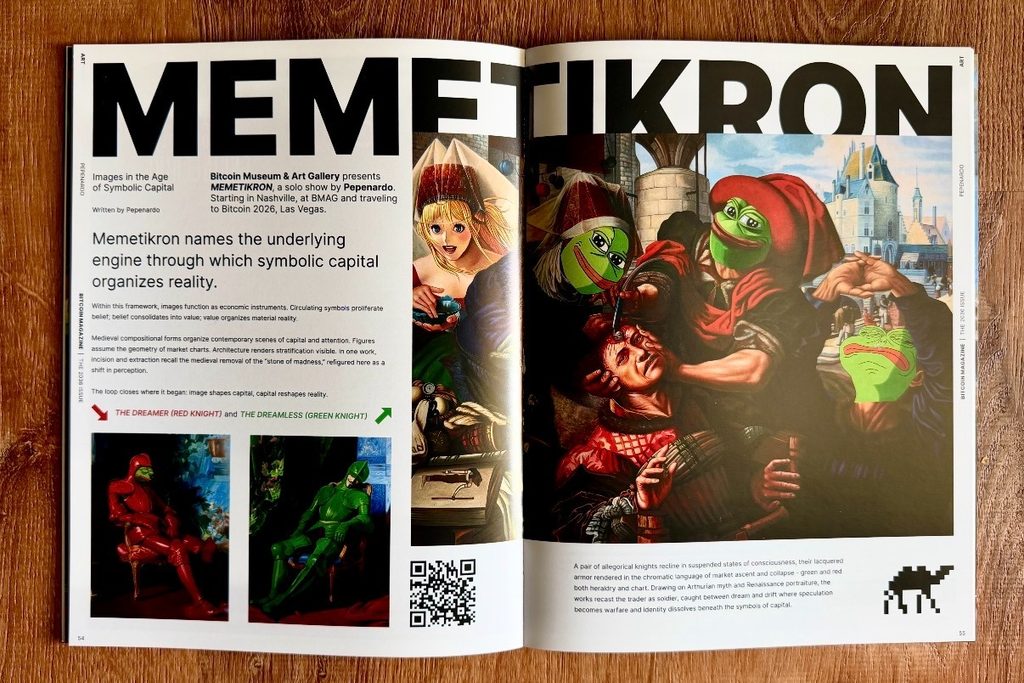
Looking back at FAKEGENESIS, Pepenardo called it the work that defined how he should approach his art. 「FAKEGENESIS will always be the pivotal work that showed me how I should properly approach my art. I knew that even before it sold. It is a painting that embeds the tropes of Bitcoin’s ethos without being too obvious. Art within the context of Bitcoin shouldn’t have to throw a big B at you all the time; it should give you the fiery sensation of standing inside a new history being built. My hope is that it is remembered as a work that represents an entire movement onwards and upwards.」
Mark Mason, Head of Media at Bitcoin Magazine, said the publication has spent more than a decade documenting Bitcoin’s evolution, from early technical development to the people and culture around it. He described each physical issue as a time capsule capturing a particular moment in Bitcoin’s path toward hyperbitcoinization.
Mason said one of the biggest drivers of collectible value is that Bitcoin Magazine never reprints past editions. That fixed supply has made early issues, graded copies, and signed covers increasingly desirable to collectors. He added that artist-customized covers such as Pepenardo’s take the relationship between Bitcoin, technology, economics, and culture one step further by turning an already collectible publication into an original artwork.
Sold out after launch, with more works still available
According to the article, Pepenardo’s custom magazine covers and trading card sets sold out shortly after launch, with all six one-of-one editions finding collectors. Additional works remain available, including MASTER CUTS OUT THE STONE (after Hemessen), the centerpiece painting from his MEMETIKRON exhibition, which traveled from the BMAG Museum in Nashville to Bitcoin 2026 in Las Vegas.
Collectors can also view FAKEGENESIS prints and the Genesis Box, a limited-edition set preserving the publication’s first 22 issues from 2012 to 2014. The article says the Bitcoin Museum & Art Gallery, or BMAG, organizes international exhibitions, auctions, and artist collaborations focused on Bitcoin and its cultural implications. BMAG is also set to return to Bitcoin Amsterdam on November 4-6, 2026, with European artists exploring money, power, and Bitcoin.
This article first appeared on Bitcoin Magazine and was written by Dennis Koch.



