
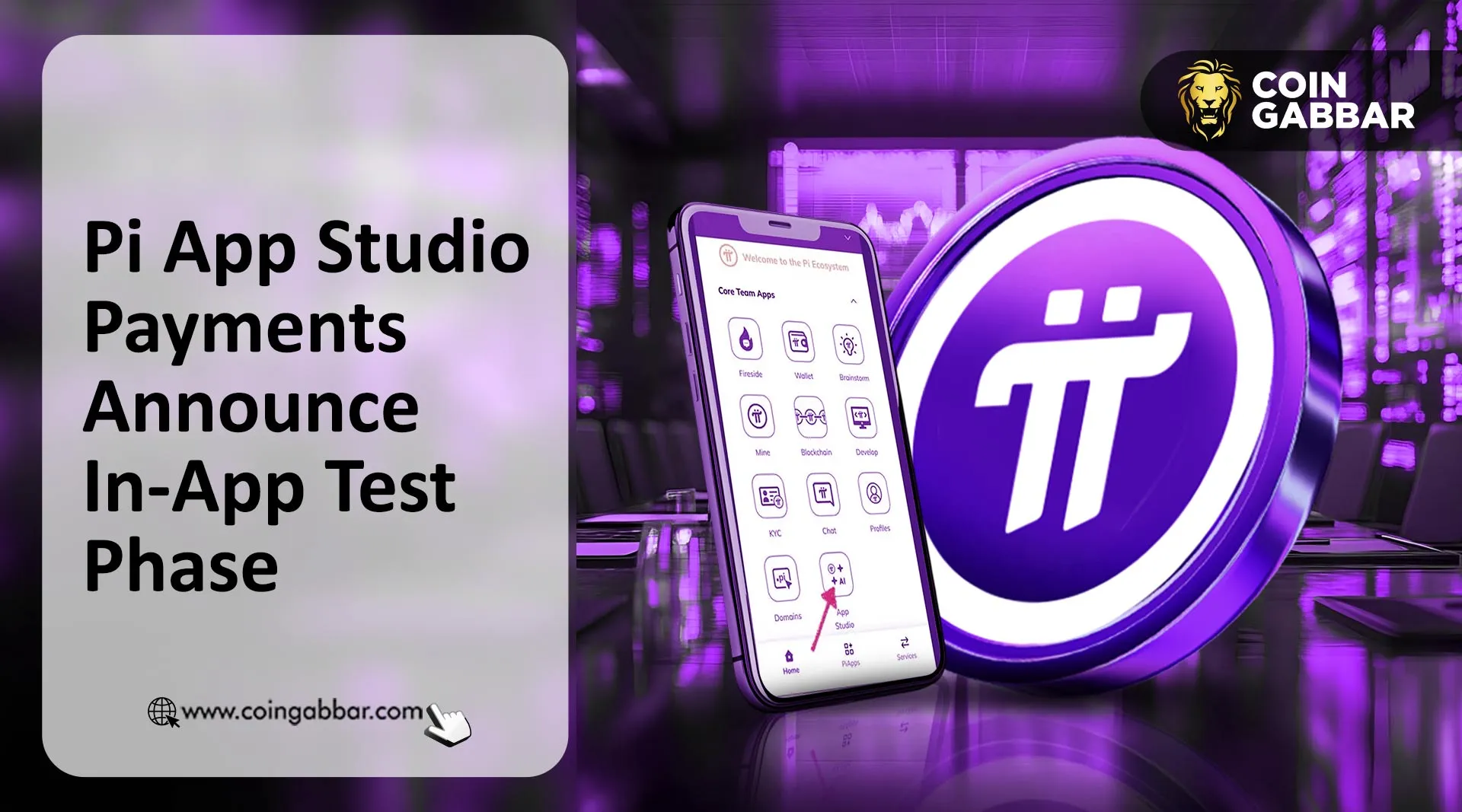
Pi App Studio has introduced a payment testing phase that lets developers use Test-Pi inside applications for digital purchases, services, game items and subscriptions. The update moves discussion around Pi Network closer to practical utility instead of leaving it centered on community mining and price speculation. It does not remove questions around price pressure or exchange access, but it gives users a clearer way to assess whether real demand can develop inside the ecosystem.
In-app payments matter only if apps are actually used
The main value of the testing phase is not the existence of a payment feature on its own. It is the chance for developers to build and test real payment flows before any broader rollout. If builders can create useful services that accept Pi inside understandable app experiences, the network gets a stronger utility signal. If those apps stay experimental or vague, payment support may remain just another feature update.
The source makes a clear distinction here: Pi price discussions should not rely only on exchange rumors. More useful indicators are developer activity, token supply conditions and actual app usage. A rise in builder adoption could support more organic demand, but only if those applications offer functions people return to and pay for repeatedly.
Token unlocks still matter, and payments do not erase supply pressure
Price sensitivity around Pi remains tied to token unlocks, which can add selling pressure. The payment feature may help demand over time, but it does not automatically absorb new supply. Any attempt to judge a change in trend still needs to consider trading volume, exchange availability and real usage inside apps, rather than treating a product test as proof of a market reversal.
The same separation applies to listing speculation. Utility updates often trigger more discussion about whether Pi could be listed on exchanges, but the payment test by itself is not a listing notice. The material states that exchange-related claims matter only when they come with direct confirmation from an exchange or from the project. Without that, product progress and market rumors should be treated as separate issues.
Mainnet access, wallet support and safe payment flows remain central
For payments to matter beyond a demo, users need stable mainnet access, clear wallet support and reliable app experiences. A practical payment flow should show a transparent transaction path, a clear reason for the charge and understandable settlement details. Repeated use carries more weight than a single announcement, and working apps count more than social discussion.
The source also puts emphasis on user safety. People using these payment flows should review app permissions, transaction details and account prompts before approving anything. If a payment page asks for unrelated wallet access or recovery information, it should be avoided. In that sense, the Pi App Studio payment test is less a conclusion than a checkpoint: the next signal comes from whether developers keep adding useful functions and whether users continue to complete transactions inside those apps.