
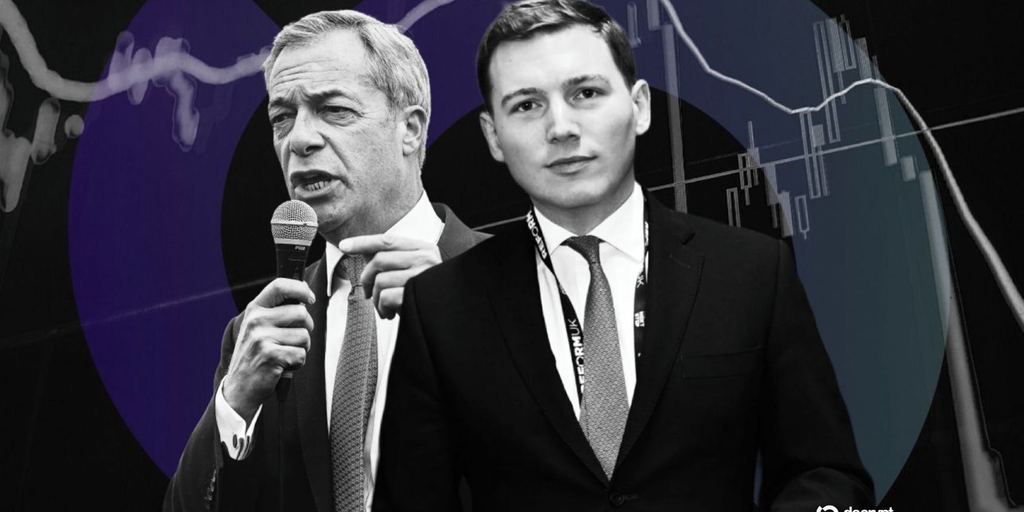
A Polymarket account registered under the name of George Cottrell received $8.8 million in cryptocurrency from unidentified sources in 2024 and used the money to bet on Donald Trump’s election victory, the Financial Times reported.
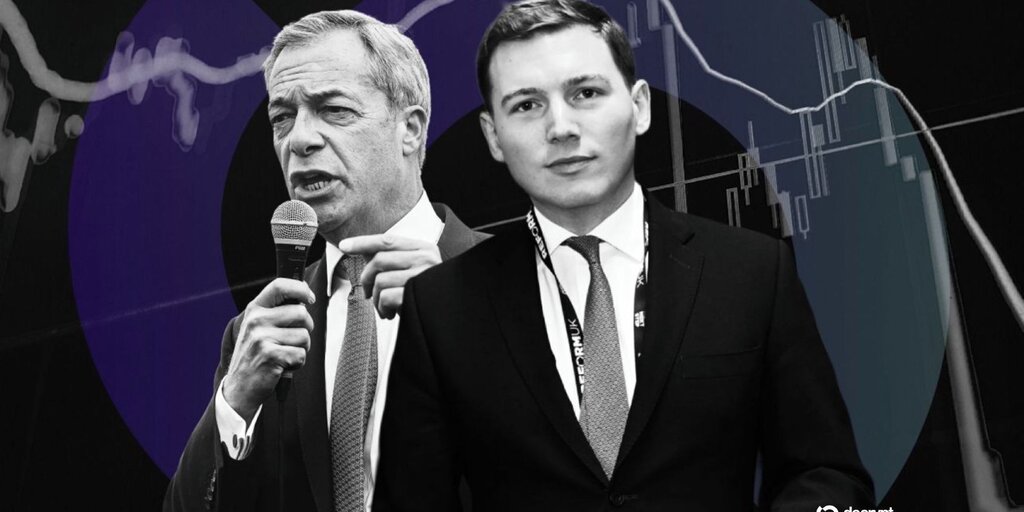
Citing public blockchain data, the FT said the account, listed as “GCottrell93,” was funded in late October 2024 through two crypto exchanges. Of that total, $7 million came from OKX in five tranches, while $1.83 million was routed through ChangeNOW. Each time funds arrived, they were immediately staked on a Trump win. After Trump’s victory, the account generated $4.46 million in profit, and almost all of the money was then moved back out to other wallets. The paper said it is unclear who supplied the funds and who ultimately collected the winnings.
The account has not been formally linked to Cottrell. Blockchain investigator ZachXBT has said he holds “high confidence” that the account belongs to him after previously flagging it earlier this year over a $550,000 loss tied to a bet on U.S. strikes on Iran. Lawyers for Cottrell declined to comment on his finances or on specific transactions and said their silence should not be taken as acceptance of the FT’s findings. Reform UK did not respond to the newspaper.
Sunday Times report examined support for Nigel Farage
Earlier this month, a Sunday Times investigation said Cottrell had bankrolled Nigel Farage’s operation in the year before Farage won his parliamentary seat. The report said that support covered staff, private security, transport, and accommodation, and that those benefits were not declared.
Under the MPs’ code of conduct, members must disclose gifts, benefits, and hospitality that “might reasonably be thought by others to influence [their] actions or words.” The Sunday Times reported that Cottrell had paid for Farage’s security for months and had recruited and paid three staff members to run his social media.
The same investigation also linked Cottrell to a crypto-gambling platform that it said was involved in “potentially illegal” unlicensed betting in the U.K. Since the election, the Sunday Times reported, Cottrell has allowed Farage to use a five-storey house he rents near Buckingham Palace, a property located minutes from Reform’s headquarters. His lawyer said that, “as a close friend,” Cottrell “did, and does, allow Mr Farage to stay in” the property.
Both the Sunday Times and the FT have asked whether money from unidentified sources may have helped fund benefits for Farage or Reform. Cottrell has declined to answer that question, including who beneficially owns the Polymarket wallet.
Cottrell’s background
Cottrell, 32, was born into an aristocratic family. In 2016, U.S. prosecutors charged him with 21 counts in connection with an alleged “dark web” money-laundering scheme. He later pleaded guilty to a single count of wire fraud under an agreement that dropped the remaining counts and served eight months in prison. The Sunday Times reported that he has since applied for a U.S. presidential pardon.
More scrutiny on Farage’s crypto connections
The FT report lands as scrutiny of Farage’s crypto ties has intensified. Earlier this month, it emerged that bankers had filed a suspicious activity report over a £5 million ($6.7 million) gift to Farage from billionaire Tether investor Christopher Harborne. Farage was also reported to the U.K.’s standards watchdog over alleged crypto lobbying.
Farage resigned his Clacton seat on July 8 and triggered a by-election that he described as a “people versus establishment” contest. After weeks of scrutiny over his finances, he denied wrongdoing. Labour, the Conservatives, the Liberal Democrats, and the Greens all declined to field candidates, calling the contest a stunt.
Among a record field of 34 candidates, Farage’s most prominent challenger in the August 13 vote is satirical candidate Count Binface, who describes himself as an “intergalactic space warrior” from the planet Sigma IX and campaigns with a metal dustbin on his head.