
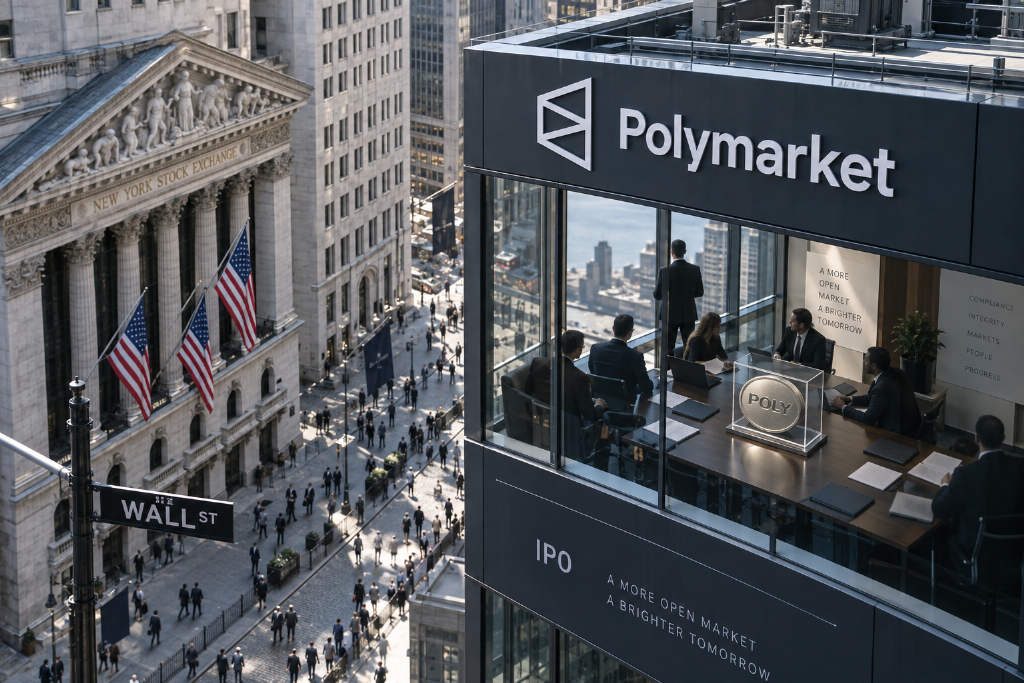
Polymarket still has no official token, and the public record now points less to a cancellation than to a plan that keeps getting pushed back.
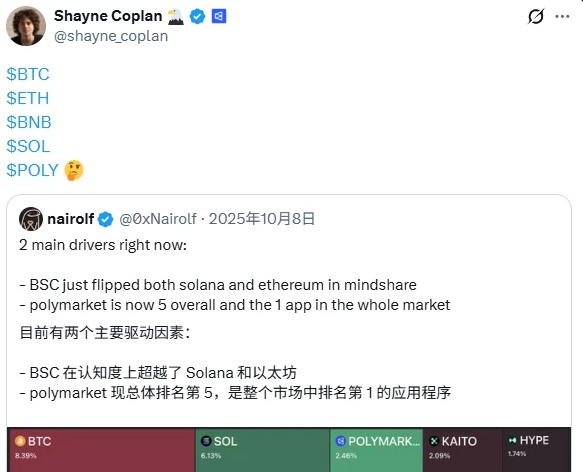
On Oct. 8, 2025, founder Shayne Coplan posted a short message on X: 「$BTC $ETH $BNB $SOL $POLY 🤔」. The first four tickers were large-cap crypto assets. The fifth, POLY, was not an existing official Polymarket token, and the post quickly fed expectations that one was on the way.
Fifteen days later, on Oct. 23, 2025, growth lead William LeGate referred to 「expected airdrop users」 in a podcast or related discussion. Then on Oct. 24, 2025, chief marketing officer Matthew Modabber made the clearest public comment yet on Degenz Live: 「There will be a token, yeah, there will be an airdrop. We could launch at any time, but we want it to have real utility and life, and to last over time.」
That was the moment the POLY story truly took shape. Nearly a year later, the token is still missing.
A promise that was never withdrawn and never fulfilled
Polymarket’s help center currently carries a standard anti-scam notice saying the platform has not announced any plans for an airdrop or token generation event. That language has coexisted for almost a year with Modabber’s public statement that there would be a token, and the company has not reconciled the two messages.
There was also an earlier sign. In September 2024, The Information reported that Polymarket planned to issue token warrants to investors in a financing round of about $50 million. In practical terms, investors would not receive tokens immediately because none had been issued yet. They would instead receive warrants giving them the right to buy a set amount of tokens under pre-agreed terms if the company later launched one.
By November 2025, the focus of public discussion had shifted. The question was no longer just whether there would be an airdrop, but what behavior would disqualify users. On Nov. 11, William LeGate said in response to volume farming accusations that accounts created through sybil attacks would receive no airdrop allocation and were simply wasting their time.
On Feb. 4, 2026, parent company Blockratize Inc. formally filed an intent-to-use trademark application with the U.S. Patent and Trademark Office for the name “POLY,” covering digital currency and crypto platform services.
On May 13, product lead Dustin Karp posted a photo of a workstation and wrote that he had passed by Mustafa’s desk. Community members zoomed in on the image and said the screen appeared to show an internal tab related to an airdrop. Around the same period, LeGate answered community questions about identity badges. A blue badge marked Polymarket employees. The Traders badge was for users with cumulative profits of $100,000 or enough trading volume. The Builders badge was for project teams building on the Polymarket ecosystem.
When asked whether posting on X could also help with airdrop eligibility, LeGate said linking an X account to a Polymarket account was only one-third of the requirement. Users also needed to place their personal page link in their X bio and keep sharing trading records and market views on X.
That round of expectations pushed prediction market pricing higher. By mid-May 2026, predict.fun showed the probability of Polymarket launching an official token before year-end at 56%. The probability that first-day fully diluted valuation would exceed $6 billion reached 51%.
That burst of attention turned out to be close to the last concentrated wave of token speculation. On July 6, 2026, Mustafa was still publicly recruiting 「the world’s top tokenomics model builders」. By August 2026, according to the article, that engineer had already left Polymarket.
Crypto outlet The Merkle offered one possible explanation in an Aug. 26, 2026 analysis: once a company has formally filed an intent-to-use trademark with the federal government, it is no longer at a stage where executives can casually post token tickers online without facing securities-law disclosure questions.
JPMorgan’s banking cutoff report and the company’s changing direction
On Aug. 14, 2026, the Financial Times reported that JPMorgan had told Polymarket as early as October 2025 to find another bank because of regulatory concerns. Reuters independently followed up that night, and Bloomberg republished the development the same day. The timing matched the same month Coplan posted the POLY ticker message.
Even so, that did not mean JPMorgan had walked away from the company entirely. In February 2026, JPMorgan invited Coplan to speak in Miami at its private bank client conference. According to The Wall Street Journal, in April 2026 JPMorgan also invited wealth-management clients to participate in Polymarket’s financing round at a $14.5 billion valuation.
In other words, JPMorgan appeared unwilling to take on the risks tied to Polymarket’s bank account while still trying to position itself as a potential underwriter for any future initial public offering.
Once IPO preparation enters the picture, a token becomes more sensitive.
Responding to the Financial Times report, Polymarket said: 「We maintain a close and active working relationship with JPMorgan across multiple entities, operational integrations, and the handling of customer fund flows... Any claim to the contrary fundamentally distorts the nature of our relationship.」
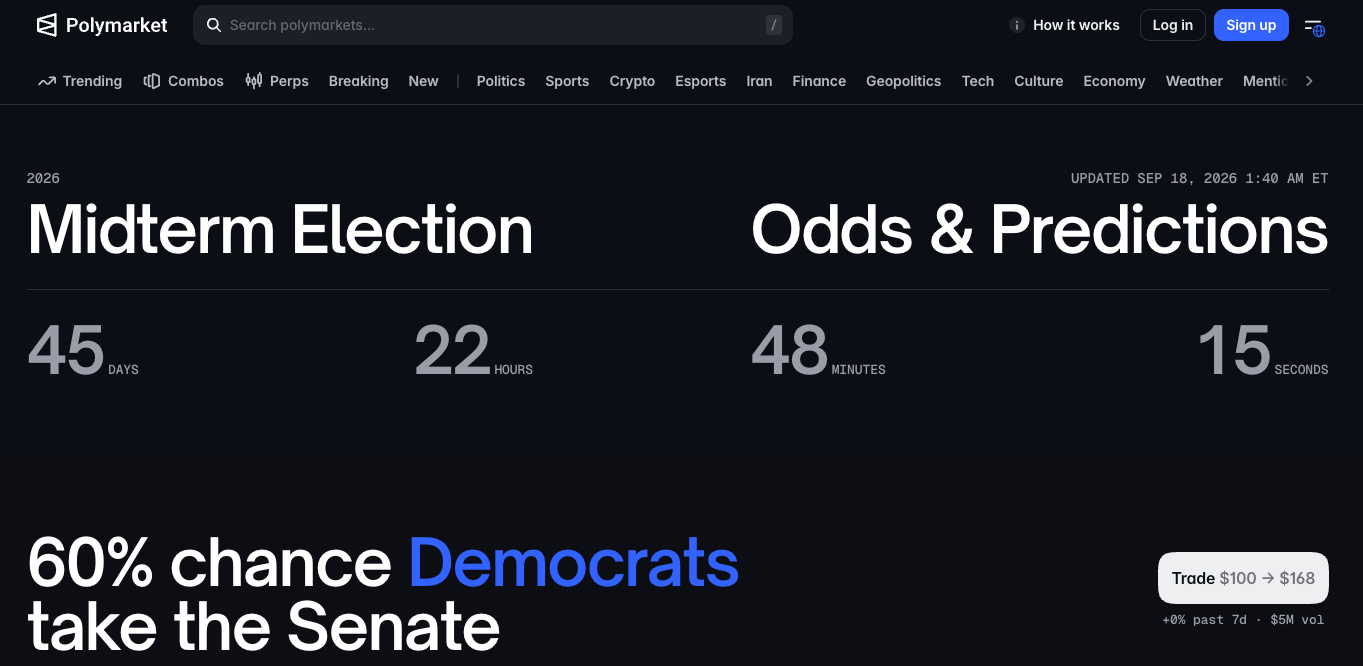
At the same time, CNBC reported on Aug. 11, 2026, that Polymarket had hired a batch of executives from traditional finance and regulatory circles, including a chief compliance officer from Robinhood, a head of regulatory affairs from Coinbase, a former FBI official as head of global investigations and intelligence, and a chief risk officer from Nasdaq. The report said those appointments were meant to prepare for trading peaks tied to the NFL season and the November midterm elections. On Sept. 16, Polymarket also launched a dedicated 2026 midterm election center page.
Why a token may now be harder to justify legally
Based on the public record, the silence around the token and JPMorgan’s reported decision to cut off banking support look like separate developments on the surface. No authoritative media report has said JPMorgan pressured Polymarket to abandon a token. The available evidence does not establish a direct causal link between the two.
But over a longer timeline, they grow out of the same shift.
Polymarket has been moving toward a far more regulated profile. The article describes a sequence that starts with a $1.4 million fine from the Commodity Futures Trading Commission in 2022, then the FBI raid on the founder’s home after the 2024 U.S. election, followed by the company’s $112 million acquisition of licensed contract market QCX in July 2025, a $2 billion strategic investment from Intercontinental Exchange in October 2025 and a return to the U.S. market by year-end, and then financing talks in August 2026 that pushed valuation above $20 billion.
That is a clear route: from a platform operating on the edge of the gray market to something closer to regulated financial infrastructure.
Along that route, a governance token creates added complications. As the article argues, it could trigger securities-law disclosure obligations, complicate an eventual IPO cap table, raise the question of whether value should accrue to equity or to the token, and conflict with the compliance-friendly image the company has been building.
Not a confirmed cancellation, but an open-ended delay
The evidence on hand does not support a firm conclusion that Polymarket has abandoned the token. The more precise description is that this is not a cancellation but an indefinite shelving.
It also would not be the first delay. The market had already priced in one round of expectations in October 2025 that a token could arrive before year-end. By May 2026, predict.fun had again pushed those odds to 56%. Time passed, and POLY still did not appear.
The article closes on one remaining possibility: if future U.S. Securities and Exchange Commission rules draw a clearer line between token rights and equity rights, POLY could still surface. Until then, it may not disappear outright. But at a company that increasingly resembles a traditional financial institution, the token looks more likely to stay on hold without a set deadline.