
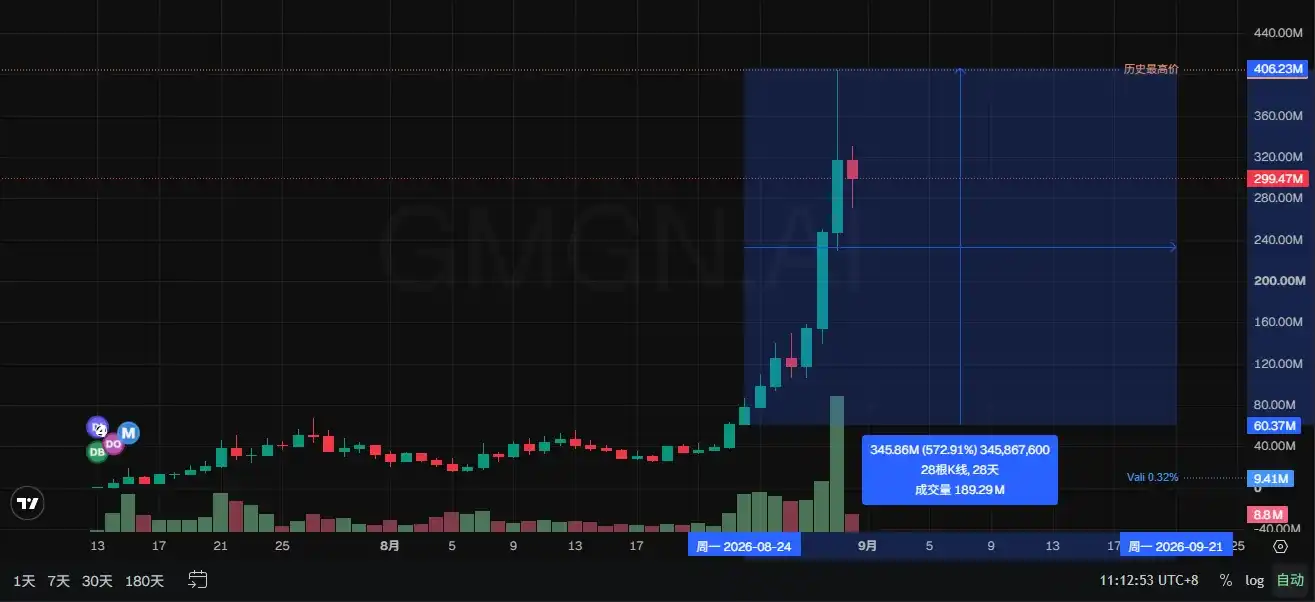
PONS, the platform token of Robinhood Chain token launch and trading platform Pons, has surged again as meme coin activity on the chain remains elevated. According to GMGN data cited in the report, PONS market capitalization rose from $60 million to a peak of $400 million in one week and has since pulled back to around $300 million.

The report noted that when Odaily last covered PONS, its market capitalization was only $40 million.
Pons expands token issuance and trading share on Robinhood Chain
The latest move in PONS has tracked rapid growth in Pons’ share of token launches and trading on Robinhood Chain. Dune data cited in the article shows that on Aug. 27, Pons issued more than 12,000 tokens in a single day, overtaking Flap again to rank first among token launch platforms on the chain. Since then, Pons has stayed in the top spot for daily issuance and widened the gap with platforms including Flap.
Yesterday, token launches on Pons exceeded 22,000, accounting for 66% of all daily token issuance on Robinhood Chain. Trading generated by newly issued tokens launched through Pons represented 78% of the chain’s daily new-token trading volume.
Protocol revenue reaches $930,000 in 24 hours
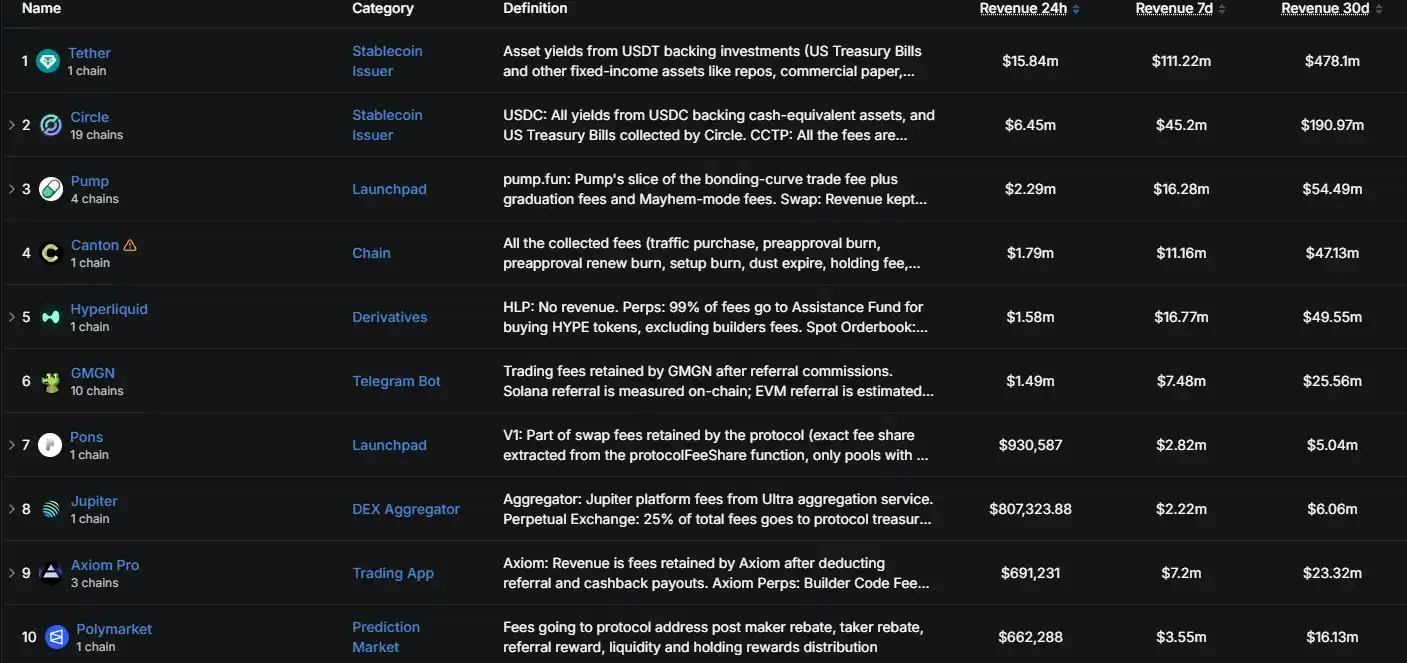
That jump in activity has also lifted platform revenue. DefiLlama data in the report shows Pons generated $930,000 in revenue over the past 24 hours, above Jupiter at $800,000 and Polymarket at $660,000. It ranked seventh among protocols by revenue over that period.
Fee-sharing model feeds PONS buybacks
Pons is a token launch and trading platform built specifically around Robinhood Chain and operated by Pons Labs. The report states it is not an official Robinhood product. Users can create and trade tokens on the platform, and all actions are signed through personal wallets. Pons does not custody user assets.
Each newly issued token on Pons currently has a fixed total supply of 1 billion tokens. Creation costs 0.0005 ETH, and the platform charges a 1% trading fee. A creator only needs to fill in a token name, ticker, image and social links to issue a token.
According to the official documentation cited in the article, for tokens issued under the new Pons contract, trading fees are split 70% to creators and 30% to the protocol. Of the protocol portion, 80% is used to buy back and burn PONS on the market, while the remaining 20% goes to infrastructure and team operations. On Aug. 28, an official update said 29% of total PONS supply had already been burned.
Buyback demand was about $740,000 over the past 24 hours
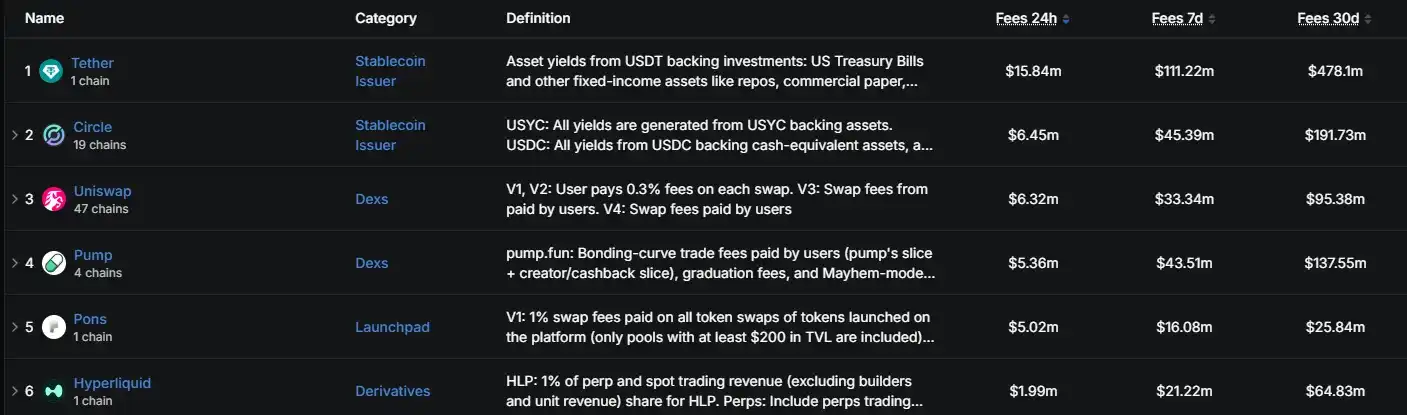
Using the latest 24-hour figures in the report, DefiLlama data shows users spent a total of $5.02 million in fees on Pons. Most of that was distributed to token creators and other participants, leaving about $930,000 as protocol revenue attributable to Pons. Based on the current 80% allocation, roughly $740,000 would be used to buy back and burn PONS, with the remaining roughly $190,000 directed to team operations.
Under that structure, each trade on Pons sends revenue to creators while also turning protocol fees into buy-side demand for PONS. The article describes the mechanism as a reinforcing loop: higher creator revenue attracts more token issuance; more new tokens drive more trading volume and fees; rising protocol revenue increases PONS buybacks. If PONS rises, the platform draws more market attention, which may in turn pull in more creators and traders.
Three indicators highlighted for PONS from here
Author Asher said three points are worth watching when assessing whether PONS can extend its rally.
The first is how long the current meme wave on Robinhood Chain can last. Over the past week, discussion on X around Robinhood Chain meme tokens has heated up, and on-chain meme trading volume has grown with it, allowing Pons to capture more issuance and trading demand. If attention on Robinhood Chain fades and users rotate to other ecosystems, both outside buying interest in PONS and the strength of buybacks could weaken as protocol revenue declines.
The second is whether Pons can keep its lead among token launch platforms. Stronger interest in Robinhood Chain does not automatically guarantee that Pons will keep benefiting. The key question is which platform captures the incremental issuance and trading demand. The report noted that when Flap’s daily issuance exceeded that of Pons, PONS market capitalization traded in the $30 million to $40 million range. More than the absolute number of tokens launched, the report says Pons’ market share on Robinhood Chain may matter more.
The third is whether the platform can produce a breakout meme token with broader reach. The article says Pons currently lacks high-market-cap meme coins that can keep attracting capital and discussion. If the platform produces a meme token that quickly reaches a $50 million or even $100 million market capitalization, the wealth effect around Pons could strengthen, and PONS could see another round of FOMO.